By the late 1920s, the quantum revolution had conquered physics: Niels Bohr had quantized the atom, Louis de Broglie had unveiled wave-particle duality, and Erwin Schrödinger had written his wave equation ($hat{mathcal{H}} psi = mathcal{E} psi$). Yet chemistry remained frustratingly divorced from quantum mechanics. Chemists drew Lewis dot structures with shared electron pairs, but could not answer the deepest mechanical questions: Why does a carbon atom with electron configuration $1s^2 2s^2 2p^2$ form four identical covalent bonds pointing to the vertices of a regular tetrahedron? Why is the benzene ring extraordinarily stable? What, fundamentally, is the chemical bond?
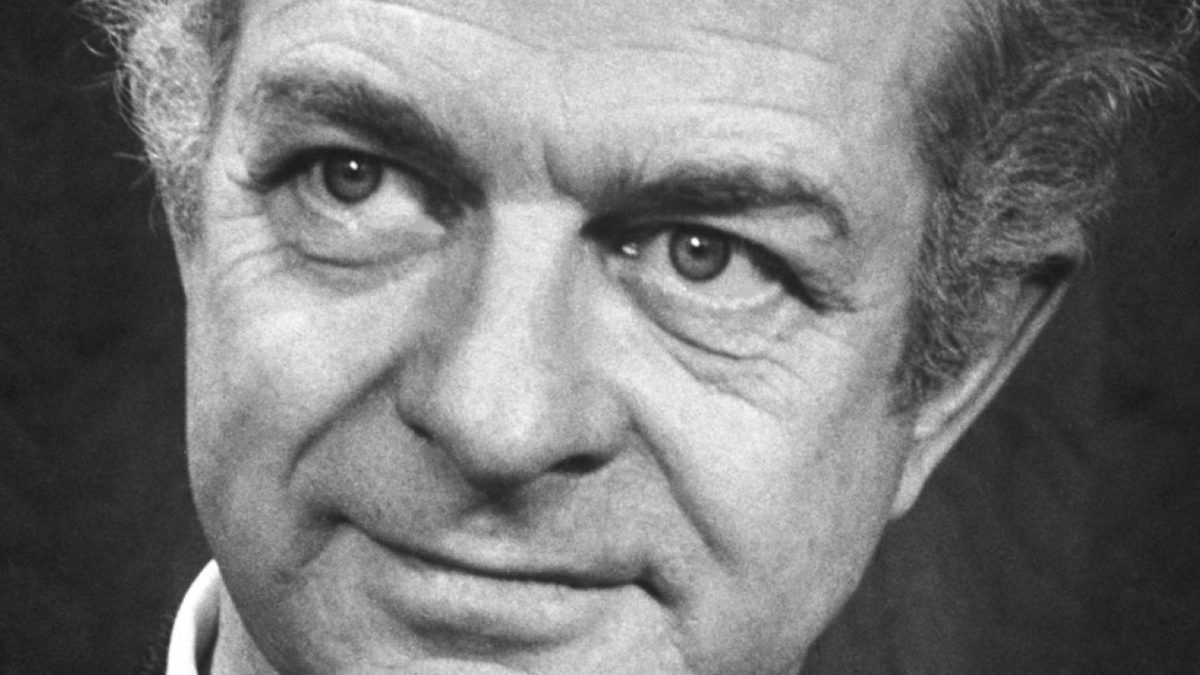
The titan who unified chemistry and quantum mechanics was an energetic American chemist from the California Institute of Technology: Linus Carl Pauling (1901–1994). Armed with wave mechanics, physical intuition, and an unparalleled aesthetic grasp of spatial geometry, Pauling published a series of monumental papers between 1931 and 1939, culminating in his masterwork The Nature of the Chemical Bond.
Orbital Hybridization: The Geometry of Carbon
Pauling confronted the central mystery of organic chemistry: the tetrahedral geometry of carbon in methane ($CH_4$). In an isolated carbon atom, the valence electrons occupy one spherical $2s$ orbital and two dumbbell-shaped $2p$ orbitals ($p_x, p_y$), with one $p$ orbital empty. If these native atomic orbitals bonded directly with hydrogen $1s$ orbitals, carbon would form only two bonds at right angles ($90^circ$), with an unshared pair—completely contradicting the experimentally proven reality of four equivalent bonds separated by $109.5^circ$.
Pauling solved this through quantum linear superposition. He showed that mathematical wavefunctions of atomic orbitals can mix (hybridize) to form new, degenerate directional hybrid orbitals. By linearly combining one $2s$ orbital with three $2p$ orbitals, nature constructs four identical, highly directional $sp^3$ hybrid orbitals pointing toward the vertices of a regular tetrahedron:
$$psi_{sp^3} = frac{1}{2} left( psi_s pm psi_{p_x} pm psi_{p_y} pm psi_{p_z} right)$$
Hybridization maximizes orbital overlap along the internuclear axis ($sigma$ bonds), dramatically lowering the potential energy and explaining the structural foundation of all organic molecules.
Molecular Resonance and Electronegativity
Pauling next tackled molecules that defied a single classical Lewis structure, most famously benzene ($C_6H_6$). In 1865, August Kekulé had proposed an oscillating equilibrium between two cyclohexatriene structures with alternating single and double bonds. Pauling demonstrated through quantum mechanics that benzene is not a rapid oscillation between two classical states; rather, its true ground state is a single, static quantum mechanical resonance hybrid of all contributing canonical wavefunctions:
$$Psi_{text{benzene}} = c_1 psi_{text{Kekulé I}} + c_2 psi_{text{Kekulé II}} + sum c_i psi_{text{Dewar } i}$$
Resonance delocalizes the six $pi$-electrons across the entire planar ring, conferring enormous extra thermodynamic stabilization (the resonance energy of $approx 150 text{ kJ/mol}$) and making all six carbon-carbon bonds completely identical in length ($1.39 text{ AA}$, intermediate between single and double bonds).
To quantify the polarity of chemical bonds, Pauling established the Pauling Electronegativity Scale, defining electronegativity as the power of an atom in a molecule to attract electrons to itself. Bonds were no longer strictly pure covalent or pure ionic; they formed a continuous spectrum parameterized by the electronegativity difference ($Delta chi$). For his revolutionary insight into the quantum nature of molecular architecture, Linus Pauling received the 1954 Nobel Prize in Chemistry, sealing the union of physics and chemistry forever.