In the span of a single century, human civilization has traveled from Gregor Mendel’s monastery garden to the threshold of the Post-Natural Genome. We have transitioned from observing the statistical ratios of wrinkled peas to decoding the double helix, sequencing all three billion base pairs of our ancestral text, and engineering living organisms from digital blueprints. Yet the early tools of CRISPR-Cas9, revolutionary though they were, functioned like blunt biological dynamite: by cleaving both strands of the DNA double helix, they relied upon the cell’s chaotic emergency repair pathways, routinely introducing uncontrolled insertions, deletions, and chromosomal translocations. As molecular genetics enters its grand mature synthesis, a new generation of precision technologies—Base Editing, Prime Editing, and Epigenome Editing—has converted the crude molecular scalpel into a flawless word processor, giving humanity sovereign architectural control over the living substrate.
Base Editing and Prime Editing: Rewriting Without Double-Strand Breaks
In 2016 and 2017, chemical biologist David R. Liu at Harvard and the Broad Institute asked a profound bioengineering question: Why must we break the double helix to fix a single chemical letter? Most human genetic diseases arise from single-nucleotide point mutations—a C turned into a T, or an A into a G.
Liu engineered Base Editors: catalytic chimera proteins fusing a catalytically impaired Cas9 “nickase” (which cuts only a single strand of DNA) to a deaminase enzyme:
- Cytosine Base Editors (CBEs): Use a cytidine deaminase to chemically convert cytosine into uracil, which the cell’s replication machinery reads and repairs into thymine ($text{C-G} rightarrow text{T-A}$).
- Adenine Base Editors (ABEs): Because no natural enzyme existed to deaminate adenine on single-stranded DNA, Liu’s team evolved an artificial transfer-RNA deaminase (TadA) to convert adenine into inosine, which is read as guanine ($text{A-T} rightarrow text{G-C}$).
In 2019, Liu introduced the ultimate molecular word processor: Prime Editing. Prime editing couples a Cas9 nickase to an engineered Reverse Transcriptase enzyme, guided by a specialized Prime Editing Guide RNA (pegRNA). The pegRNA not only specifies the target genomic address, but its extended $3’$ tail carries the actual replacement text! Cas9 nicks a single strand; the reverse transcriptase copies the pegRNA’s corrected template directly into the host chromosome; and the cell seals the flap without ever creating a double-strand break. Prime editing can execute all twelve possible base-to-base transitions and transversions, as well as targeted insertions and deletions of up to hundreds of base pairs with exquisite fidelity and near-zero off-target indels.
Synthetic Gene Drives and Ecological Inheritance
Genetics is no longer confined to the individual patient or crop; it has expanded to encompass entire wild ecosystems through Synthetic Gene Drives. Under classical Mendelian inheritance, an allele carried by one parent has an exact 50% probability of being transmitted to an offspring. A gene drive shatters this rule.
By engineering a CRISPR-Cas9 cassette directly into a specific chromosomal locus alongside a target gene (such as a sterility factor in the female malaria mosquito, Anopheles gambiae), the drive acts as a self-copying genetic machine:
- During gametogenesis in a heterozygote, Cas9 expresses, cuts the wild-type homologous chromosome at the identical position, and forces the cell to repair the break using the gene drive chromosome as a template.
- The heterozygote is converted into a homozygote carrying two copies of the drive.
- Instead of 50% inheritance, the drive is transmitted to nearly 100% of all progeny!
Within a few dozen generations, a synthetic gene drive can sweep through an entire continental population, potentially eradicating vector-borne scourges such as malaria, dengue, and Lyme disease—or permanently altering wild species. The power to direct ecological inheritance presents civilization with moral and ecological responsibilities unprecedented in planetary history.
The Expanded Genetic Alphabet: Hachimoji DNA and Xenobiology
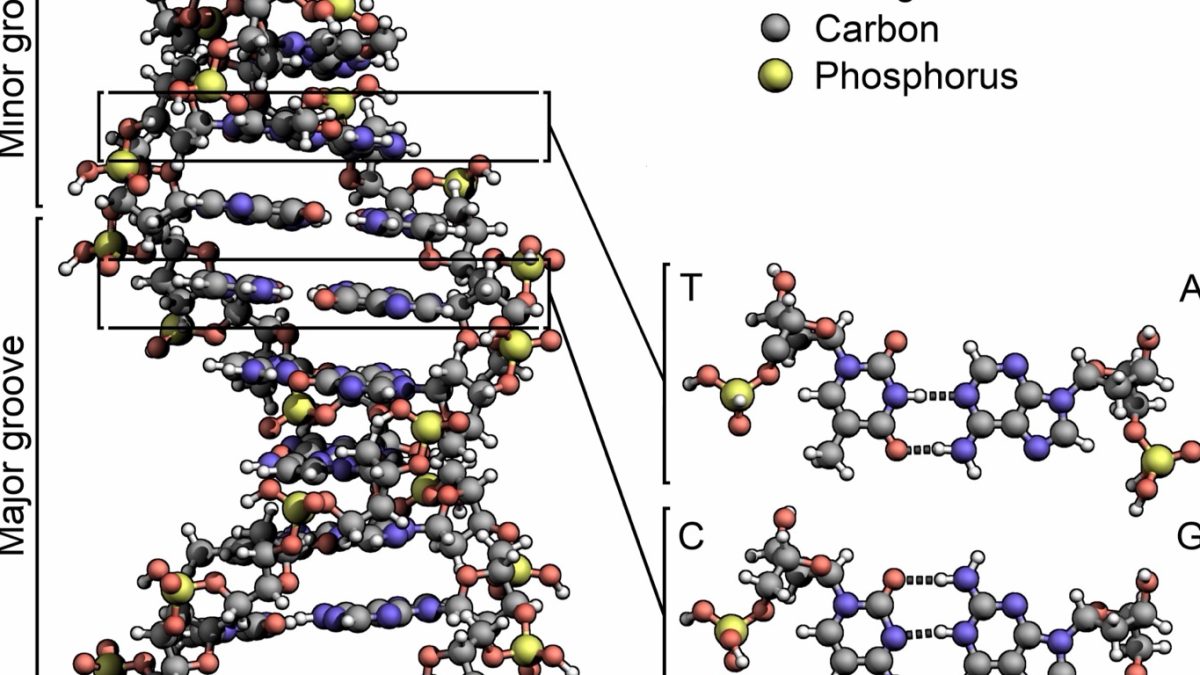
Terrestrial life has relied exclusively upon four nucleotides ($text{A, T, G, C}$) and twenty amino acids for four billion years. But synthetic biologists are now expanding the chemical alphabet of reality. In 2019, synthetic chemist Steven Benner synthesized Hachimoji DNA (from the Japanese hachi, meaning eight, and moji, meaning letters)—an eight-letter double-helical genetic system featuring four synthetic non-natural nucleobases ($P, Z, B, S$) forming two novel Watson-Crick hydrogen-bonding pairs ($Z-P$ and $S-B$). Hachimoji DNA replicates, transcribes into functional synthetic RNA, and doubles the information density of natural DNA.
Simultaneously, researchers have engineered orthogonal ribosomes and expanded codons (four-base quadruplet codons) capable of incorporating dozens of non-canonical synthetic amino acids—carrying fluorescent labels, halogen atoms, and photocrosslinking groups—into designer proteins that do not exist anywhere in terrestrial nature.
The Grand Archival Destiny
We stand today at the twilight of unconscious evolution and the dawn of conscious genetic design. The genome is no longer merely a biological inheritance; it is an informational medium. Scientists are now encoding the entirety of human cultural knowledge—encyclopedias, symphonies, and literature—into dense synthetic DNA pools that can survive in crystalline stability for hundreds of thousands of years, outlasting all magnetic and optical digital storage.
From Gregor Mendel pacing his Moravian monastery garden counting yellow and green peas in 1856, through the structural triumph of Watson, Crick, and Franklin, the algorithmic heroism of the Human Genome Project, and the molecular scalpel of CRISPR, the story of genetics is humanity’s journey to comprehend its own chemical foundation. In unlocking the language of the genome, conscious life on Earth has achieved something truly transcendent: the universe, through human thought, has begun to edit the very instructions of its own existence.