Take a glance around modern civilization: synthetic textiles, nylon parachutes, polyethylene packaging, polycarbonate lenses, Teflon coatings, and carbon-fiber aircraft fuselages. The physical reality of the twentieth and twenty-first centuries is inescapably an Age of Polymers. Yet a century ago, the greatest academic authorities in chemistry maintained that long-chain molecules did not and could not exist. The intellectual battle to vindicate these giant molecules was one of the fiercest doctrinal conflicts in the annals of science.
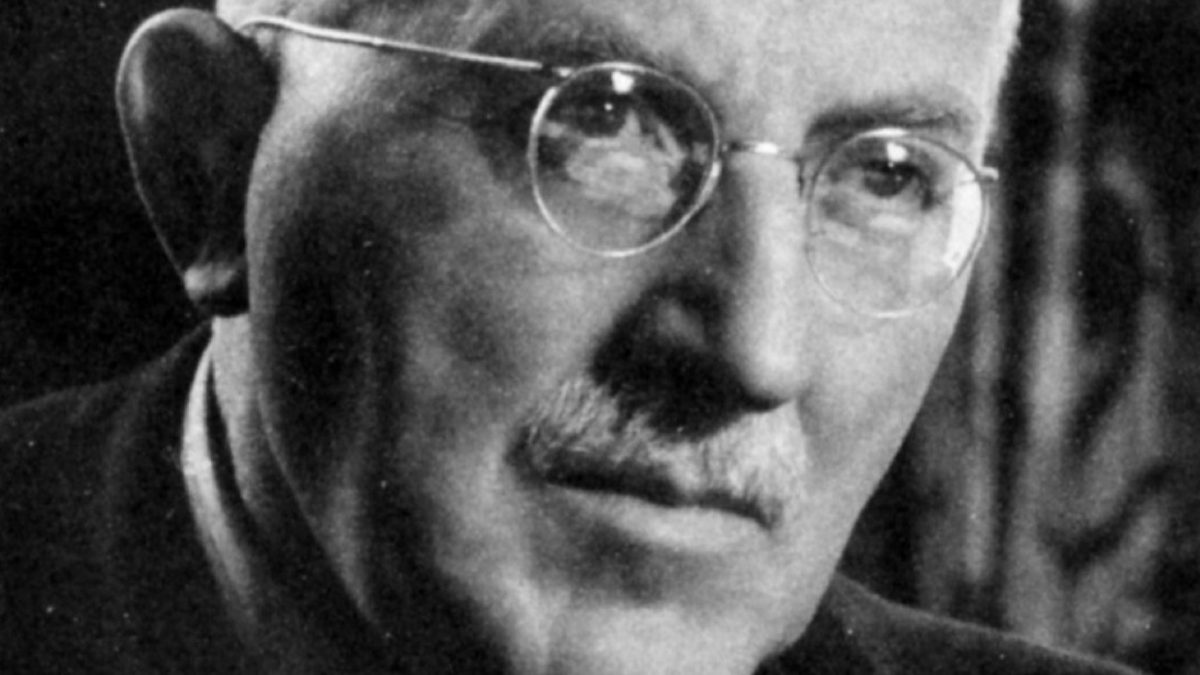
In the early twentieth century, organic chemistry was dogmatically governed by the “small molecule” paradigm. When natural rubber, cellulose, starch, or proteins exhibited exceptionally high molecular weights in freezing-point depression experiments, the scientific consensus—spearheaded by Emil Fischer and Paul Walden—declared that these substances were colloidal aggregates. They believed small molecules were loosely bundled together by mysterious secondary Van der Waals associations. In 1920, when a prominent organic chemist named Hermann Staudinger (1881–1965) challenged this consensus, a distinguished colleague warned him: “Dear colleague, leave the concept of large molecules alone… There can be no such thing as a macromolecule!”
The Macromolecular Hypothesis (1920)
Staudinger, then Professor of Chemistry at the ETH Zurich and later Freiburg, refused to yield. In his historic 1920 paper “Über Polymerisation,” he articulated the Macromolecular Hypothesis: substances like rubber, cellulose, and polystyrene were not loose micellar aggregates; they were genuine, individual molecules composed of hundreds or thousands of monomeric units linked together by standard, covalent carbon-carbon bonds.
To prove his hypothesis beyond empirical dispute, Staudinger synthesized hydrogenated rubber (hydrorubber). He reasoned that if rubber were merely held together by weak secondary associations between unsaturated double bonds, saturating the double bonds with hydrogen would break the aggregate into low-viscosity small molecules. Instead, hydrorubber retained its enormous viscosity and high molecular weight. The backbone was covalently indestructible.
Viscosity and the Birth of Synthetic Materials
Staudinger established the quantitative link between polymer chain length and fluid mechanics through Staudinger’s Viscosity Law:
$$[eta] = mathcal{K}_m cdot mathcal{M}^alpha$$
Where $[eta]$ is the intrinsic viscosity of the solution, $mathcal{K}_m$ is an empirical constant, and $mathcal{M}$ is the average molecular weight. Measuring the flow rate of a polymer solution through an ordinary glass capillary tube allowed chemists to directly calculate the astronomical weight of giant molecules for the first time.
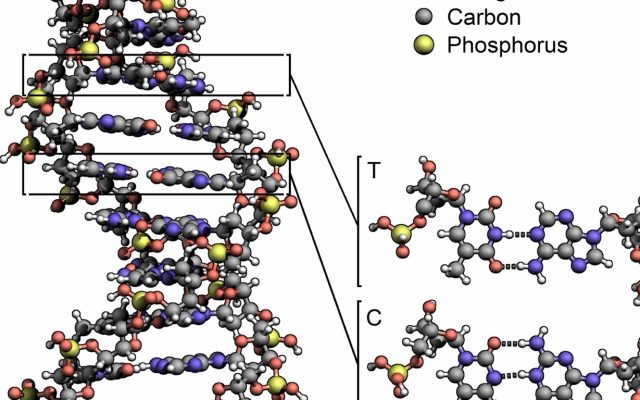
Staudinger’s vindication unleashed a torrent of industrial innovation. At DuPont, Wallace Carothers synthesized neoprene and nylon-6,6 in the 1930s; Karl Ziegler and Giulio Natta invented coordination stereospecific catalysts in the 1950s to produce high-density polyethylene and crystalline polypropylene. More profoundly, Staudinger’s macromolecules provided the conceptual foundation for molecular biology: without the recognition that long covalent chains could stably encode chemical information, the double helix of DNA and the folded architecture of proteins would have remained forever unthinkable. Hermann Staudinger was awarded the 1953 Nobel Prize in Chemistry—a triumphant, long-overdue victory for the giant molecules.