Throughout antiquity and the Middle Ages, the atmosphere enveloping the Earth was regarded as an indivisible, uniform element: “air.” It was conceived not as a chemical reagent possessing distinct reactive properties, but merely as a passive physical medium that supported life and transmitted sound. The idea that air could consist of fundamentally different chemical species—some suffocating, some flammable, some essential to life—was completely alien to seventeenth-century science. The dismantling of this prejudice required what historians celebrate as the Pneumatic Revolution.
The dawn of pneumatic chemistry began in the 1750s with the Scottish physician Joseph Black (1728–1799). By gently heating magnesium carbonate and capturing the liberated gas over liquid, Black discovered “fixed air” (carbon dioxide, $CO_2$). Unlike atmospheric air, fixed air extinguished candle flames instantly and suffocated small animals. Soon after, the eccentric British genius Henry Cavendish (1731–1810) reacted zinc and iron with sulfuric acid, isolating an extraordinarily light, highly combustible gas that he christened “inflammable air” (pure hydrogen gas, $H_2$). Air was no longer a monolithic substance; the atmosphere was a complex chemical arena.
The Dominance of Phlogiston Theory
Yet even as new gases emerged from flasks, chemical explanation was suffocated by the reigning orthodoxy of the eighteenth century: the Phlogiston theory, formulated by the German chemist Georg Ernst Stahl (1659–1734). Stahl posited that all combustible bodies—charcoal, sulfur, phosphorus, and unoxidized metals—contained a weightless or negative-weight fiery substance called phlogiston. When wood burned or zinc calcined, phlogiston escaped violently into the surrounding air:
$$text{Metal (ore)} + text{Phlogiston} longrightarrow text{Metallic Calx} + text{Escaped Phlogiston}$$
Air functioned merely as a cosmic sponge that absorbed liberated phlogiston. When a candle extinguished inside a sealed bell jar, phlogistonists argued not that oxygen was depleted, but that the enclosed air had become completely saturated with phlogiston (“phlogisticated”) and could absorb no more.
Joseph Priestley and the Burning Lens
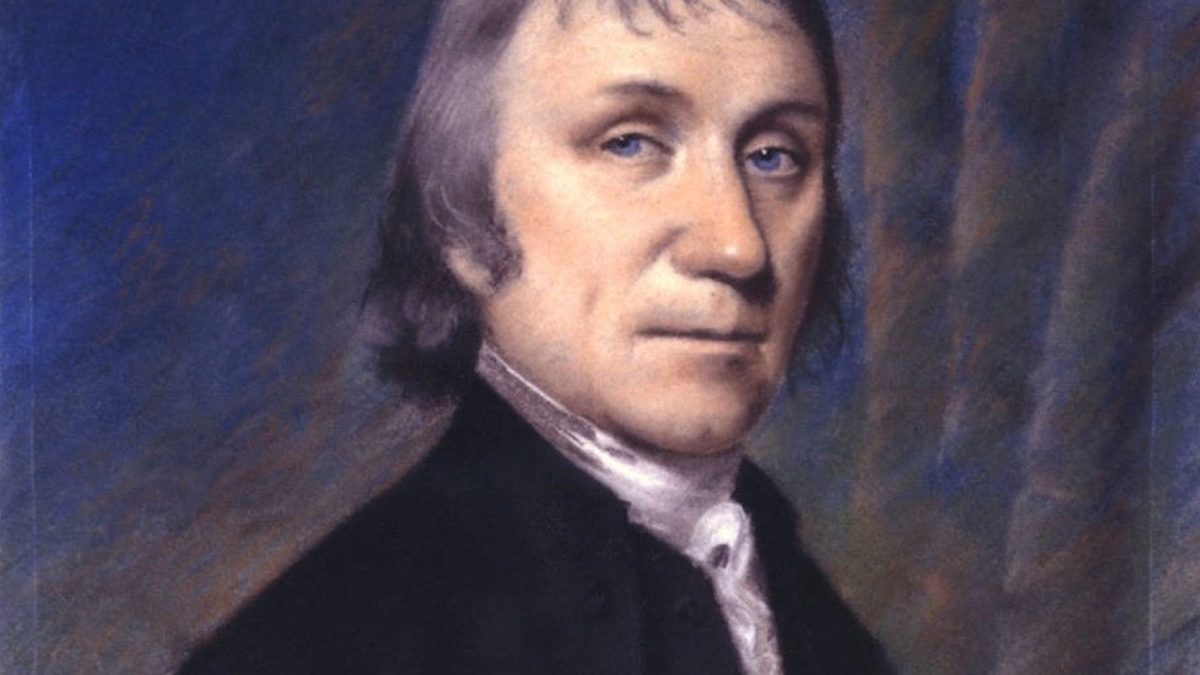
The man who would isolate the key to the mystery, while paradoxically remaining a lifelong defender of phlogiston, was the radical English dissenting minister and polymath Joseph Priestley (1733–1804). Living in Leeds next to a commercial brewery, Priestley initially amused himself by experimenting with the heavy blanket of carbon dioxide hovering over fermenting beer vats. He invented carbonated soda water (the ancestor of modern soft drinks) and pioneered the pneumatic trough using mercury instead of water to trap water-soluble gases like ammonia ($NH_3$), sulfur dioxide ($SO_2$), and hydrogen chloride ($HCl$).
On August 1, 1774, at his laboratory in Bowood House, Wiltshire, Priestley conducted his fateful experiment. Using a massive 12-inch glass burning lens (a solar collector), Priestley focused intense sunlight onto a sample of red mercuric calx (mercuric oxide, $HgO$) sealed inside a glass cylinder over mercury liquid:
$$2HgO_{(s)} xrightarrow{Delta} 2Hg_{(l)} + O_{2(g)}$$
Instantly, silvery beads of liquid mercury precipitated on the glass walls, while a vigorous volume of colorless gas accumulated above the mercury column. When Priestley tested this mysterious gas, he was astonished: a glowing wooden ember burst into a dazzling, roaring flame; a candle burned with fierce brilliance; and two mice placed in the gas survived twice as long as in common air. When Priestley inhaled the gas himself, he recorded a feeling of profound exhilaration: “My breath felt peculiarly light and easy for some time afterwards… but who can tell whether this pure air may not at last become a fashionable luxury?”
The Clashing Paradigms
Trapped within the phlogiston worldview, Priestley named this remarkable gas dephlogisticated air. He reasoned that because the gas supported combustion with such miraculous intensity, it must be completely devoid of phlogiston, allowing it to suck phlogiston out of burning substances far more greedily than ordinary air. In October 1774, Priestley traveled to Paris and dined with a brilliant French nobleman: Antoine-Laurent Lavoisier. Across the dinner table, Priestley described his miraculous gas and his heating of red calx. Lavoisier listened with rapt attention—and recognized immediately what Priestley could not: that this was not “dephlogisticated air,” but the fundamental active principle of the atmosphere, the universal oxidizer, and the long-sought key to the Chemical Revolution.