With the decline of the Greco-Roman classical world and the burning of the Great Library of Alexandria, theoretical inquiries into the nature of matter might have vanished entirely into theological obscurity. Instead, between the eighth and thirteenth centuries, the epicenter of scientific exploration shifted decisively east to the burgeoning intellectual capitals of the Islamic Golden Age: Damascus, Cairo, and above all, the Abbasid imperial metropolis of Baghdad. Here, natural philosophers did not merely copy and translate Aristotle, Galen, and Bolos of Mendes; they constructed operational laboratories, systematically weighed reagents, and elevated metallurgical alchemy into an experimental science.
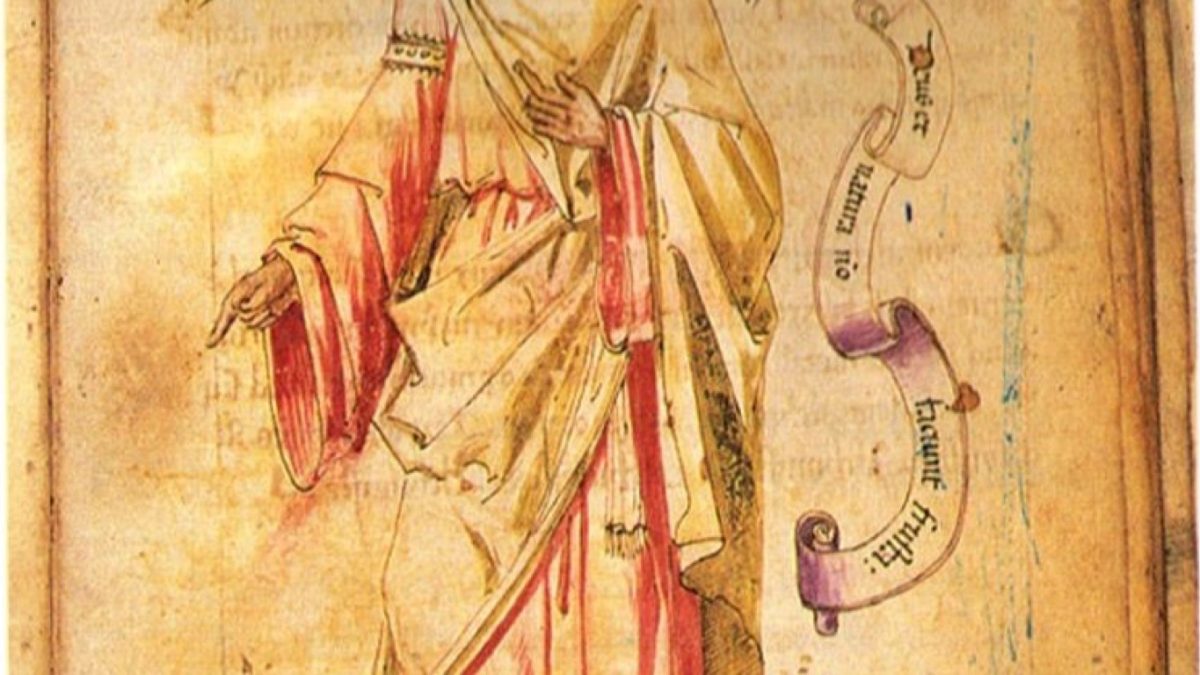
At the vanguard of this chemical dawn stood Abu Musa Jabir ibn Hayyan (c. 721–815 CE), known to medieval Europe by the Latinized name Geber. Practicing in Kufa and Baghdad under the patronage of the Barmakid viziers of Caliph Harun al-Rashid, Jabir operated according to an uncompromising methodological dictum: “The first essential in chemistry is that thou shouldst perform practical work and conduct experiments, for he who performs not practical work nor makes experiments will never attain to the least degree of mastery.”
The Invention of the Alembic and Fractional Distillation
Jabir’s most enduring legacy was the design and standardization of specialized chemical glassware and distillation apparatus. Chief among these was the alembic (Arabic: al-anbīq, from Greek ambix). The alembic consisted of a boiling vessel (the cucurbit) heated from below, an arched condenser head (the alembic proper) that captured rising vapors, and a downward-sloping spout that channeled the condensed liquid into a receiver flask.
By precisely controlling heat through sand baths (balneum arenae) and water baths (balneum mariae), Jabir achieved unprecedented separation of volatile compounds based on differential boiling points. Fractional distillation allowed Islamic chemists to produce concentrated ethyl alcohol (al-kuhl), extract essential aromatic oils, and isolate petroleum distillates like naphtha (naft). More dramatically, Jabir’s laboratory mastered the high-temperature distillation of sulfates, nitres, and vitriols, producing the first pure mineral acids known to human history:
- Sulfuric acid (oil of vitriol): Obtained by distilling iron or copper sulfates ($FeSO_4 cdot 7H_2O$).
- Nitric acid (aqua fortis): Synthesized by heating saltpeter ($KNO_3$) with alum.
- Aqua regia (royal water): A vicious mixture of nitric and hydrochloric acids capable of dissolving gold—the noble metal hitherto considered impervious to chemical assault.
The Sulfur-Mercury Theory of Metals
To provide a theoretical rationale for the apparent transmutability of metallic ores, Jabir formulated the Sulfur-Mercury theory. Extending Aristotle’s dual vapor doctrine, Jabir proposed that when subterranean exhalations were compressed within the Earth’s mantle, they crystallized into two idealized philosophical principles:
- Philosophical Sulfur: Representing combustibility, heat, volatility, and color.
- Philosophical Mercury: Representing liquidity, malleability, metallic luster, and density.
In Jabir’s metallurgy, every known metal—gold, silver, copper, iron, tin, and lead—was composed of these two fundamental principles in varying degrees of purity and proportion. Gold represented the supreme equilibrium: perfectly purified Sulfur unified with perfectly balanced Mercury in harmonious proportion. Base metals like lead or iron suffered from impurities or an excess of sulfurous dross. Transmutation, therefore, was not magical conjure, but a medical curing of metallic illness: by applying an el-iksir (elixir or Philosopher’s Stone), an adept could purge imperfections and restore a base ore to the noble equilibrium of pure gold.
While the transmutation of base lead into gold proved chemically impossible, the pursuit itself drove magnificent empirical triumphs. Islamic chemists under Jabir, Al-Razi (Rhazes), and Ibn Sina (Avicenna) cataloged chemical reagents, invented calcination and sublimation techniques, discovered sal ammoniac ($NH_4Cl$), and established the operational protocols that European scholars would eagerly translate and absorb during the twelfth-century Renaissance.