By 1960, the theoretical framework was solid: Francis Crick’s Central Dogma established that mRNA transferred genetic instructions from nuclear DNA to cytoplasmic ribosomes, where tRNAs translated the script into proteins. But what was the script? Four chemical bases ($A, U, G, C$) had to spell out the instructions for twenty canonical amino acids. If one base coded for one amino acid, only $4^1 = 4$ amino acids could be specified. If two bases formed a code, only $4^2 = 16$ permutations existed—insufficient for twenty. Therefore, the minimum theoretical code was a triplet code: $4^3 = 64$ possible three-letter permutations (codons). But which of the sixty-four codons corresponded to which amino acid? The genetic code was a cipher without a Rosetta Stone.
The Poly-U Breakthrough at the NIH
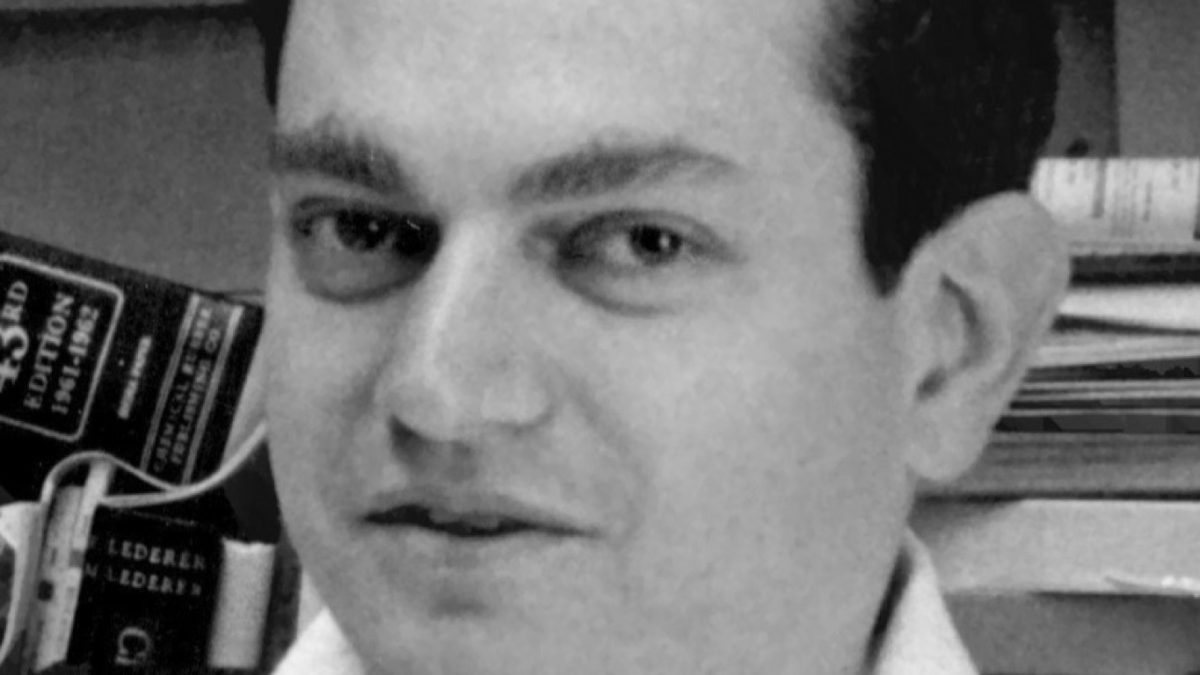
The breakthrough came not from elite Ivy League departments, but from an unassuming, thirty-four-year-old junior scientist named Marshall Nirenberg (1927–2010) and his German postdoctoral fellow Heinrich Matthaei (b. 1929) working at the National Institutes of Health (NIH) in Bethesda, Maryland.
Nirenberg and Matthaei prepared a cell-free translation system from broken E. coli bacteria containing active ribosomes, tRNAs, ATP, and enzymes, but depleted of endogenous bacterial mRNA by pre-incubation with DNase. To this quiet mixture, they set up twenty test tubes. Each tube was supplied with an identical mixture of nineteen cold (unlabeled) amino acids, plus one specific amino acid labeled with radioactive Carbon-14 ($^{14}text{C}$).
On May 27, 1961, at 3:00 AM, Matthaei added synthetic polyuridylic acid (poly-U)—an artificial RNA molecule composed entirely of repeating uracil bases ($text{…UUUUUUUUU…}$)—to the twenty tubes. Nineteen of the tubes remained silent, showing zero protein synthesis. But tube number fifteen—the tube containing radioactive $^{14}text{C}$-phenylalanine—exhibited an explosion of radioactivity incorporated into insoluble polypeptides.
Poly-U had directed the synthesis of pure polyphenylalanine. The first word of the dictionary of life had been deciphered:
$$text{UUU} Longrightarrow text{Phenylalanine (Phe)}$$
The Moscow Sensation and the Race to Completion
In August 1961, Nirenberg traveled to Moscow for the Fifth International Congress of Biochemistry. As an unknown researcher, he was assigned a tiny room with barely thirty people in attendance. But Francis Crick heard of the paper, recognized its earth-shattering significance, and immediately arranged for Nirenberg to repeat his presentation the next morning before an electrified audience of over a thousand world-renowned scientists.
The race was now on. Nirenberg’s NIH laboratory competed intensely with Nobel laureate Severo Ochoa’s group at NYU. Synthetic RNAs with random base proportions (e.g., poly-UC or poly-AG) provided base compositions, but could not determine codon order. The problem of absolute sequence order was solved by two methodological breakthroughs:
- Khorana’s Defined Polynucleotides: Indian-born organic chemist Har Gobind Khorana (1922–2011) at the University of Wisconsin developed brilliant chemical-enzymatic synthesis techniques to construct defined repeating dinucleotide, trinucleotide, and tetranucleotide polymers (such as $text{…UGUGUG…}$ or $text{…UACUACUAC…}$). By reading these precise templates, Khorana unambiguously determined that $text{UGU}$ coded for Cysteine, while $text{GUG}$ coded for Valine.
- The Triplet Binding Assay: In 1964, Nirenberg and Philip Leder discovered that synthetic trinucleotides as short as three bases could cause specific radioactively charged aminoacyl-tRNAs to bind to ribosomes on nitrocellulose filters, enabling the rapid direct testing of all 64 triplets.
The Architecture of the Universal Code
By 1966, the complete 64-codon dictionary of terrestrial life was fully assembled:
- 61 Sense Codons: Directing the incorporation of the 20 canonical amino acids.
- Start Codon ($text{AUG}$): Coding for Methionine, establishing the universal open reading frame for protein translation.
- 3 Stop Codons ($text{UAA}, text{UAG}, text{UGA}$): “Ochre”, “Amber”, and “Opal”—signals that recruit release factors to terminate polypeptide elongation.
- Degeneracy: The code is highly redundant (degenerate). Most amino acids are specified by multiple codons differing primarily at the third position. In 1966, Francis Crick formulated the Wobble Hypothesis, demonstrating that non-Watson-Crick base pairing at the $3’$ end of the codon allows a single tRNA anticodon to recognize multiple synonymous codons.
Most profoundly, with negligible minor variations in mitochondria and certain protozoa, the genetic code is universal across all life on Earth. A strand of human insulin mRNA introduced into a common bacterium is translated into identical human insulin protein. From deep-sea hydrothermal extremophiles to redwood trees and human brains, every living organism speaks the exact same mathematical chemical dialect—the definitive proof of common ancestry.