Throughout the first three decades of the molecular revolution, genetic research was paralyzed by a brutal quantitative reality: The needle in the haystack problem. The human genome contained three billion base pairs of DNA. A single human gene spanned merely a few thousand base pairs—accounting for less than one-millionth of the total genomic mass. To analyze, sequence, or clone that single gene required extracting DNA from quarts of human blood or pounds of tissue, followed by months of laborious restriction digestions and bacterial library screenings. If a forensic crime scene contained merely a single hair root, a dried microscopic bloodstain, or a single drop of semen, genetics was powerless: there simply was not enough physical DNA to register on a spectrophotometer or an agarose gel. What biology desperately needed was a biological Xerox machine: a way to find a solitary target sequence and amplify it into billions of copies. That conceptual miracle occurred on a midnight highway in California.
The Epiphany on Route 128
On a Friday night in May 1983, Kary Mullis (1944–2019), an eccentric thirty-eight-year-old chemist working for the biotechnology company Cetus Corporation, was driving his silver Honda Civic along the winding Pacific Coast Highway (Route 128) toward Mendocino. As his headlights swept across the towering coastal redwoods, Mullis was contemplating a method to sequence single-nucleotide mutations in the human beta-globin gene using two oligonucleotide primers.
Suddenly, a mathematical cascade exploded in his consciousness. If he flanked the target DNA sequence with two opposing primers—one annealing to the sense strand and the other to the antisense strand, both oriented with their $3’$ ends pointing toward one another—and extended them using DNA polymerase, the newly synthesized strands would themselves become templates for the opposing primers in the subsequent round of synthesis!
“Dear Thor! The product would double with every cycle: two, four, eight, sixteen, thirty-two, sixty-four, one hundred twenty-eight… After thirty cycles, it would be over a billion. I pulled the car over onto the shoulder of the road and scribbled formulas on the back of an envelope. I was smelling the exhaust of my Honda and the sweet smell of the buckeye trees, and I knew I had invented something that would change the world.”
— Kary Mullis, Dancing Naked in the Mind Field (1998)
In thirty cycles, $2^{30} = 1,073,741,824$ copies would be generated. Exponential enzymatic amplification could transform an undetectable zeptomole ($10^{-21}text{ moles}$) of target DNA into microgram quantities visible under ultraviolet light as a glowing, neon-orange ethidium bromide band.
The Three Thermal Steps of the PCR Cycle
The beauty of the Polymerase Chain Reaction (PCR) lay in its algorithmic simplicity. A complete cycle consisted of three precise, automated temperature transitions:
- Denaturation ($94^circtext{C} – 96^circtext{C}$): Intense thermal energy disrupts the hydrogen bonds holding the complementary strands of the target double helix together, unzipping the DNA into two separate single-stranded templates.
- Annealing ($50^circtext{C} – 65^circtext{C}$): The temperature is dropped rapidly. Because the synthetic oligonucleotide primers are present in vast molar excess over the template, they find and hybridize specifically to their complementary target sequences flanking the gene of interest before the long genomic strands can re-anneal.
- Extension / Elongation ($72^circtext{C}$): DNA polymerase binds to the primer-template junction and rapidly polymerizes complementary dNTPs from $5′ rightarrow 3’$, synthesizing a pristine replica of the intervening genetic sequence.
The Geysers of Yellowstone and Taq Polymerase
In Mullis’s initial prototype, PCR was an agonizing, manual torture. The DNA polymerase available was the Klenow fragment of E. coli. Because mesophilic bacterial enzymes permanently denature and lose all catalytic activity at temperatures above $55^circtext{C}$, the $95^circtext{C}$ denaturation step destroyed the polymerase in every single cycle. The technician had to stand by water baths for hours, manually transferring tubes and pipetting fresh, expensive enzyme into each tube every three minutes across thirty cycles.
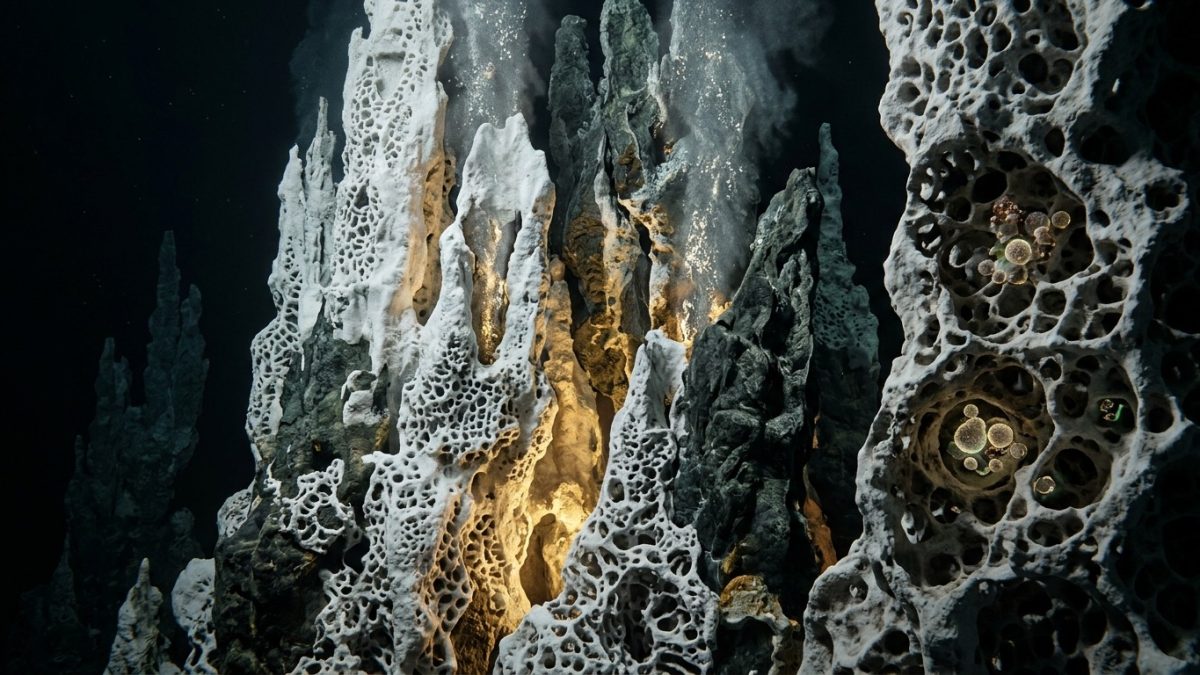
The definitive engineering triumph occurred in 1986, when Cetus researchers isolated and cloned DNA polymerase from Thermus aquaticus, an extremophilic bacterium discovered by Thomas Brock in the boiling geothermal hot springs of Yellowstone National Park. Adapted to thrive in volcanic waters, Taq polymerase was thermostable: it could survive hours at $95^circtext{C}$ with an optimal catalytic extension rate at $72^circtext{C}$ (synthesizing up to 1,000 bases per minute).
With Taq polymerase, PCR was automated inside compact desktop thermal cyclers (Peltier-driven heating blocks). A scientist could load a microcentrifuge tube containing template DNA, primers, dNTPs, buffer, and Taq, push a button, walk away, and return three hours later to find a billion pure copies of the exact target gene.
The impact of PCR across science and civilization was staggering. It revolutionized forensic criminal justice (DNA fingerprinting could now convict or exonerate suspects from a single trace cell left on a glass); enabled prenatal genetic screening for hereditary diseases; allowed paleogenomicists to resurrect genes from extinct mammoths and Neanderthals; became the global gold standard for diagnostic pathology during viral pandemics (RT-qPCR); and provided molecular biology with its universal Swiss army knife. In 1993, Kary Mullis was awarded the Nobel Prize in Chemistry for a flash of mathematical intuition that transformed the molecular landscape forever.