Throughout the heroic era of the Central Dogma, molecular biology was dominated by a strictly protein-centric paradigm. RNA was treated merely as a transient, disposable messenger—a passive carbon copy bridging the permanent double-helical library of the nucleus to the catalytic protein factories of the cytoplasm. When the Human Genome Project revealed in 2001 that a staggering 98.5% of human DNA does not code for proteins, many prominent geneticists reflexively dismissed this vast expanse as evolutionary flotsam: pseudogenes, degenerated transposons, and selfish repetitive sequences casually branded as “Junk DNA.” But over the ensuing two decades, a conceptual revolution dismantled this dismissive dogmatism, revealing that the non-coding genomic dark matter is teeming with transcriptional life, orchestrated by a vast and sophisticated world of functional non-coding RNAs (ncRNAs).
The Shock of Split Genes: Introns and the Spliceosome
The first crack in the colinearity model of genetics appeared in 1977, when Phillip Sharp at MIT and Richard Roberts at Cold Spring Harbor discovered split genes in adenovirus. Eukaryotic genes were not continuous stretches of coding instructions. Instead, they were interrupted by vast, non-coding intervening sequences termed introns, separating the protein-coding islands termed exons.
When a gene is transcribed, RNA polymerase II synthesizes a colossal precursor messenger RNA (pre-mRNA). Before translation can occur, a massive molecular machine called the spliceosome—composed of five small nuclear RNAs (U1, U2, U4, U5, U6 snRNAs) and over one hundred core proteins—assembles upon the pre-mRNA, loops out the introns via a conserved branchpoint adenine lariat mechanism, cleaves the junctions, and ligates the flanking exons together with single-nucleotide precision.
Introns were initially viewed as energetic waste. In reality, they are the secret engine of organismal diversification: Alternative Splicing. By selectively including or excluding specific exons in different cell types or developmental windows, a single genomic locus can produce dozens, hundreds, or even thousands of distinct protein isoforms. In Drosophila, the single Dscam gene can theoretically generate 38,016 distinct protein isoforms through combinatorial exon splicing—more than double the total number of genes in the entire fly genome!
The RNA World: Catalytic Ribozymes
In the early 1980s, Thomas Cech (studying the ciliate protozoan Tetrahymena thermophila) and Sidney Altman (studying bacterial RNase P) made a Nobel Prize-winning discovery that shattered the doctrine that all biological enzymes are proteins: RNA can act as an enzyme (a ribozyme). Cech demonstrated that certain intron RNAs can fold into complex tertiary shapes and catalyze their own excision without a single protein molecule present.
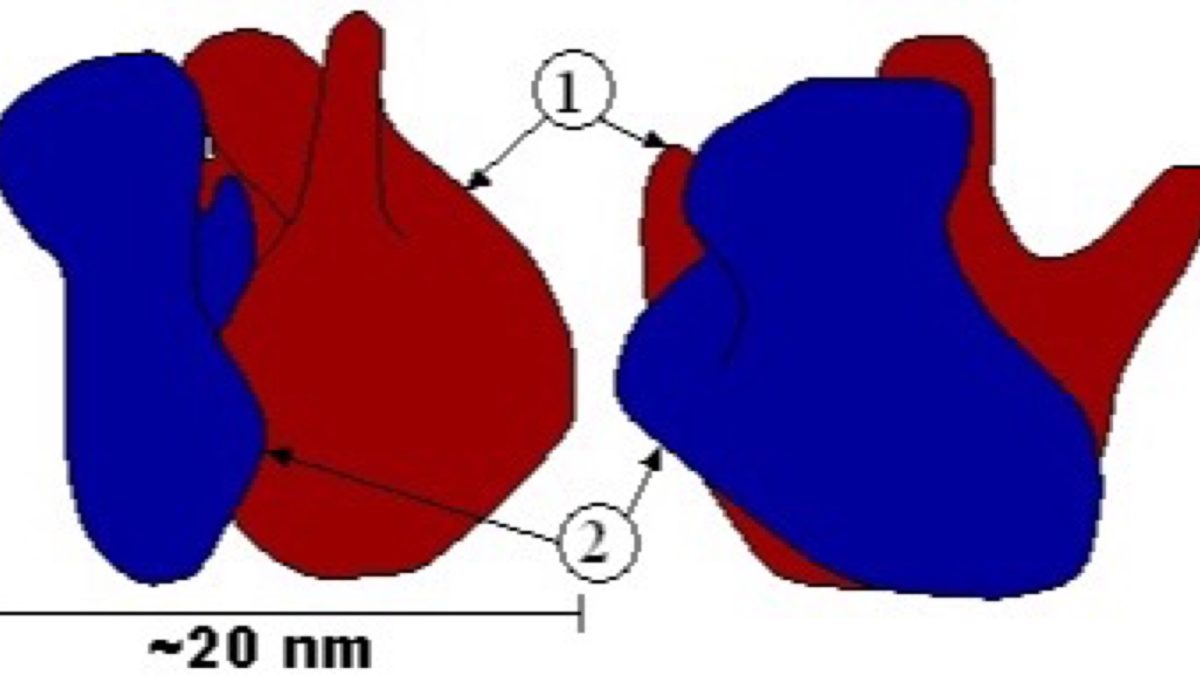
This revelation resolved the ancient evolutionary chicken-and-egg dilemma: Which came first, DNA (which requires proteins to replicate) or proteins (which require DNA to encode them)? The answer was the RNA World hypothesis: early life was based entirely on RNA molecules that simultaneously stored genetic sequence information (like DNA) and catalyzed chemical reactions (like enzymes). Indeed, when Ada Yonath, Venki Ramakrishnan, and Thomas Steitz resolved the atomic crystal structure of the ribosome in 2000, they proved that the peptidyl transferase center of the 50S large subunit is composed purely of 23S ribosomal RNA. The ribosome is not a protein engine with an RNA skeleton; it is an ancient ribozyme that learned to synthesize proteins.
The MicroRNA Revolution: Ambros, Ruvkun, and RNAi
In 1993, working with the roundworm Caenorhabditis elegans, developmental geneticists Victor Ambros and Gary Ruvkun discovered an unprecedented genetic mechanism. A gene named lin-4, which controlled the timing of larval development, did not encode a protein. Instead, it produced a tiny, 22-nucleotide non-coding RNA hairpin. Ambros and Ruvkun discovered that this tiny RNA had sequence complementarity to multiple sites in the $3’$ untranslated region ($3’$ UTR) of the lin-14 messenger RNA, post-transcriptionally suppressing its translation into protein.
Initially ignored as a nematode quirk, the discovery of a second conserved tiny RNA (let-7) in 2000 ignited the microRNA (miRNA) explosion. Today, thousands of distinct microRNAs are recognized across animals and plants. Synthesized as primary hairpins, cropped by the nuclear enzyme Drosha, exported to the cytoplasm, and diced by Dicer into mature double-stranded duplexes, miRNAs are loaded into the Argonaute protein of the RNA-induced silencing complex (RISC). Operating as guide dogs, miRNAs scan cytoplasmic mRNAs via a 6-to-8-nucleotide “seed sequence,” tuning and dampening protein expression across more than 60% of all human protein-coding genes.
The ENCODE Project: The Pervasive Transcriptome
In September 2012, the international Encyclopedia of DNA Elements (ENCODE) consortium published the results of a decade of systematic functional genomic analysis across hundreds of human cell lines. Utilizing deep RNA sequencing (RNA-seq), chromatin immunoprecipitation (ChIP-seq), and DNase I hypersensitivity assays, ENCODE delivered a profound shock to evolutionary genetics:
“The vast majority of the human genome—more than 80%—is assigned a specific biochemical function, actively engaged in transcription, protein binding, or chromatin accessibility.”
— The ENCODE Project Consortium, Nature (2012)
Tens of thousands of previously invisible long non-coding RNAs (lncRNAs)—such as Xist, which physically coats and epigenetically silences an entire X chromosome in female mammalian cells, and HOTAIR, which scaffolds chromatin-modifying complexes across Hox developmental clusters—were unmasked. The genome was not an ocean of junk punctuated by rare protein islands; it was a dense, pervasive computational continent where non-coding RNA reigns as the master architect of cellular life.