In the late twentieth century, civilization marshaled the largest biological collaboration in human history: the Human Genome Project (HGP). Launched formally in October 1990 with a fifteen-year mandate and a three-billion-dollar international budget funded by the US Department of Energy, the National Institutes of Health, and the Wellcome Trust, the project’s ambition was breathtaking in scope: to decipher the complete chemical sequence of all twenty-three pairs of human chromosomes—an astronomical text spanning over 3.1 billion base pairs. If printed in standard twelve-point telephone books, the sequence would stack higher than the Washington Monument. It was biology’s landing on the Moon.
Two Clashing Methodologies: Clone-by-Clone vs. Whole-Genome Shotgun
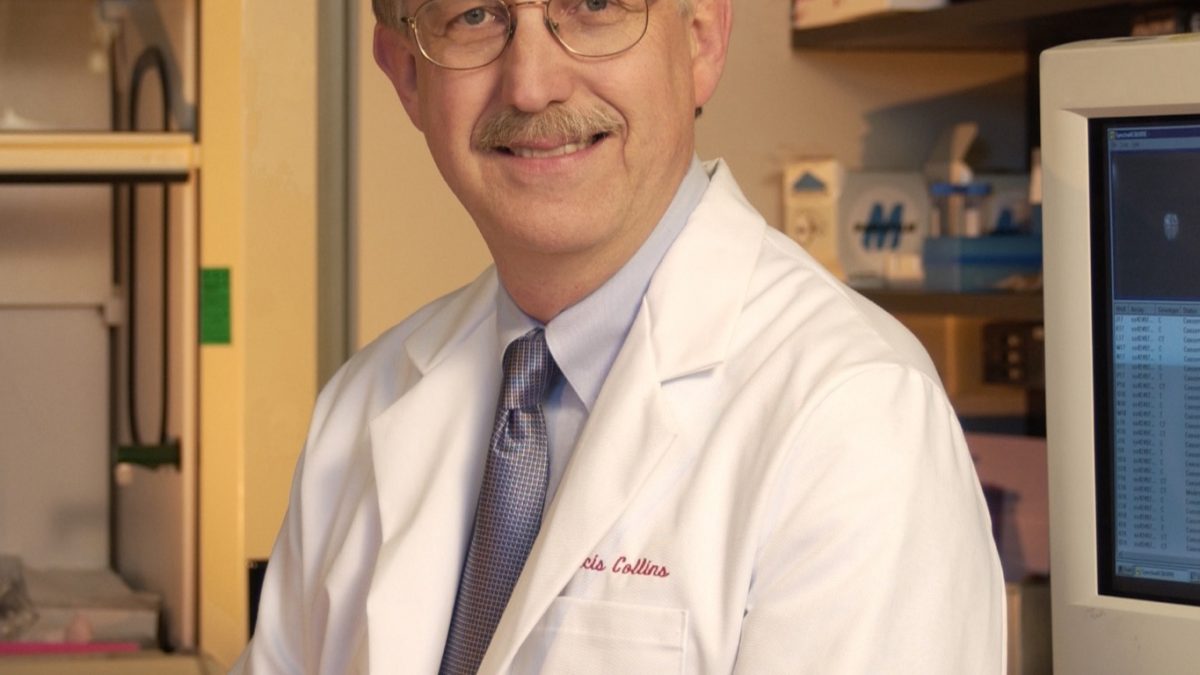
The public consortium, commanded initially by James Watson and later led by physician-geneticist Francis Collins (b. 1950), adopted a cautious, methodical hierarchical clone-by-clone shotgun strategy:
- The human genome was sheared into large chunks of 150,000–200,000 base pairs and cloned into Bacterial Artificial Chromosomes (BACs).
- Scientists mapped the physical positions of these BACs along the chromosomes using restriction fingerprinting.
- Individual known BAC clones were then sheared into random 1,000-base-pair fragments, sequenced on automated slab-gel Sanger sequencers, and assembled locally before stitching the macroscopic map together.
By 1998, however, after eight years of work, less than 10% of the genome had been sequenced. Into this bureaucratic landscape burst a charismatic, swashbuckling biochemist and former Vietnam naval medic named J. Craig Venter (b. 1946). Founding a private corporation named Celera Genomics, backed by Perkin-Elmer’s newly invented ABI PRISM 3700 automated capillary sequencers (which replaced manual gels with 96 liquid capillary channels reading fluorescent laser dyes), Venter declared war on the public effort.
Venter championed a radical, high-risk computational methodology: Whole-Genome Shotgun Sequencing. Venter proposed skipping the tedious, years-long BAC physical mapping entirely:
- The entire human genome would be blasted simultaneously into tens of millions of random overlapping fragments of varying sizes (2 kb, 10 kb, 50 kb).
- These fragments would be sequenced from both ends (paired-end reads) across an army of 300 capillary sequencers running 24 hours a day.
- Supercomputers running advanced graph algorithms (designed by computer scientist Gene Myers) would match overlapping sequence ends, assembling the shattered puzzle in one colossal algorithmic calculation.
Critics within the public consortium claimed Venter’s approach would collapse into incoherence when confronted with the vast stretches of repetitive “junk” DNA that riddle the mammalian genome. But Venter’s machines churned through billions of bases with terrifying speed, forcing the public consortium to abandon its leisurely timeline and dramatically accelerate its output.
The White House Announcement (June 26, 2000)
To avert an unseemly proprietary patent war over the human heritage, US President Bill Clinton and British Prime Minister Tony Blair brokered a historic truce. On June 26, 2000, standing side by side in the East Room of the White House, Francis Collins and Craig Venter announced the completion of the first working draft of the Human Genome.
“Today, we are learning the language in which God created life. We are gaining ever more awe for the complexity, the beauty, and the wonder of God’s most divine and sacred gift.”
— President Bill Clinton, White House Address (June 26, 2000)
The companion drafts were published concurrently in February 2001 in Nature (public consortium) and Science (Celera), with the fully finished, high-accuracy sequence unveiled in April 2003, coinciding with the 50th anniversary of Watson and Crick’s double helix.
The Revelations of the Text
When geneticists finally read the finished sequence, the results upended nearly every prior dogma of biological anthropology:
- The Gene Deficit: Before the project, textbooks estimated that human beings possessed between 100,000 and 150,000 genes to account for our cognitive and physiological sophistication. The sequence revealed a startling modesty: humans possess merely ~20,000 to 21,000 protein-coding genes—scarcely more than the microscopic roundworm C. elegans (~19,000 genes) and fewer than a common grain of rice (~32,000 genes). Organismal complexity was driven not by raw gene count, but by combinatorial alternative splicing and complex regulatory networks.
- The Coding Island: Only 1.5% of our 3.1 billion base pairs code directly for amino acid sequences in proteins. The remaining 98.5% was non-coding DNA—introns, regulatory switches, retrotransposons, and structural telomeres and centromeres.
- Universal Equality: Any two human beings on Earth, regardless of geographic ancestry or skin color, share more than 99.9% of their genetic sequence in common. The totality of human phenotypic diversity arises from single-nucleotide polymorphisms (SNPs) and copy number variations scattered across a minuscule fraction of a percent of our DNA. Biological racism was rendered chemically obsolete.