In the spring of 1900, thirty-four years after Gregor Mendel published his ignored experiments, three European botanists working independently—Hugo de Vries in the Netherlands, Carl Correns in Germany, and Erich von Tschermak in Austria—rediscovered Mendel’s papers and recognized their monumental truth. Simultaneously, cytologists armed with advanced oil-immersion microscopes and aniline dyes were peering into the eukaryotic cell nucleus, watching dark, thread-like bodies condense, duplicate, and segregate during cell division. In 1902, Walter Sutton in the United States and Theodor Boveri in Germany formulated the Sutton-Boveri Chromosome Hypothesis: the physical segregation of homologous chromosomes during meiosis was precisely parallel to the abstract segregation of Mendel’s paired hereditary factors. But hypothesis is not proof. The physical embodiment of the gene demanded empirical confirmation.
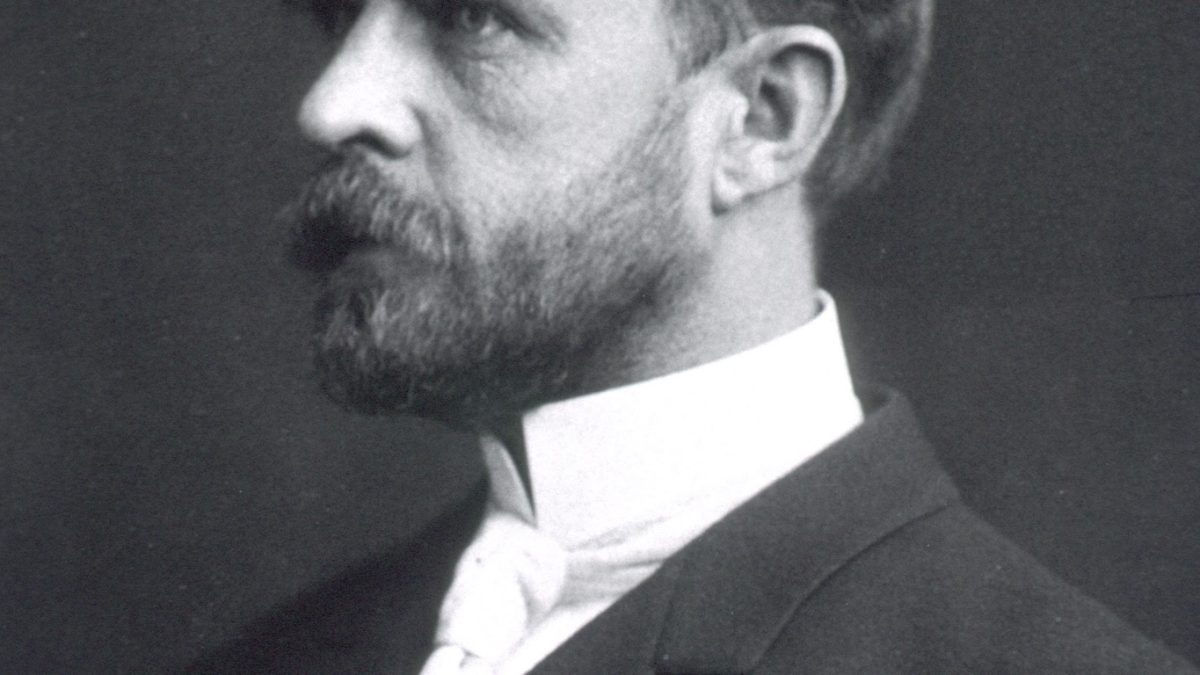
That proof was forged inside Room 611 of Schermerhorn Hall at Columbia University—a cramped, pungent, sixteen-by-twenty-three-foot laboratory known to history simply as The Fly Room. Presided over by embryologist Thomas Hunt Morgan (1866–1945), along with an extraordinary trio of undergraduate protégés—Alfred Sturtevant, Calvin Bridges, and Hermann Joseph Muller—this modest room became the cradle of modern transmission genetics.
The White-Eyed Fly and Sex Linkage
Morgan chose as his experimental organism the humble fruit fly, Drosophila melanogaster. Drosophila was an engineering marvel for genetics: it was cheap to maintain in repurposed glass milk bottles stoppered with cotton, thrived on fermented mashed bananas, produced hundreds of offspring per brood, and possessed a generation cycle of merely ten to twelve days. Most importantly, its diploid somatic cells contained only four pairs of chromosomes.
For more than a year, Morgan stared through low-power binocular microscopes at tens of thousands of wild-type flies, all of which possessed vivid brick-red eyes, searching desperately for a Mendelian mutation. In May 1910, among a culture bottle of red-eyed flies, Morgan spotted a solitary male fly with startling, snow-white eyes. He carefully isolated the white-eyed male and crossed it with normal, wild-type red-eyed females.
The results at first seemed classically Mendelian:
- $F_1$ Generation: Every single male and female offspring possessed red eyes, proving that red eyes ($w^+$) was dominant over white eyes ($w$).
- $F_2$ Generation: Crossing the $F_1$ siblings yielded the classical $3:1$ phenotypic ratio (3 red-eyed flies to 1 white-eyed fly).
However, when Morgan examined the distribution of sexes among the $F_2$ progeny, an unprecedented anomaly emerged: every single white-eyed fly was male. Not a single female among thousands scored possessed white eyes; all females were red-eyed, while males were divided equally between red and white eyes.
Morgan realized that this phenomenon could be explained by a single, revolutionary physical reality: the gene governing eye color was located directly on the X sex chromosome. Female flies possessed two X chromosomes ($XX$), while male flies possessed one X chromosome and a morphologically distinct, genetically inert Y chromosome ($XY$). A female could only express white eyes if she inherited two copies of the recessive allele ($X^w X^w$), whereas a male, possessing only a single X chromosome, expressed white eyes immediately upon inheriting a single mutant allele ($X^w Y$). For the first time in scientific history, a specific Mendelian gene was irrevocably tethered to a physical cellular structure.
Crossing Over and the Birth of Genetic Mapping
As the Fly Room isolated dozens of new mutations (such as miniature wings, yellow bodies, and vermilion eyes), Morgan discovered that genes residing on the same chromosome did not assort independently as Mendel’s Second Law predicted. Instead, they tended to be inherited together in packages—a phenomenon termed genetic linkage.
Yet this linkage was rarely absolute. In crosses involving two X-linked traits—such as white eyes and miniature wings—a small but consistent percentage of progeny displayed recombinant phenotypes (e.g., white eyes with normal wings, or red eyes with miniature wings). Morgan hypothesized that during meiosis, when homologous maternal and paternal chromosomes pair intimately in synapsis, the physical chromosomal threads twist, break, and exchange segments—a physical event cytologically termed a chiasma and genetically christened crossing over.
One evening in 1911, Morgan’s undergraduate student Alfred Sturtevant (1891–1970) experienced a flash of mathematical insight. Sturtevant realized that if genes were arranged along the chromosome in a linear sequence like beads on a thread, the probability of a crossover occurring between two genes should be directly proportional to the physical distance separating them: the farther apart two genes were, the more likely a random break would occur between them.
“I went home, and spent most of the night (to the neglect of my undergraduate homework) in producing the first chromosome map.”
— Alfred Sturtevant, A History of Genetics (1965)
By tabulating recombination frequencies among six sex-linked factors in Drosophila, Sturtevant constructed the world’s first genetic linkage map, defining one unit of genetic distance (now named the centimorgan in honor of Morgan) as a 1% frequency of recombination. The gene was no longer a metaphysical ghost: it possessed a precise, reproducible linear address upon a physical macromolecular thread.