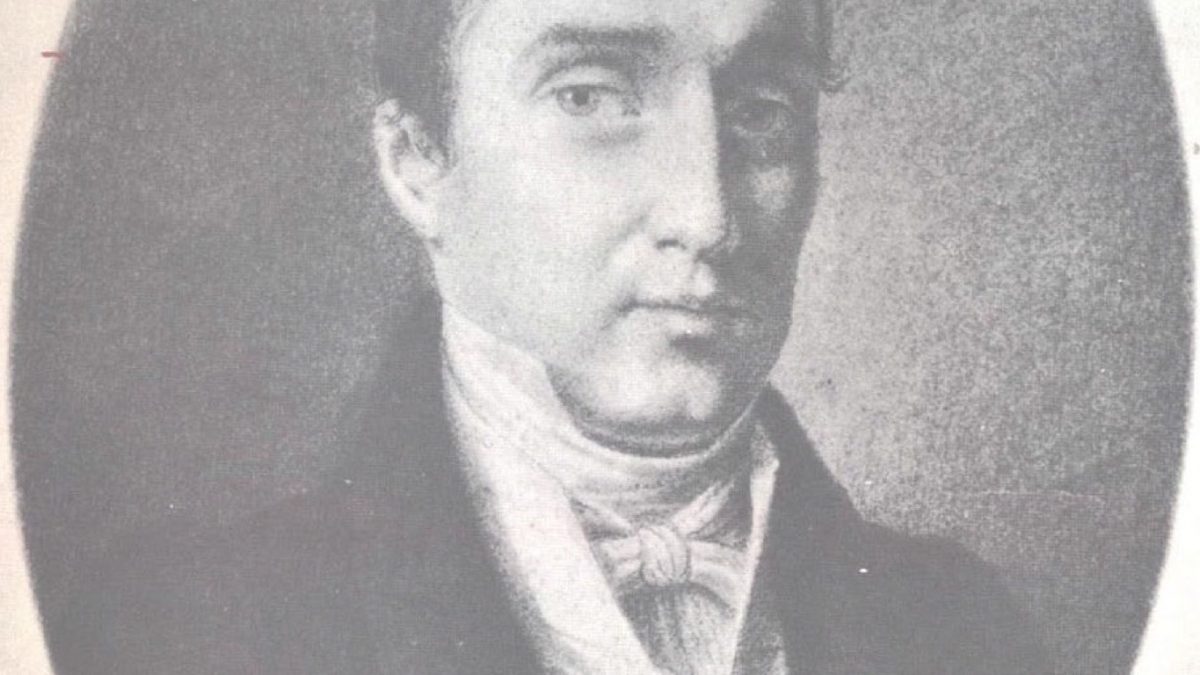
While mechanics mastered the deterministic motion of planets and cannonballs, the Industrial Revolution was powered by a mysterious entity: heat. Steam engines pumped coal mines, drove locomotives, and powered cotton mills, yet no engineer understood the fundamental limits of transforming fire into mechanical work. In 1824, a 27-year-old French military engineer named Nicolas Léonard Sadi Carnot published a 118-page monograph that gave birth to thermodynamics and uncovered the inexorable cosmic arrow of time: entropy.
1. Carnot’s Ideal Engine and the Thermodynamic Limit
Carnot realized that heat engines do not consume heat; they operate because caloric “falls” from a hot reservoir ($T_H$) to a cold condenser ($T_C$), analogous to water falling over a mill wheel. He constructed the theoretical concept of a completely reversible cycle (the Carnot Cycle) composed of four distinct stages:
- Isothermal Expansion: Heat $Q_H$ absorbed at constant high temperature $T_H$.
- Adiabatic Expansion: Gas continues expanding and cools without heat exchange to $T_C$.
- Isothermal Compression: Heat $Q_C$ rejected at constant cold temperature $T_C$.
- Adiabatic Compression: Gas compressed and heated back to $T_H$.
Carnot proved that no engine operating between two temperatures can ever be more efficient than a reversible Carnot engine, establishing the absolute maximum thermodynamic efficiency:
2. Clausius and the Birth of Entropy
In the 1850s, Rudolf Clausius and William Thomson (Lord Kelvin) recognized that heat is not a fluid, but microscopic thermal energy. Energy is conserved—the First Law of Thermodynamics:
Yet energy conservation does not explain why heat flows spontaneously from hot to cold, but never from cold to hot. Clausius defined a new state function, Entropy ($S$), from the cyclic integral of heat transfer:
The Second Law of Thermodynamics took its famous formulation: for any spontaneous process in an isolated system, total entropy must always increase or remain constant:
3. Ludwig Boltzmann and the Statistical Micro-World
In Vienna, Ludwig Boltzmann linked thermodynamics to the Newtonian atoms that many nineteenth-century physicists still dismissed as fictions. Boltzmann showed that entropy is simply a measure of statistical probability: the number of microscopic arrangements ($Omega$, microstates) corresponding to a given macroscopic state:
Why does an egg shatter on the floor, but broken pieces never spontaneously reassemble into an egg? Not because energy conservation forbids it, but because there are trillions of disordered arrangements of egg fragments, and only one ordered arrangement of a whole egg. Entropy defines the Arrow of Time: time flows forward in the direction of increasing cosmic disorder.