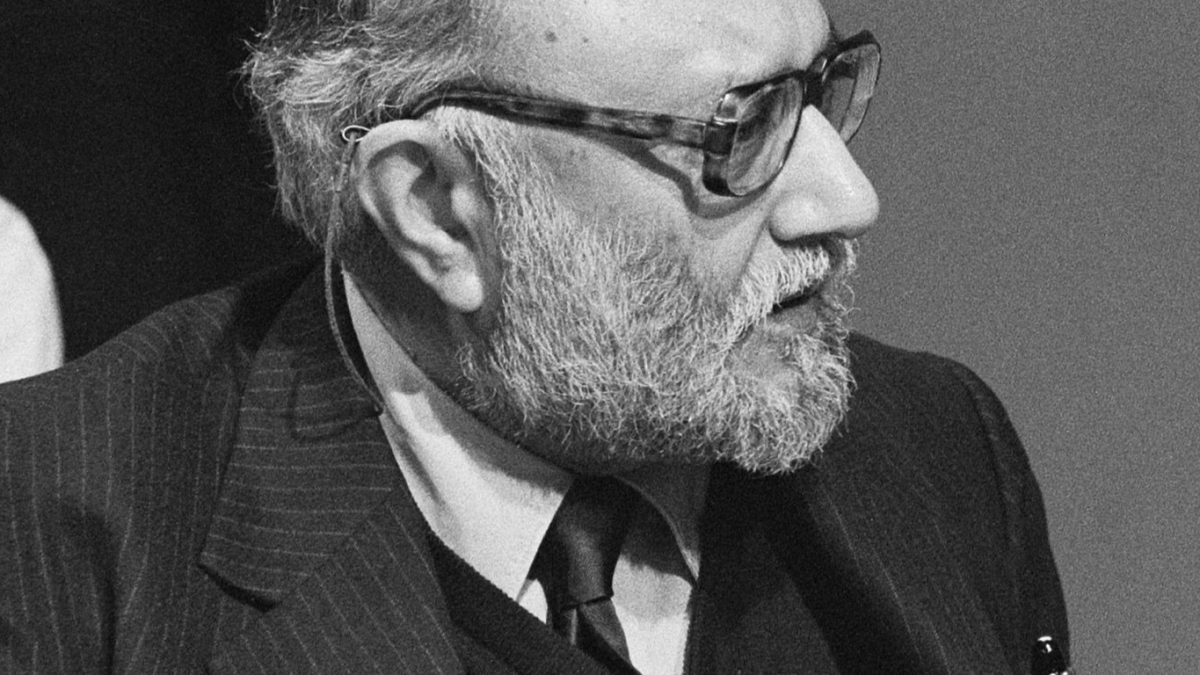
By the mid-1960s, physics recognized four fundamental forces governing the cosmos: gravity, electromagnetism, the strong nuclear force, and the weak nuclear force (responsible for radioactive beta decay). Electromagnetism was mediated by massless photons and had infinite range; the weak force operated exclusively within the subatomic radius of $10^{-18}$ meters. To unite these two radically disparate interactions seemed impossible until Pakistani theoretical physicist Abdus Salam, American theorist Steven Weinberg, and Sheldon Glashow deployed the mathematical miracle of spontaneous symmetry breaking, forging the unified Electroweak Theory.
The Fermi Weak Current and the Gauge Invariance Dilemma
In 1934, Enrico Fermi formulated the first effective theory of beta decay as a four-fermion point interaction ($G_F approx 1.166 times 10^{-5} text{ GeV}^{-2}$). While Fermi’s theory worked remarkably well at low energies, it violated unitarity at high energies ($> 300 text{ GeV}$) and was fundamentally unrenormalizable.
Yang-Mills gauge theory provided the natural mathematical language for force mediators: gauge bosons. But local gauge invariance strictly requires all gauge bosons to be massless—like the photon. If the weak force mediators ($W^pm$) were massless, the weak force would possess an infinite range, which contradicted empirical reality.
The Glashow-Weinberg-Salam Model
In 1961, Sheldon Glashow identified the underlying symmetry group: $SU(2)_L times U(1)_Y$, where $L$ denotes weak isospin acting solely on left-handed fermions, and $Y$ denotes weak hypercharge. However, Glashow had to insert gauge boson masses by hand, destroying gauge symmetry.
Between 1967 and 1968, Steven Weinberg at MIT and Abdus Salam at Imperial College London independently resolved the paradox by incorporating the Higgs mechanism. They hypothesized that at high temperatures in the early universe, the $SU(2)_L times U(1)_Y$ symmetry was completely manifest. But as the universe cooled, a scalar field acquired a non-zero vacuum expectation value ($v approx 246 text{ GeV}$), spontaneously breaking the symmetry:
$$SU(2)_L times U(1)_Y xrightarrow{langle phi rangle = frac{v}{sqrt{2}}} U(1)_{text{EM}}$$
The Weinberg Angle and the Vector Bosons
Through this spontaneous symmetry breaking, three of the four gauge generators became massive vector bosons, while one linear combination remained orthogonal and massless—the photon ($A_mu$):
- Charged Weak Bosons: $W^pm$, with theoretical mass $M_W = frac{1}{2} g v approx 80 text{ GeV}/c^2$
- Neutral Weak Boson: $Z^0$, with theoretical mass $M_Z = frac{M_W}{cos theta_W} approx 91 text{ GeV}/c^2$
- Electromagnetic Photon: $gamma$, with mass $M_gamma = 0$
Here, $theta_W$ is the Weinberg angle (weak mixing angle), linking the electric charge coupling $e$ to the weak coupling constants:
$$e = g sin theta_W = g’ cos theta_W$$
Gargamelle and the Discovery of W and Z at CERN
A crucial prediction of the Salam-Weinberg model was the existence of a neutral weak current mediated by the unobserved $Z^0$ boson (e.g., neutrino-electron scattering $nu_mu + e^- to nu_mu + e^-$). In 1973, physicists analyzing photographs from the massive Gargamelle heavy-liquid bubble chamber at CERN observed a lone electron recoil with no incoming track—the unambiguous signature of a neutral weak current.
In 1979, Glashow, Salam, and Weinberg were awarded the Nobel Prize in Physics for their unified electroweak theory. Four years later, in 1983, the UA1 and UA2 collaborations led by Carlo Rubbia and Simon van der Meer at CERN’s Super Proton Synchrotron (SPS) directly produced and detected the physical $W^pm$ and $Z^0$ bosons at their exact predicted masses ($80.4 text{ GeV}$ and $91.2 text{ GeV}$). Electricity, magnetism, and nuclear radioactivity were permanently unified.