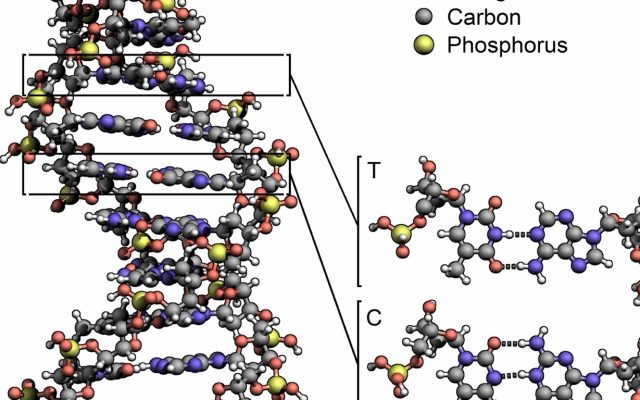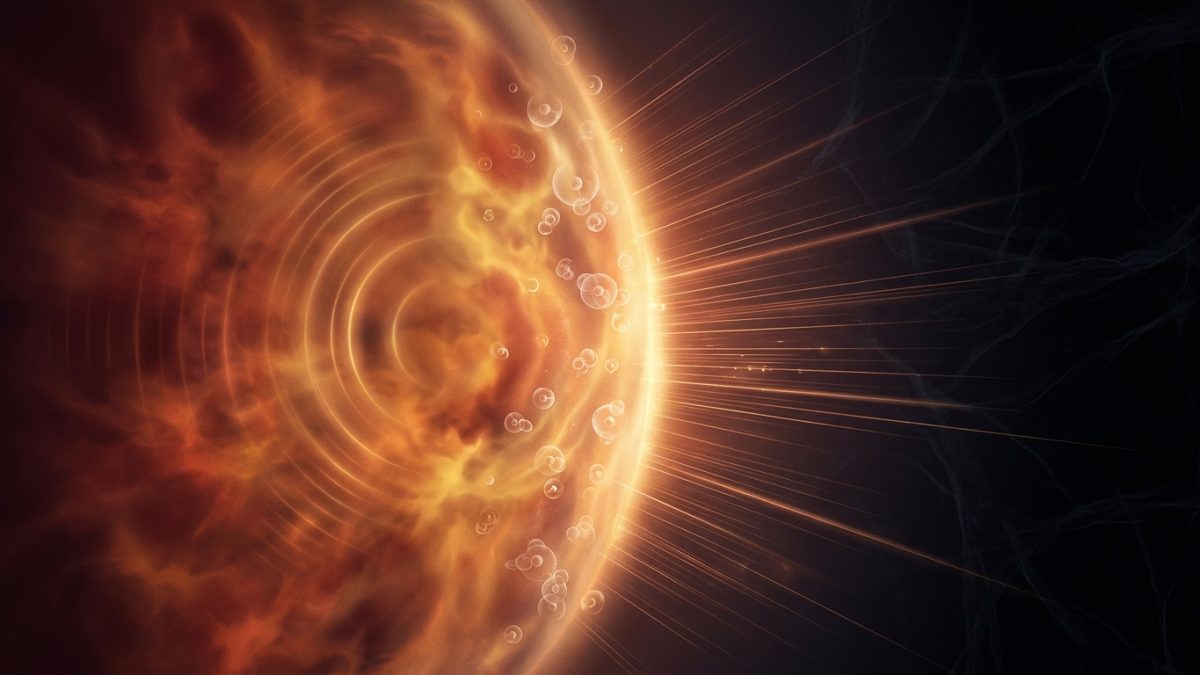
Four billion years ago, on the abyssal floor of Earth’s dark, anoxic primordial ocean, a miraculous qualitative phase transition took place. Inorganic rocks began to behave like living cells. Within the porous mineral micro-chambers of alkaline hydrothermal vents, sustained natural electrochemical proton gradients drove the reduction of carbon dioxide into organic molecules. In this chemical incubator, catalytic strands of ribonucleic acid (RNA) learned to store digital information and duplicate themselves—crossing the cosmic threshold from physics and geochemistry into self-sustaining biological evolution.
What is Life? The Thermodynamic Challenge
To understand how life began, we must first define what life actually does in physical terms. In 1944, quantum pioneer Erwin Schrödinger published “What is Life?”, proposing that living organisms survive by drawing negative entropy (Δ S < 0) from their environment. A living organism is not a static object like a diamond or a rock; it is a non-equilibrium dissipative structure—a continuous vortex of matter and energy that maintains internal structural order by degrading high-grade chemical energy and dissipating low-grade waste heat into its surroundings.
Modern biochemists define a minimal living system by three interconnected pillars:
- 1. Compartmentalization: A semi-permeable physical boundary (lipid membrane) that separates the internal biochemical system from the chaotic external environment, preventing vital biomolecules from diffusing into oblivion.
- 2. Continuous Metabolism: A self-sustaining network of chemical reactions that harvests external energy and carbon to synthesize cellular components and maintain an electrochemical charge across the membrane.
- 3. Digital Genetic Information: Linear polymeric molecules (RNA or DNA) capable of storing sequence data that directs catalytic machinery, replicates with high fidelity, and exhibits Darwinian heritable variation.
Beyond the Primordial Soup: Why the Miller-Urey Flask was Incomplete
In 1953, Stanley Miller and Harold Urey conducted their famous spark-discharge experiment at the University of Chicago. By firing high-voltage electric sparks through a glass flask containing water, methane (CH₄), ammonia (NH₃), and hydrogen (H₂), Miller synthesized over twenty different amino acids, the chemical building blocks of proteins. For half a century, school textbooks taught that lightning striking a “primordial organic soup” in a warm pond gave birth to life.
However, modern cosmochemistry and planetary geology revealed two fatal problems with the open-soup hypothesis:
1. The Neutral Atmosphere
Analysis of mantle oxidation states in Hadean zircons proves that early volcanic outgassing produced a weakly reducing or neutral atmosphere dominated by carbon dioxide (CO₂) and nitrogen (N₂), with only trace amounts of methane and hydrogen. When Miller-style spark experiments are repeated with CO₂ and N₂, amino acid yields drop to nearly zero.
2. The Dilution and Concentration Problem
Even if organic molecules rained into the open ocean, the volume of Earth’s hydrosphere (1.4 × 10^{21} liters) would dilute them to vanishingly low nanomolar concentrations. Furthermore, polymerizing amino acids into proteins or nucleotides into RNA is a condensation reaction that eliminates a water molecule (A + B → AB + H₂O). In an open ocean filled with water, Le Chatelier’s principle thermodynamically favors hydrolysis (breaking polymers apart) rather than polymer synthesis!
The Deep-Sea Alkaline Vent: Earth’s Natural Electrochemical Reactor
In 1989, geochemist Michael Russell proposed a revolutionary paradigm that has become the preeminent scientific model for abiogenesis: life originated not in sunlit surface ponds, but in deep-sea alkaline hydrothermal vents (such as the modern “Lost City” hydrothermal field discovered in 2000 along the Mid-Atlantic Ridge).
Crucially, Russell’s model does not point to violent, volcanic “Black Smokers” (which spew acidic water at 350°C that destroys fragile biomolecules). Instead, it identifies mild, off-axis Alkaline Vents driven by a low-temperature geochemical reaction between seawater and mantle peridotite: Serpentinization.
$$\text{Olivine} + \text{Water} \to \text{Serpentine} + \text{Brucite} + \text{Magnetite} + \text{Hydrogen } (\text{H}_2)$$
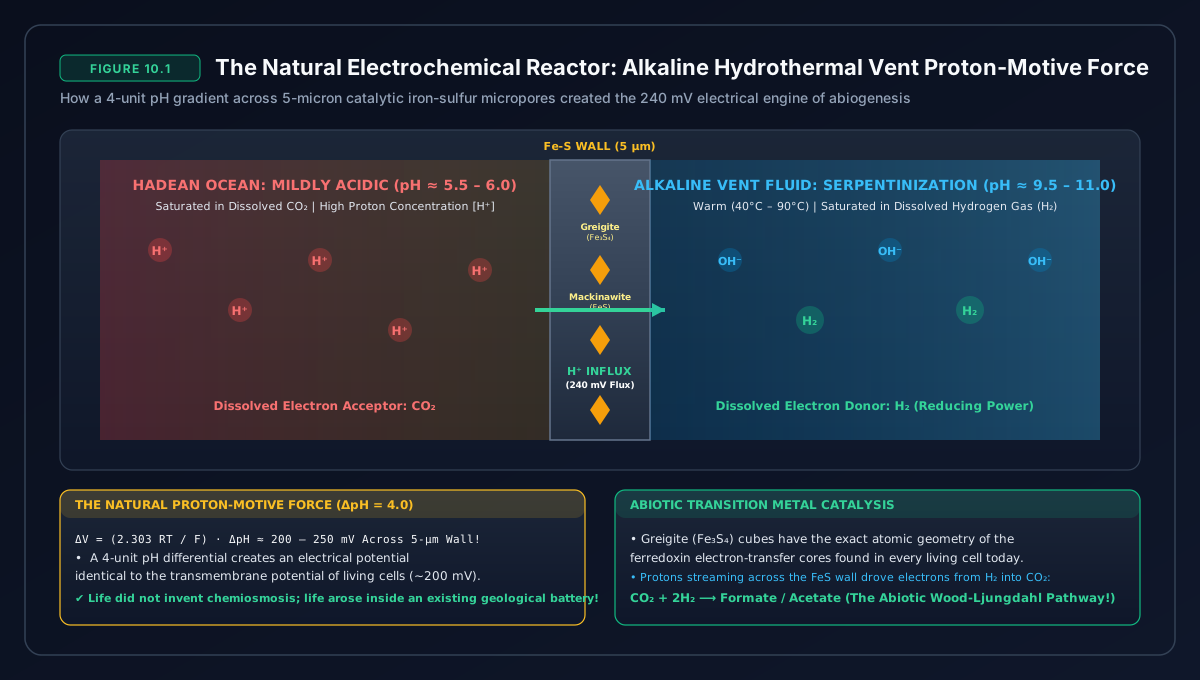
Serpentinization generates warm (40°C to 90°C), strongly alkaline fluids (pH 9 to 11) saturated with dissolved hydrogen gas (H₂), methane, and hydrosulfide (HS⁻). When these alkaline fluids seep upward into the Hadean ocean floor, they encounter the primordial ocean—which was mildly acidic (pH 5.5 to 6.0) due to hundreds of bars of dissolved atmospheric CO₂.
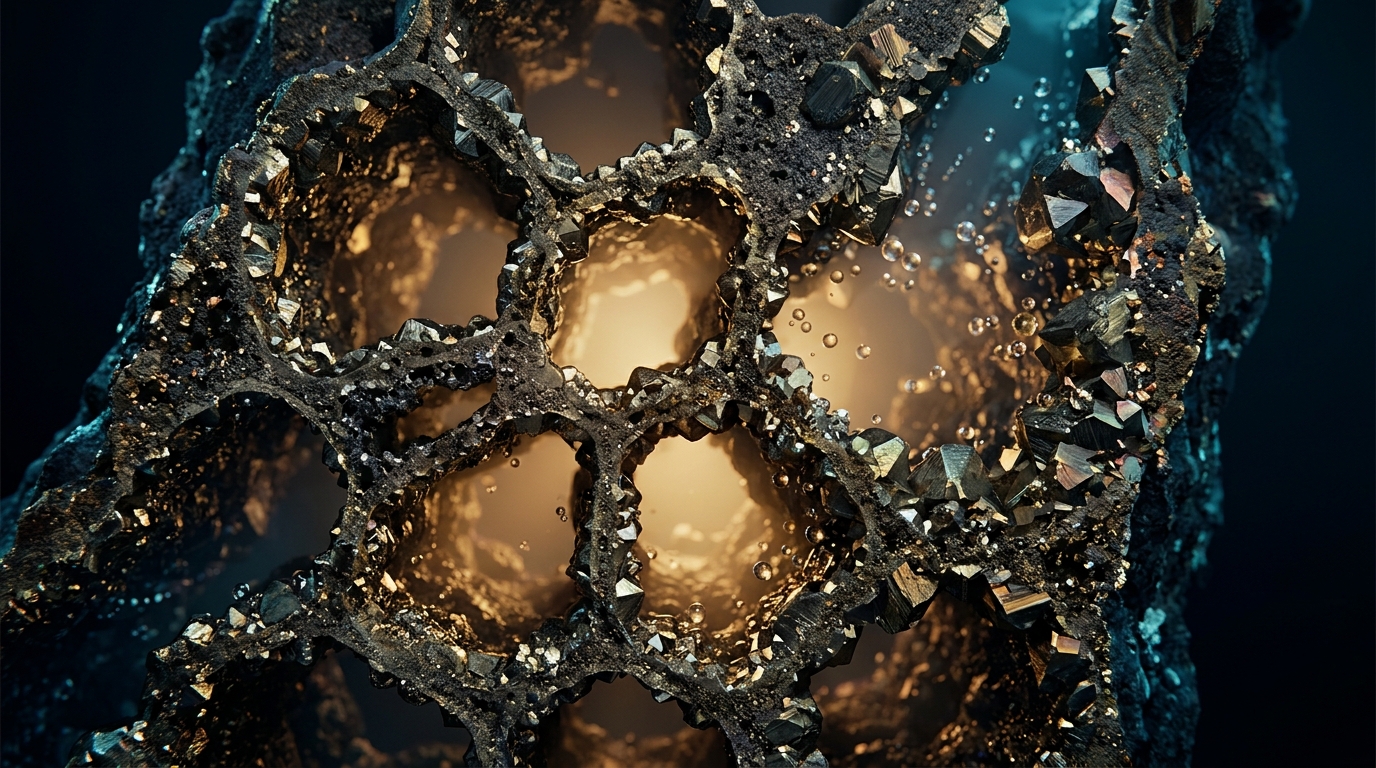
At the interface, calcium carbonate and iron-sulfur minerals (greigite, mackinawite) precipitated to build towering chimneys riddled with microscopic, interconnected inorganic chambers (micropores 10 to 100 micrometers across). Across the thin, catalytic, semi-conducting iron-sulfur walls of these pores, there existed an innate, natural pH gradient: a differential of 4 to 5 pH units, creating a voltage of roughly 200 to 300 millivolts!
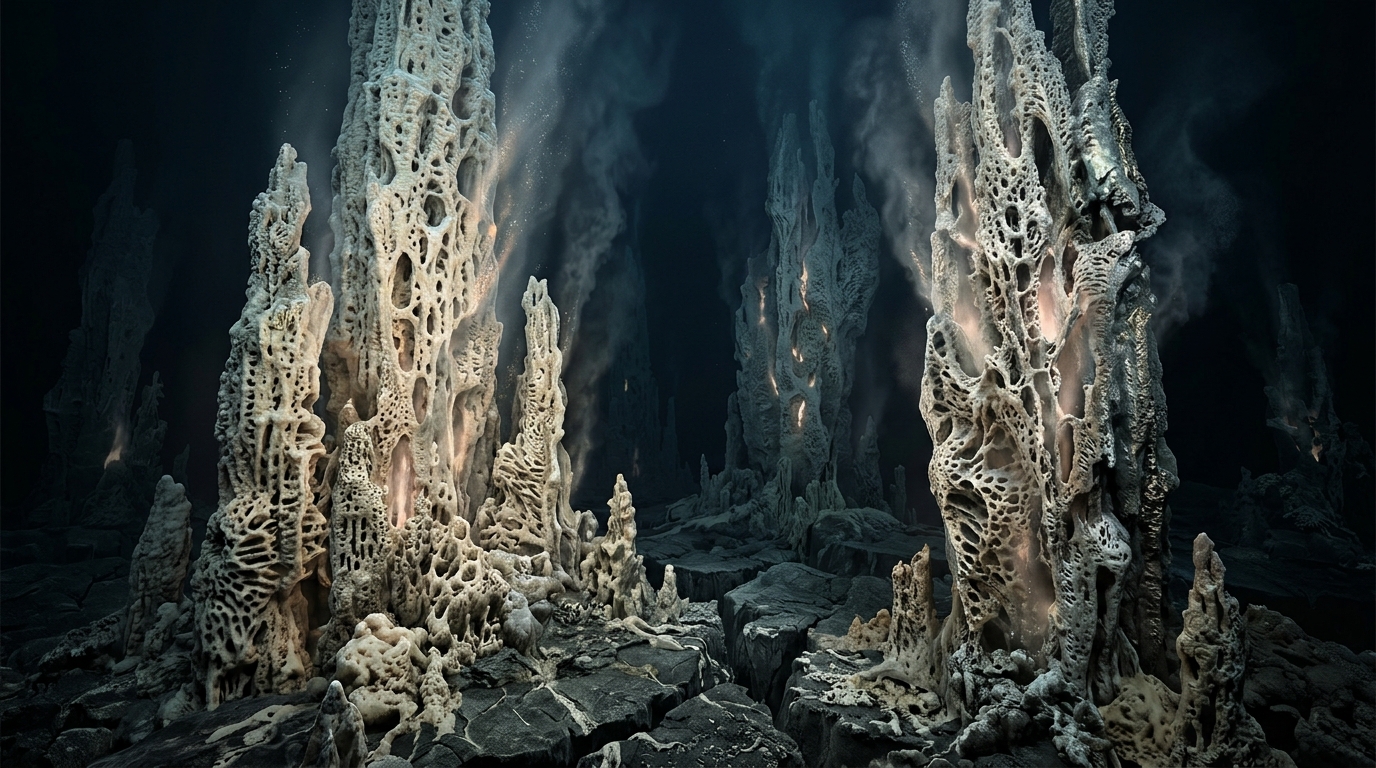
This natural electrical gradient across mineral walls is identical in magnitude, polarity, and orientation to the proton-motive force (~ 200 mV) that every living cell on Earth uses today to generate ATP via Peter Mitchell’s chemiosmotic coupling! Before cells evolved lipid membranes and protein proton pumps, they utilized the geological battery of the Earth itself.
The Ancient Engine: The Wood-Ljungdahl Pathway
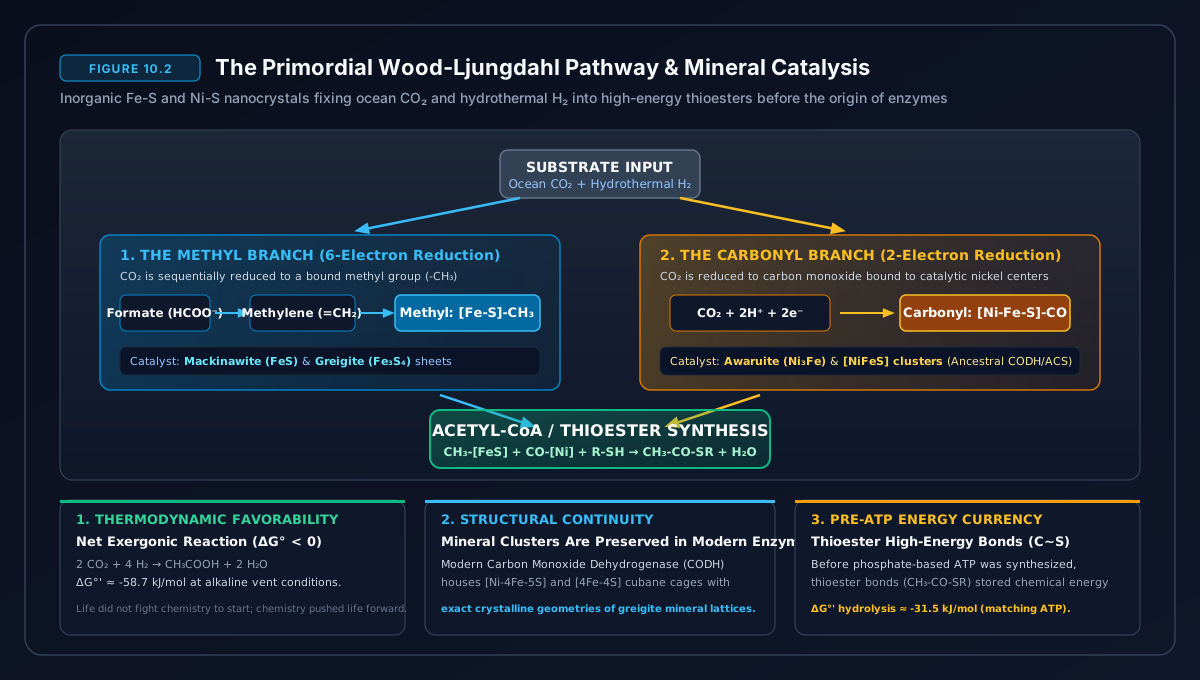
How did inorganic carbon dioxide become organic molecules? The most ancient metabolic pathway known to biology is the Wood-Ljungdahl (acetyl-CoA) Pathway. It is the only carbon-fixation pathway found in both ancient Archaea (methanogens) and Bacteria (acetogens), and the only one that releases energy rather than consuming it:
$$\text{CO}_2 + 2\text{H}_2 \to \text{Formate} / \text{Acetate} + \text{H}_2\text{O} \quad (\Delta G^\circ < 0)$$
Inside the vent micropores, the catalytic iron-sulfur minerals (FeS and NiS) acted as primitive, inorganic precursors to modern biological enzymes (such as carbon monoxide dehydrogenase and ferredoxin). Driven by the natural proton gradient across the mineral barrier, hydrogen transferred electrons directly to dissolved CO₂, synthesizing formate, acetate, pyruvate, and acetyl-thioesters—the foundational building blocks of biochemistry.
The RNA World: Solving the Molecular Chicken-and-Egg Paradox
In modern biology, life operates through a strict division of labor between two classes of macromolecules:
- DNA (The Blueprint): Possesses high chemical stability to store genetic code, but is completely inert and cannot catalyze chemical reactions or replicate itself.
- Proteins (The Workers): Fold into intricate three-dimensional enzymes that carry out all catalytic and metabolic tasks, but cannot store or transmit heritable digital code.
DNA requires proteins to replicate; proteins require DNA to specify their amino acid sequences. How could either have originated in the absence of the other?
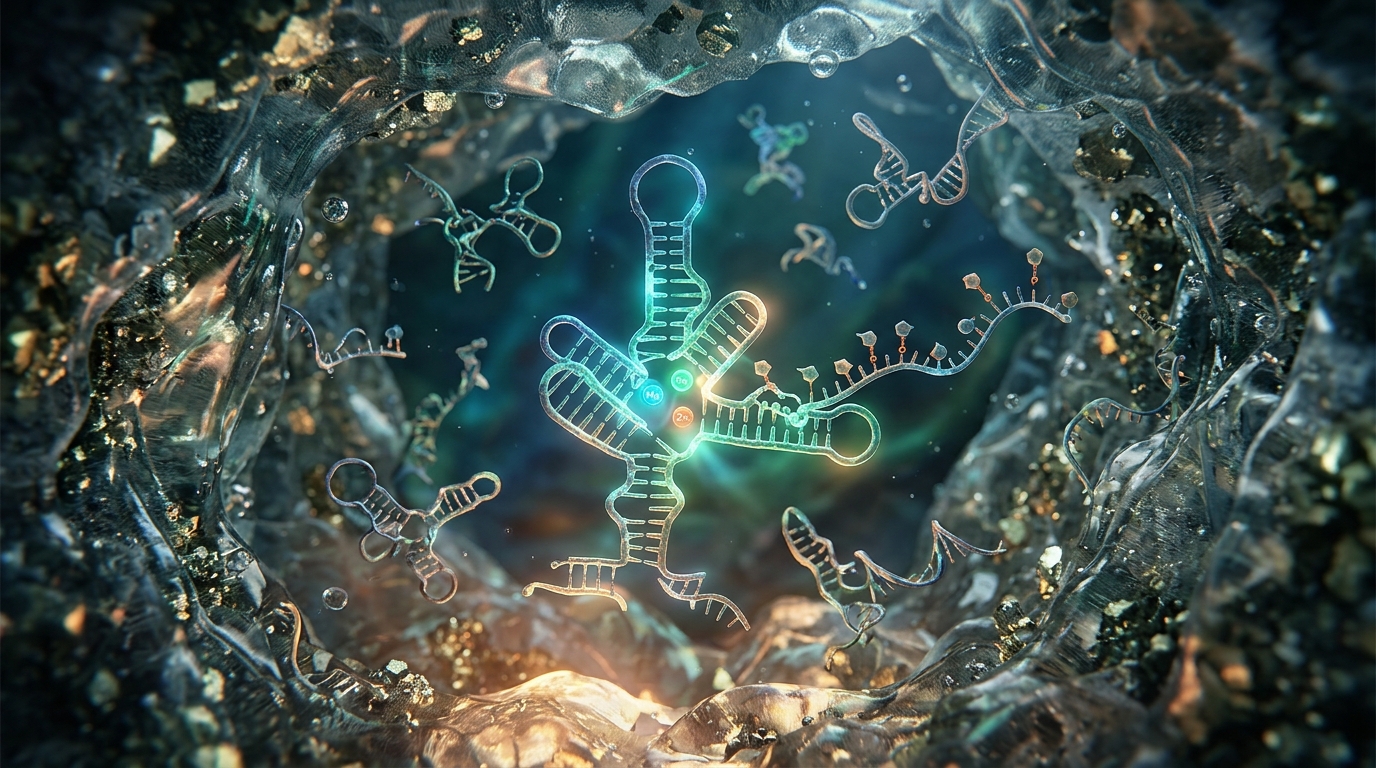
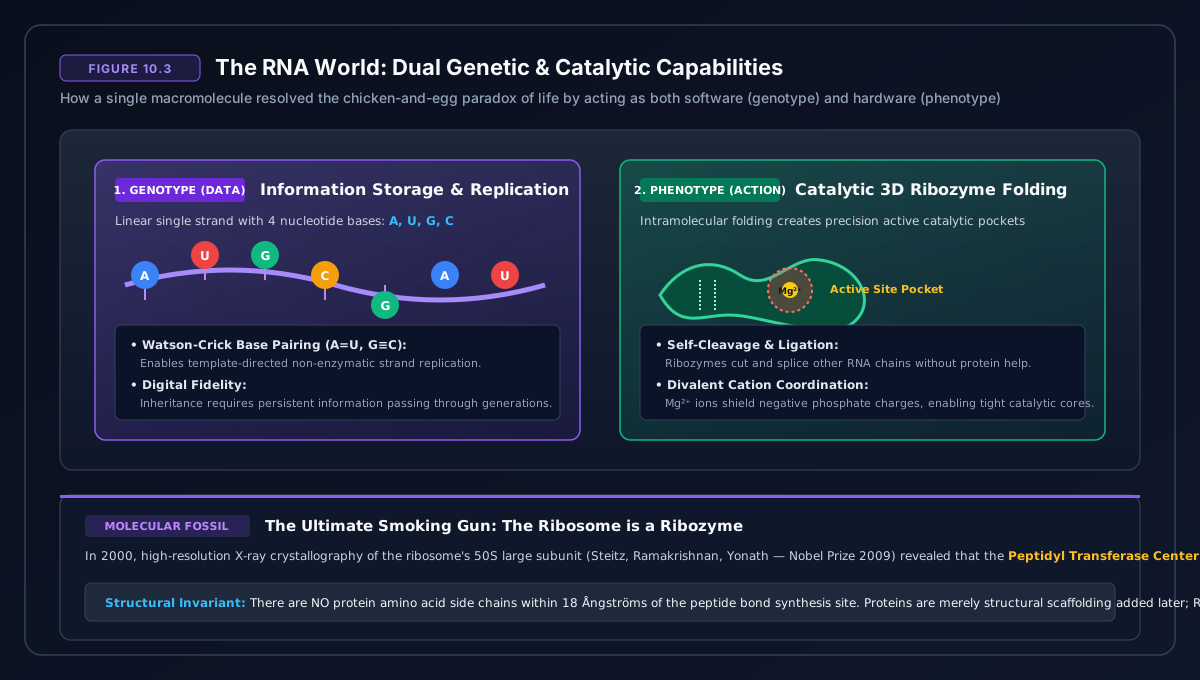
In the 1980s, Thomas Cech and Sidney Altman discovered that Ribonucleic Acid (RNA) can perform both functions simultaneously! In addition to storing digital genetic information via its four nucleotide bases (Adenine, Cytosine, Guanine, Uracil), single-stranded RNA can fold back on itself into complex tertiary structures that act as true catalytic enzymes, termed Ribozymes.
The smoking gun of this evolutionary transition was revealed when structural biologists mapped the atomic structure of the Ribosome—the universal molecular factory in all living cells that builds proteins: the active catalytic site where amino acids are forged together (the peptidyl transferase center) is composed 100% of ribosomal RNA, with zero protein enzymes involved! Proteins are literally the evolutionary creation of ancient, catalytic RNA.
During the RNA World epoch (t ≈ 4.0 to 3.8 billion years ago), self-assembling nucleotides (synthesized via formamide and cyanide pathways catalyzed by ultraviolet light and mineral surfaces) concentrated inside hydrothermal micropores via thermophoresis (thermal convection currents). Over millions of cycles of temperature and hydration fluctuations, RNA polymers grew, folded into catalytic ribozymes, and evolved the ability to catalyze their own template-directed replication.
The Cellular Exodus: Escaping the Mineral Matrix
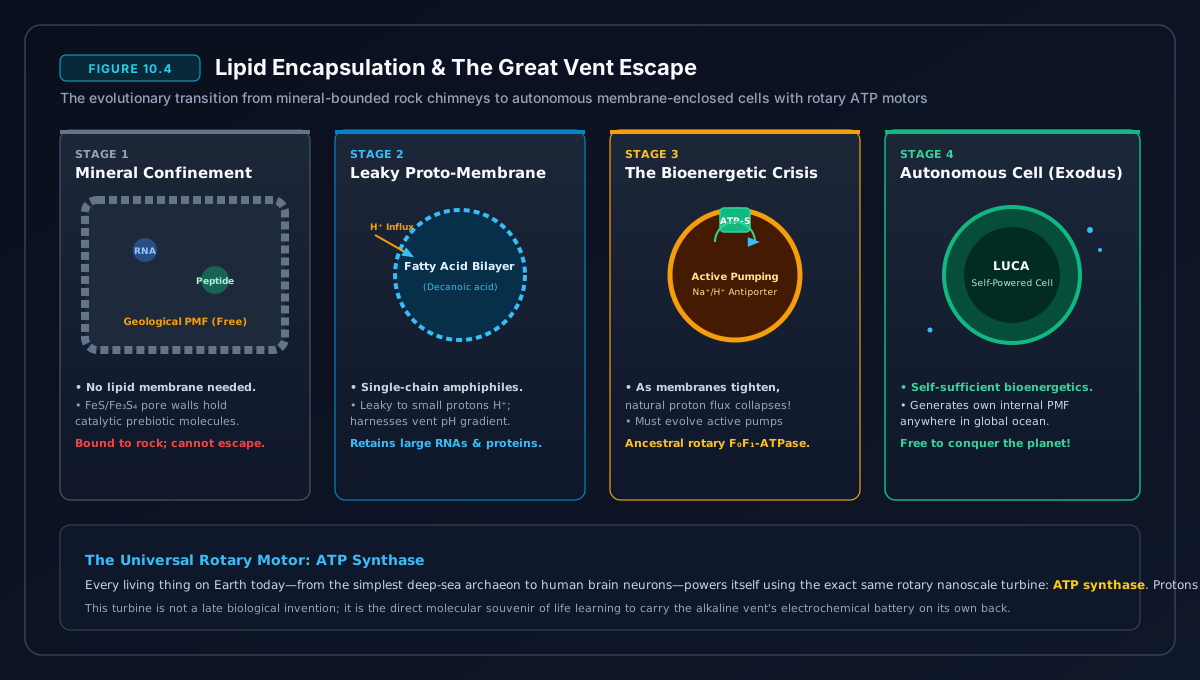
As catalytic RNA and metabolic reactions flourished inside the inorganic mineral cavities, another spontaneous physical process was underway: lipid self-assembly. Simple single-chain amphiphilic fatty acids (such as decanoic acid and glycerol phosphate) spontaneously aggregate into stable, microscopic bilayer vesicles (liposomes) when suspended in water.
Eventually, self-replicating RNA and peptide networks became encapsulated inside these lipid vesicles. To escape dependence on the geological proton gradients of the vent chimney, these proto-cells evolved their own membrane-bound proton pumps (precursors to the F_1F_0-ATP synthase complex). Once a proto-cell could maintain its own proton gradient across its own lipid membrane, it was free. It detached from the mineral vent chimney and drifted freely into the open ocean.
LUCA: The Common Root of All Earthly Life
Every living organism that breathes, crawls, swims, or computes on Earth today—from the gut bacterium E. coli to an oak tree, a blue whale, or a human engineer—traces its uninterrupted biological lineage back to a solitary population of ancient single-celled organisms: LUCA (The Last Universal Common Ancestor), living roughly 3.8 to 4.0 billion years ago.
In 2016, genomicist William Martin and his team sequenced over 6.1 million prokaryotic genes and identified 355 universal gene families shared across ancient Bacteria and Archaea. From these conserved genes, LUCA’s exact biological portrait emerged:
- Environment: An obligate anaerobe living in a hot, dark, geochemically active hydrothermal environment rich in H₂, CO₂, and iron.
- Metabolism: Autotrophic, utilizing the Wood-Ljungdahl pathway to fix inorganic carbon directly using transition-metal clusters ([Fe_4S_4] and [NiFeS]).
- Genetic Machinery: Possessed a universal genetic code, a DNA genome, transcribed messenger RNA, and synthesized proteins using a modern 20-amino-acid ribosome.
Prebiotic Geochemistry vs. Universal Living Cell Architecture
| Biochemical Feature | Hydrothermal Vent Prebiotic Origin | Modern Cellular Execution (LUCA & Descendants) |
|---|---|---|
| Compartmentalization | Microporous iron-sulfur/carbonate chimneys | Lipid bilayer cell membrane with embedded transport proteins |
| Energy Driving Force | Natural geological ΔpH gradient (9 → 6) | Chemiosmotic proton-motive force powering F_1F_0-ATP synthase |
| Carbon Fixation | Inorganic serpentinization & FeS catalysis | Wood-Ljungdahl (acetyl-CoA) metabolic pathway |
| Catalytic Machinery | Greigite ([Fe_4S_4]) & Mackinawite minerals | Ferredoxin, hydrogenase, and metalloenzyme cofactors |
| Information Storage | Catalytic, self-replicating Ribozymes (RNA World) | Double-stranded DNA genome with RNA intermediaries |
| Protein Synthesis | Peptide bonds catalyzed on RNA templates | Universal 70S/80S Ribosome (100% RNA catalytic core) |
The Great Divergence: Bacteria and Archaea
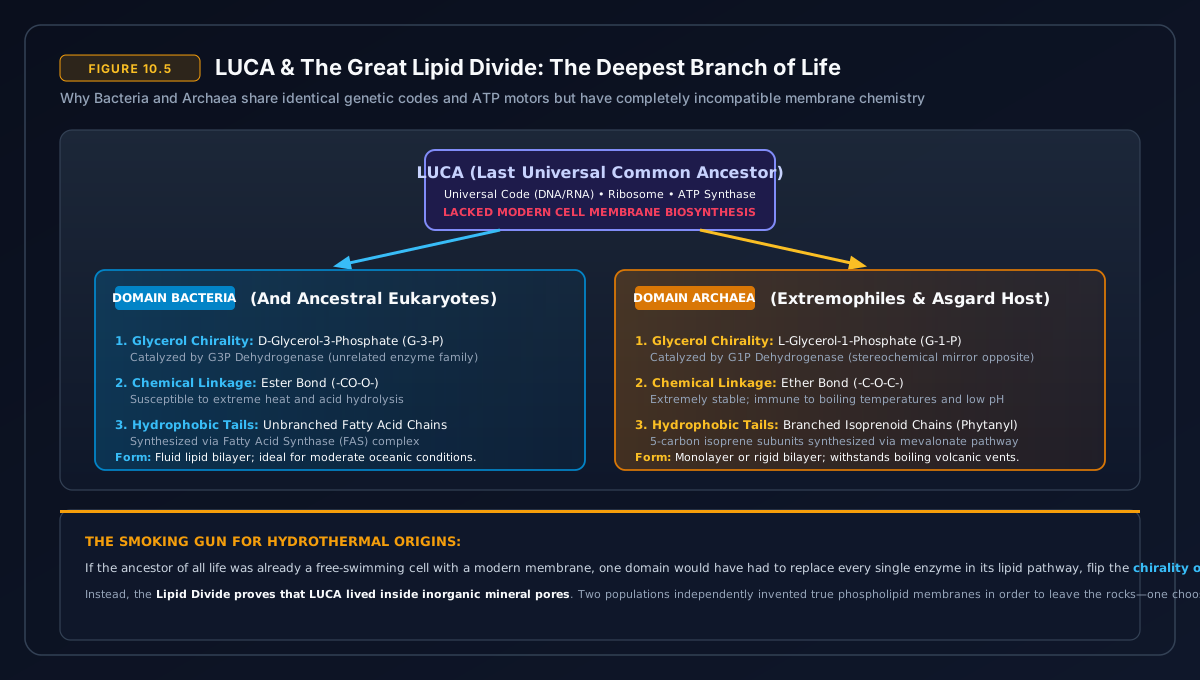
Shortly after emerging from the vents, LUCA branched into the two primary domains of cellular life: Bacteria and Archaea. Interestingly, while both domains share an identical genetic code and core ribosome, their cell membrane lipids are fundamentally different:
- Bacterial Lipids: Unbranched fatty acids bound to D-glycerol via ester linkages.
- Archaeal Lipids: Branched isoprenoid hydrocarbon chains bound to L-glycerol via chemical ether linkages—providing immense structural stability that allowed Archaea to conquer extreme environments (hyper-saline pools, boiling acidic hot springs, and deep subsurface crust).
For the next billion years, Bacteria and Archaea held undisputed dominion over the planet. They colonized every drop of the global ocean, metabolizing hydrogen, sulfur, iron, and methane in complete darkness. But in the sunlit surface waters of the ocean, a group of photosynthetic bacteria was quietly developing a biochemical invention that would reshape the geology of the entire planet: oxygenic photosynthesis.
In Part 11 of The Universal Chronicle, we will explore the most catastrophic and miraculous transformation in Earth’s history: The Oxygen Catastrophe & The Miracle — Cyanobacteria, the Great Oxidation Event, and the Huronian Snowball Earth.
Academic Citations & Foundational Literature
- Miller, S. L. (1953). “A Production of Amino Acids Under Possible Primitive Earth Conditions.” Science, 117(3046), 528–529. doi:10.1126/science.117.3046.528.
- Russell, M. J., & Hall, A. J. (1997). “The emergence of life from iron monosulphide bubbles at a submarine hydrothermal redox and pH front.” Journal of the Geological Society, 154(3), 377–402. doi:10.1144/gsjgs.154.3.0377.
- Martin, W., & Russell, M. J. (2003). “On the origins of cells: a hypothesis for the evolutionary transitions from abiotic geochemistry to chemoautotrophic prokaryotes, and from replicating physical compartmentalization to biochemical organizations.” Philosophical Transactions of the Royal Society of London. Series B: Biological Sciences, 358(1429), 59–85. doi:10.1098/rstb.2002.1183.
- Lane, N., Allen, J. F., & Martin, W. (2010). “How energy flow shaped the evolution of life.” Nature, 467, 929–936. doi:10.1038/nature09486.
- Gilbert, W. (1986). “Origin of life: The RNA world.” Nature, 319, 618. doi:10.1038/319618a0.
- Cech, T. R. (1986). “A model for the RNA-catalyzed replication of RNA.” Proceedings of the National Academy of Sciences, 83(12), 4360–4363. doi:10.1073/pnas.83.12.4360.
- Weiss, M. C., et al. (2016). “The physiology and habitat of the last universal common ancestor.” Nature Microbiology, 1, 16116. doi:10.1038/nmicrobiol.2016.116.