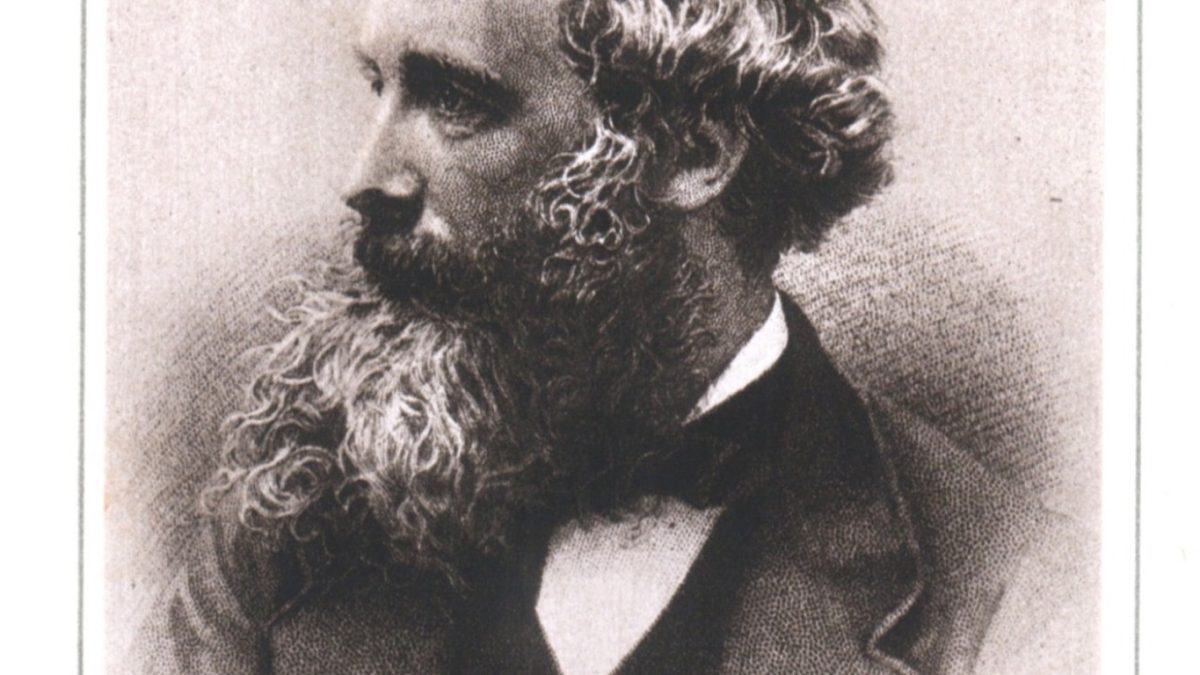
In 1865, Scottish mathematical physicist James Clerk Maxwell published “A Dynamical Theory of the Electromagnetic Field”, achieving what Richard Feynman later characterized as the most significant event of the nineteenth century: the mathematical synthesis of electricity, magnetism, and optics into four unified differential equations.
The Separate Streams: Coulomb, Ampère, and Faraday
For centuries, electricity and magnetism were investigated as distinct empirical oddities. Amber rubbed with fur attracted feathers; lodestones aligned along terrestrial meridians. The first quantitative bridge arrived in 1785 when Charles-Augustin de Coulomb formulated the inverse-square law for electrostatic charges:
$$F = frac{1}{4pi varepsilon_0} frac{q_1 q_2}{r^2}$$
The paradigm shattered in the spring of 1820 when Hans Christian Ørsted demonstrated during a lecture demonstration that an electric current in a wire deflected a nearby magnetic compass needle. Within months, André-Marie Ampère quantified the magnetic force between current-carrying conductors, and Jean-Baptiste Biot and Félix Savart mapped the geometry of magnetic fields circling currents.
Yet it was Michael Faraday—a self-taught blacksmith’s apprentice with intuitive geometric genius but minimal formal mathematical training—who revolutionized physics by proposing the concept of the field (lines of magnetic force). In 1831, Faraday made his crowning discovery: electromagnetic induction. A changing magnetic flux generates an electromotive force (emf):
$$mathcal{E} = -frac{dPhi_B}{dt}$$
Maxwell’s Mathematical Insight: The Displacement Current
Faraday had established that changing magnetic fields produce electric fields. Maxwell, examining Ampère’s circuital law ($nabla times mathbf{B} = mu_0 mathbf{J}$), identified a profound mathematical inconsistency when applying the divergence operator. Because the divergence of any curl is identically zero ($nabla cdot (nabla times mathbf{B}) equiv 0$), Ampère’s law implied $nabla cdot mathbf{J} = 0$, which violates the conservation of electric charge during the charging of a capacitor ($nabla cdot mathbf{J} = -frac{partial rho}{partial t}$).
Maxwell boldly introduced an extra term: the displacement current ($mathbf{J}_D = varepsilon_0 frac{partial mathbf{E}}{partial t}$). With this single theoretical addition, Maxwell realized that a changing electric field produces a magnetic field, completing a symmetrical dynamical dance.
The Four Maxwell Equations
Cast in modern vector notation by Oliver Heaviside, Maxwell’s four equations govern all classical electromagnetic phenomena:
$$nabla cdot mathbf{E} = frac{rho}{varepsilon_0} quad text{(Gauss’s Law for Electricity)}$$
$$nabla cdot mathbf{B} = 0 quad text{(Gauss’s Law for Magnetism — No Magnetic Monopoles)}$$
$$nabla times mathbf{E} = -frac{partial mathbf{B}}{partial t} quad text{(Faraday’s Law of Induction)}$$
$$nabla times mathbf{B} = mu_0 mathbf{J} + mu_0 varepsilon_0 frac{partial mathbf{E}}{partial t} quad text{(Ampère-Maxwell Law)}$$
Light as an Electromagnetic Wave
In a vacuum devoid of free charges ($rho = 0$) and currents ($mathbf{J} = 0$), Maxwell applied the curl operator to Faraday’s law and substituted the Ampère-Maxwell equation, yielding the three-dimensional wave equations for electric and magnetic fields:
$$nabla^2 mathbf{E} = mu_0 varepsilon_0 frac{partial^2 mathbf{E}}{partial t^2}, quad nabla^2 mathbf{B} = mu_0 varepsilon_0 frac{partial^2 mathbf{B}}{partial t^2}$$
Comparing this directly with the standard wave equation $nabla^2 psi = frac{1}{v^2} frac{partial^2 psi}{partial t^2}$, the wave velocity emerged from pure laboratory measurements of electric permittivity ($varepsilon_0$) and magnetic permeability ($mu_0$):
$$c = frac{1}{sqrt{mu_0 varepsilon_0}} approx 3.0 times 10^8 text{ m/s}$$
“We can scarcely avoid the inference that light consists in the transverse undulations of the same medium which is the cause of electric and magnetic phenomena.” — James Clerk Maxwell, 1865
In 1887, Heinrich Hertz confirmed Maxwell’s prediction experimentally by generating and detecting radio waves in his Karlsruhe laboratory. Optics had ceased to be an isolated discipline; it was permanently united with electricity and magnetism.