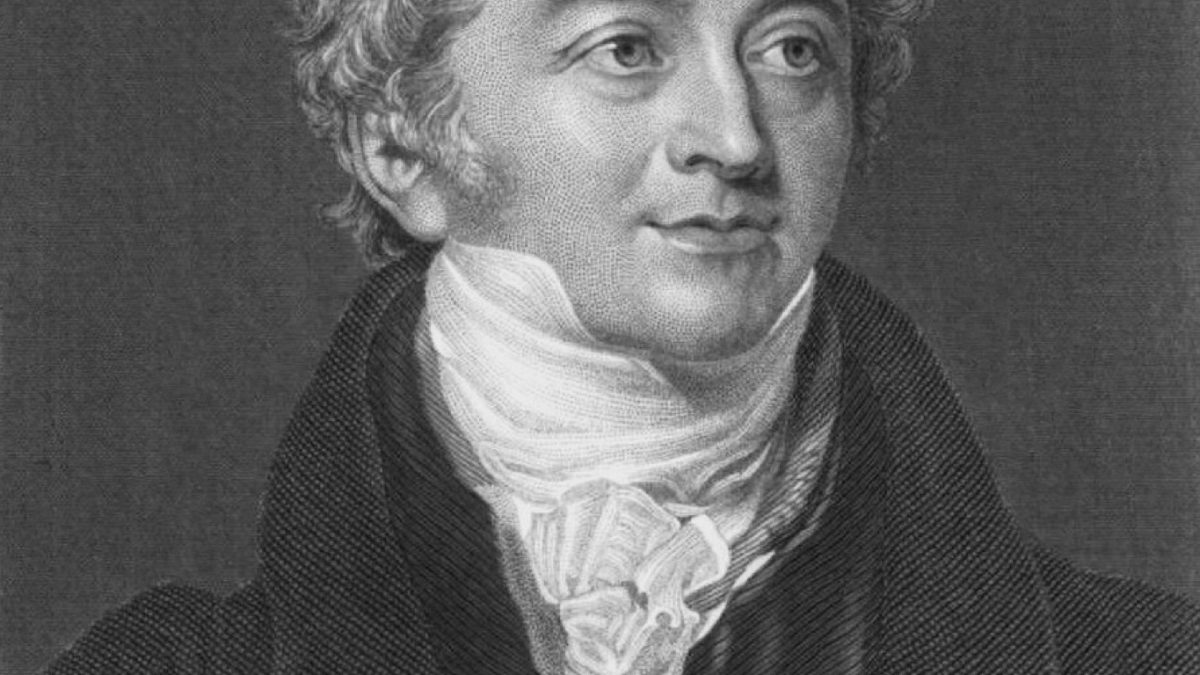
What is light? To Isaac Newton, light was an emission of discrete physical particles—”corpuscles”—traveling in straight rays, reflecting off mirrors like billiard balls. But to the Dutch mathematician Christiaan Huygens, light was a mechanical wave propagating through an invisible, elastic medium known as the ether. For more than a century, Newton’s colossal authority silenced the wave theory. It took a polymathic British physician named Thomas Young, wielding a single beam of sunlight and a pair of razor-thin slits, to prove that light is a wave.
1. Huygens’ Principle and Wavefront Geometry
In his 1678 Treatise on Light, Huygens proposed a geometric construction to explain reflection and refraction: every point on a propagating wavefront acts as a secondary source of spherical wavelets. The envelope tangent to these secondary wavelets forms the new wavefront at any subsequent moment.
Huygens demonstrated that when a wavefront passes from air into a denser medium like water or glass, it must slow down to bend toward the normal. Newton’s corpuscular theory predicted the opposite: that water particles attract light corpuscles, accelerating them into the medium. For a hundred years, experimental technology was insufficient to measure the speed of light in water to test the competing claims.
2. Thomas Young’s 1801 Double-Slit Experiment
In 1801, Thomas Young devised an experiment that bypassed the speed-of-light measurement entirely. If light consists of particles, passing it through two adjacent narrow slits onto a viewing screen should produce two bright stripes. But if light is a wave, the wavelets emerging from the two slits will overlap and interfere.
Where the crest of one wave meets the crest of another, constructive interference produces bright bands. Where a crest meets a trough, destructive interference creates darkness. Young observed not two stripes, but a stunning series of alternating bright and dark interference fringes:
Using basic trigonometry and the fringe spacing on the screen ($y_m approx frac{mlambda L}{d}$), Young performed the first calculation of the wavelengths of visible light, determining that violet light has a wavelength of approximately $400text{ nm}$ and red light approximately $700text{ nm}$.
3. Augustin-Jean Fresnel and Poisson’s Arago Spot
In 1818, the French engineer Augustin-Jean Fresnel submitted a rigorous mathematical wave theory to the Académie des Sciences. The mathematician Siméon Denis Poisson, an ardent Newtonian, sought to ridicule Fresnel’s paper by demonstrating what he believed was an absurd consequence: Fresnel’s equations implied that if light shines on a completely opaque circular disc, a bright spot of constructive interference must appear at the exact geometric center of the shadow.
François Arago performed the experiment immediately. To the astonishment of the committee, the bright spot appeared precisely at the shadow’s center. Poisson’s attempt to disprove the wave theory became its ultimate empirical triumph.