Between the fourth and third millennia BCE, in the alluvial plains between the Tigris and Euphrates rivers, humanity underwent one of its most transformative institutional mutations: the emergence of the temple-state complex. In ancient Sumerian city-states such as Uruk, Ur, Lagash, and Nippur, vast centrally administered institutions—the temple (É) and the palace (É-gal)—commanded thousands of hectares of irrigated barley fields, herds of livestock, workshops of weavers, and warehouses of dates and dried fish.
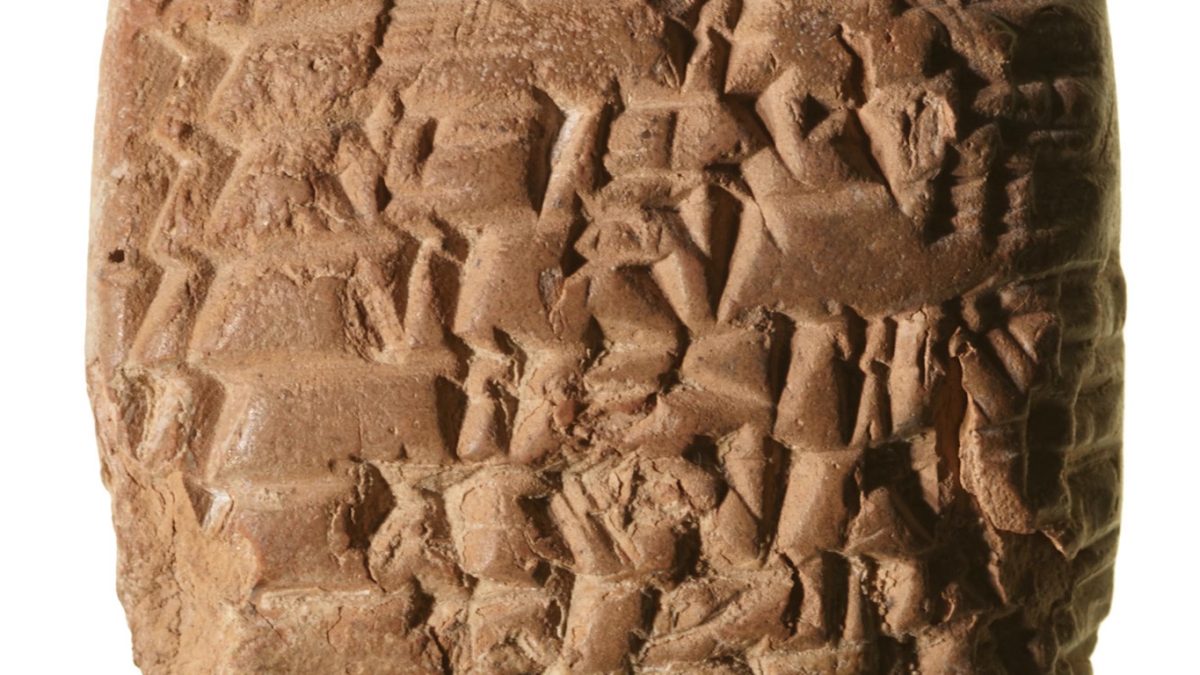
To administer this gargantuan surplus, human memory was wholly inadequate. Contrary to the prevailing classical assumption that writing was invented to record poetry or divine revelation, archaeological excavations of archaic cuneiform tablets have revealed an uncompromising administrative truth: over ninety percent of the earliest written tablets from Uruk IV and III are accounting ledgers, ration lists, tax assessments, and debt contracts. Money was invented in Mesopotamia not as a circulating piece of metal, but as an abstract bureaucratic unit of account inscribed into wet alluvial clay.
The Shekel: An Abstract Equivalence Between Grain and Silver
The monetary foundation of ancient Mesopotamia rested upon the shekel (Sumerian: gin₂, Akkadian: šiqlu). In its origin, the shekel was not a coin stamped with the portrait of a king; it was a standardized unit of weight, equivalent to approximately 8.33 grams of silver. However, silver was scarce in southern Mesopotamia and rarely circulated in the daily purchases of ordinary peasant farmers.
Instead, the temple administration established a revolutionary dual monetary standard—a state-mandated parity between silver and barley (še):
$$1 text{ Gin}_2 text{ (Silver Shekel)} = 1 text{ Gur of Barley} approx 300 text{ Liters} = 180 text{ Grains of Barley}$$
This statutory equivalence transformed the Mesopotamian economy. The temple disbursed land, seed, draught oxen, and canal water to tenant farmers on credit. The debts and lease obligations were denominated in silver shekels on cuneiform clay tablets; yet when the harvest arrived in the spring, the peasant farmer discharged the obligation in physical bushels of barley measured directly into the temple granaries.
Silver functioned as the abstract unit of account and international settlement currency between merchant guilds (tamkārum), while barley served as the domestic medium of exchange and daily subsistence currency. Money was a standardized metric of value that allowed completely dissimilar goods—wool, sesame oil, timber, and copper—to be calculated, compared, and cleared through central ledgers.
The Cuneiform Promissory Note and the Clay Envelope
By the Ur III Period (c. 2112–2004 BCE) and the Old Babylonian Period (c. 1894–1595 BCE), credit had escaped the confines of the temple walls and infused private enterprise. Merchants and landowners routinely extended loans of silver and grain, recorded on clay tablets bearing the names of witnesses and the distinctive roll-impressions of cylinder seals.
To prevent fraud—such as a debtor chipping away the quantity of barley owed—Mesopotamian scribes devised an ingenious cryptographic technology: the clay envelope (tablet-case). The scribe inscribed the exact terms of the debt on an inner clay tablet, baked or dried it, and then encased it in a second, outer layer of wet clay. The contract was written a second time on the exterior envelope and sealed with the seals of both parties. If any dispute arose regarding alterations, the outer envelope was smashed in open court before the city elders to reveal the pristine inner document.
| Anatomy of an Old Babylonian Debt Tablet | Administrative & Legal Function |
|---|---|
| Principal & Denomination: e.g., 5 Shekels of Silver | Capital advanced by the creditor (often a temple or wealthy tamkārum). |
| Interest Provision: ṣibtu | Fixed interest rate: 20% per annum for silver, 33⅓% for barley. |
| Maturity Date: ina ebūrim | “At the harvest time”—peasant farmer required to repay in grain at the threshing floor. |
| Pledge & Collateral: erubātu | Lien placed upon the borrower’s land, livestock, or family members (debt peonage). |
| Witness List & Cylinder Seals: | Notarization guaranteeing legal enforceability before the municipal assembly (puḫrum). |
The Mathematics of Mesopotamian Interest: Compound Growth vs. Real Output
Mesopotamian mathematics, operating on a base-60 (sexagesimal) numerical system, was extraordinarily sophisticated. Babylonian scribal schools trained pupils extensively in calculating interest rates, compound interest, and debt amortizations.
The standard annual interest rate was codified by imperial decree and reinforced in the Code of Hammurabi (c. 1754 BCE):
- Interest on Silver Loans: 20% per year (1/5th of principal, or 1 shekel per 5 shekels).
- Interest on Grain Loans: 33⅓% per year (1/3rd of principal, or 100 silà per gur).
Let initial principal be (P_0), the annual interest rate be (r), and time in years be (t). Under simple annual compounding, the nominal debt obligation accumulates according to:
$$P(t) = P_0 (1 + r)^t$$
At an annual interest rate of (r = 0.20), a debt doubles in approximately 3.8 years ((t = frac{ln 2}{ln 1.20} approx 3.80)). In Babylonian mathematics problems preserved on tablets from Susa and Nippur, students were explicitly tasked with calculating: “How long will it take for 1 shekel of silver to become 64 shekels?” (The answer: 6 doubling periods, or approximately 23 years).
Here lay the profound existential flaw of the ancient credit economy: debt compounds exponentially, whereas agricultural yields and biological populations grow arithmetically and face physical bottlenecks (floods, locusts, soil salinization). When adverse weather struck the Euphrates valley, peasant farmers could not service their compounding liabilities. Creditors foreclosed on family plots, seized cattle, and forced the farmer’s children and wives into debt bondage (slavery).
The Royal Clean Slate: Andurārum and the Jubilee Tradition
Had market forces been permitted to run unchecked, Mesopotamian society would have collapsed into catastrophic feudal polarization, reducing free citizens to landless serfs and leaving the monarch without an army or taxable peasantry. To prevent this systemic breakdown, Babylonian and Sumerian kings exercised a supreme macroeconomic safety valve: The Royal Clean Slate (Sumerian: amargi, Akkadian: andurārum or mīšarum).
“When a king ascended the throne, or during years of severe drought and famine, he issued an edict of *mīšarum* (equity): he ‘raised the golden torch’ and declared all agrarian debts null and void. Peasants held in debt servitude were set free, and ancestral agricultural lands were restored to their original owners.”
— Michael Hudson, …and forgive them their debts (2018)
Crucially, royal clean slates applied exclusively to non-commercial agrarian debts owed by citizens to the state or private oligarchs; commercial business loans between merchants remained fully enforceable. This ancient Mesopotamian practice of periodic debt jubilees was directly assimilated into Hebrew law in the Book of Leviticus (Chapter 25), giving rise to the biblical concept of the Jubilee Year every fifty years: “And ye shall hallow the fiftieth year, and proclaim liberty throughout all the land unto all the inhabitants thereof.”
Conclusion: The Ledger as the True Ancestor of Money
The archaeology of ancient Mesopotamia dismantles the myth that money originated as physical gold and silver coins that individuals carried in purses. Two millennia before the first Greek coin was minted, the Near East operated an advanced civilization with sophisticated financial institutions, interest rates, credit instruments, legal contracts, and central ledgers. Money did not start as a tangible metal token; it started as an abstract metric of social debt and an institutional ledger inscribed in the clay of the Euphrates.