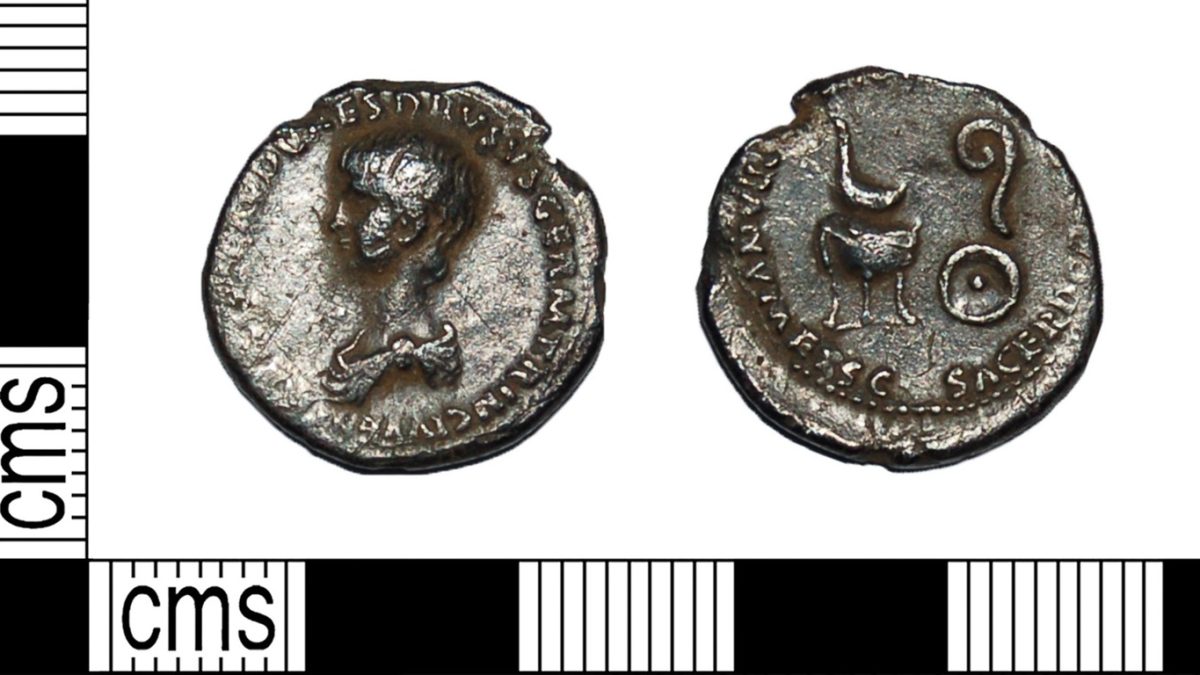
In the year 27 BCE, Gaius Octavius—crowned Augustus Caesar—inaugurated the Pax Romana and established an empire-wide monetary system anchored by the silver denarius. Weighing approximately 3.9 grams of 95% to 98% pure silver, the Augustan denarius served as the lifeblood of Roman commerce and military power. It was the coin in which the legions were paid, imperial grain was purchased in Alexandria, and taxes were remitted from the Atlantic shores of Hispania to the sands of Syria. Yet within three centuries, this mighty silver standard suffered one of the most catastrophic debasements in monetary history, plunging from near-pure silver to a bronze slug washed in a microscopic skin of silver wash.
The tragedy of the denarius reveals an enduring law of political economy: when a sovereign empire faces structural fiscal deficits, military expansion costs, and an inability to raise taxes, it will inevitably resort to the invisible tax of currency debasement. Rome’s economic trajectory from the Julio-Claudians to the Reforms of Diocletian provides the foundational historical case study of hyperinflation, wage-price controls, and systemic monetary disintegration.
The Slippery Slope of Debasement: From Nero to Marcus Aurelius
The precedent of currency debasement was set in 64 CE by Emperor Nero. Facing massive expenditures following the Great Fire of Rome and the lavish construction of his palace complex (the Domus Aurea), Nero enacted a monetary reform that permanently altered the empire’s trajectory:
- He reduced the weight of the gold aureus from 1/40th of a Roman pound (8.18g) to 1/45th (7.28g).
- He reduced the weight of the silver denarius from 1/84th of a pound (3.9g) to 1/96th (3.41g).
- Crucially, he lowered the silver fineness of the denarius from ~98% to approximately 90%, diluting the coin with 10% base copper.
To the imperial treasury, debasement appeared to be pure alchemy. For every 100 denarii worth of unrefined silver bullion melted down at the Capitoline mint, the state could strike 110 denarii of newly alloyed coins. The emperor retained the difference as an immediate cash windfall—known as seigniorage ((S)):
$$S = M_{text{nominal}} – (C_{text{metal}} + C_{text{production}})$$
Where (M_{text{nominal}}) is the face value declared by state decree, (C_{text{metal}}) is the intrinsic cost of the bullion, and (C_{text{production}}) is the minting labor cost. Under Nero, seigniorage transformed from a minor administrative fee into an indispensable tool of imperial deficit financing.
| Roman Emperor & Era | Silver Fineness (%) | Silver Content (Grams) | Fiscal / Military Trigger |
|---|---|---|---|
| Augustus (27 BCE – 14 CE) | ~98.0% | 3.82 g | Establishment of professional standing army and imperial treasury. |
| Nero (54–68 CE) | ~90.0% | 3.07 g | Great Fire of Rome; construction of Domus Aurea. |
| Trajan (98–117 CE) | ~85.0% | 2.75 g | Dacian Wars; lavish public building projects across Rome. |
| Marcus Aurelius (161–180 CE) | ~75.0% | 2.50 g | Antonine Plague (halving of tax base) and Marcomannic Wars. |
| Septimius Severus (193–211 CE) | ~50.0% | 1.65 g | Doubling of legionary pay; civil war consolidation. |
| Caracalla (211–217 CE) | ~50.0% | 1.60 g (Introduced Antoninianus) | Massive bribes to legions; citizenship decree to expand tax base. |
| Gallienus (253–268 CE) | < 2.0% | 0.05 g | Crisis of the Third Century; Germanic invasions; Persian capture of Valerian. |
Gresham’s Law and the Disappearance of Good Silver
As the Severan emperors flooded the marketplace with denarii that contained equal parts copper and silver, the Roman public responded with classic monetary behavior codified centuries later as Gresham’s Law: “Bad money drives out good.”
Let there exist two currencies circulating with the identical nominal face value ((FV)): good money ((M_g)) possessing higher intrinsic bullion value ((V_g)), and bad money ((M_b)) possessing lower bullion value ((V_b)), such that (V_g > V_b). Because the state mandates by legal tender law that both must be accepted at par:
$$text{Arbitrage Incentive} = V_g – V_b > 0$$
Rational economic agents across the Roman provinces immediately sorted their coins. They spent the debased, copper-heavy denarii to settle taxes and daily debts, while hoarding the high-silver denarii of Augustus and Trajan in clay jars beneath their floorboards, or melting them into private jewelry and export bullion. Over three decades of intensive debasement, sound silver completely vanished from circulation across the Mediterranean.
The Crisis of the Third Century and Hyperinflation
Between 235 and 284 CE, the Roman Empire was engulfed by the Crisis of the Third Century. Over fifty rival generals claimed the imperial purple; plague decimated cities; the Sasanian Empire crushed Roman armies in the east, capturing Emperor Valerian alive; and Germanic confederations breached the Rhine and Danube frontiers. To bribe troops to support precarious claims to the throne, successive barracks emperors had no recourse but the printing press of antiquity: the mint.
Under Emperor Gallienus (260s CE), the silver coin (now the double-denarius or antoninianus) reached its nadir: a mere 1.5% silver. The coins were essentially cast iron or bronze dipped momentarily in a sulfurous silver salt solution to give them a fleeting, deceptive sheen. Within weeks of circulation, the thin silver skin rubbed off in pockets, revealing the ugly copper beneath.
Prices exploded. Because merchants realized the coins contained virtually no precious metal, they raised nominal prices exponentially. In Roman Egypt, where dry sands have preserved extensive papyrus business records, the price of a modius of wheat climbed from 2 drachmas in the second century to over 100,000 drachmas by the late third century—an annualized inflation rate that destroyed the Roman urban middle class, eliminated long-term contracts, and forced rural communities to revert to feudal barter and self-sufficiency.
Diocletian’s Totalitarian Response: The Edict on Maximum Prices (301 CE)
In 284 CE, an authoritarian military reformer from Illyria, Diocletian, restored political stability and reunited the fractured empire into the Tetrarchy. Confronted by runaway inflation and the refusal of soldiers to accept worthless base-metal coins, Diocletian enacted one of the most famous economic blunders of antiquity: the Edict on Maximum Prices (Edictum de Pretiis Rerum Venalium, 301 CE).
Rather than acknowledging that state debasement was the root cause of the inflation, Diocletian blamed the crisis entirely on the “greed” and “unbridled avarice” of merchants. The Edict established draconian price ceilings for over 1,000 commodities, services, and freight rates across the entire empire—from a pound of pork to a day’s labor of a stonemason—with the penalty for exceeding the price ceiling set as death.
“For who is so hard-hearted and devoid of human feeling that he cannot see that uncurbed avarice is raging in the markets where our troops are stationed… Therefore, it is our pleasure that prices should be set, not to restrict the freedom of trade, but to check greed by capital punishment.”
— Preamble to the Edict on Maximum Prices (301 CE)
The economic outcome was immediate and disastrous. As the contemporary Christian writer Lactantius observed in De Mortibus Persecutorum, merchants refused to bring grain and goods to market at the statutory prices. Vast shortages materialized overnight; black markets proliferated; riots erupted; and numerous citizens were executed for trivial infractions. Within months, the Edict became completely unenforceable and fell into total abeyance.
Constantine and the Gold Solidus: The Anchor of Byzantium
Realizing that the silver denarius was beyond resurrection, Diocletian’s successor, Constantine the Great (reigned 306–337 CE), executed a profound monetary reset: he abandoned the silver standard and re-anchored the empire to a brand-new gold coin, the Solidus.
Struck at 1/72nd of a Roman pound (exactly 4.54 grams of pure gold), the Solidus was strictly protected from debasement. By confiscating the gold treasuries of pagan temples across the empire and imposing heavy gold taxes on senators and merchants, Constantine accumulated a massive gold reserve. While the lower classes were left with worthless bronze copper coins, the imperial elite and military were paid in unyielding gold.
The Constantine Solidus (and its later Byzantine incarnation, the Nomisma or Besant) maintained its exact weight and 98%+ purity for an astonishing seven hundred years, serving as the international reserve currency of Europe and the Levant throughout the Dark Ages until the eleventh century. Rome fell in the West; but its sound gold standard sustained Constantinople for nearly a millennium.
Conclusion: The Timeless Lessons of Roman Debasement
The story of the Roman denarius proves that the laws of monetary physics are immune to imperial decrees. An emperor may command legions and claim divine authority, but he cannot legislate value into worthless copper. Debasement inevitably triggers Gresham’s hoarding, hyperinflation, the destruction of commerce, and the breakdown of civic trust. Rome did not fall merely to barbarian swords; it rotted from within through the slow, irresistible poison of monetary dilution.