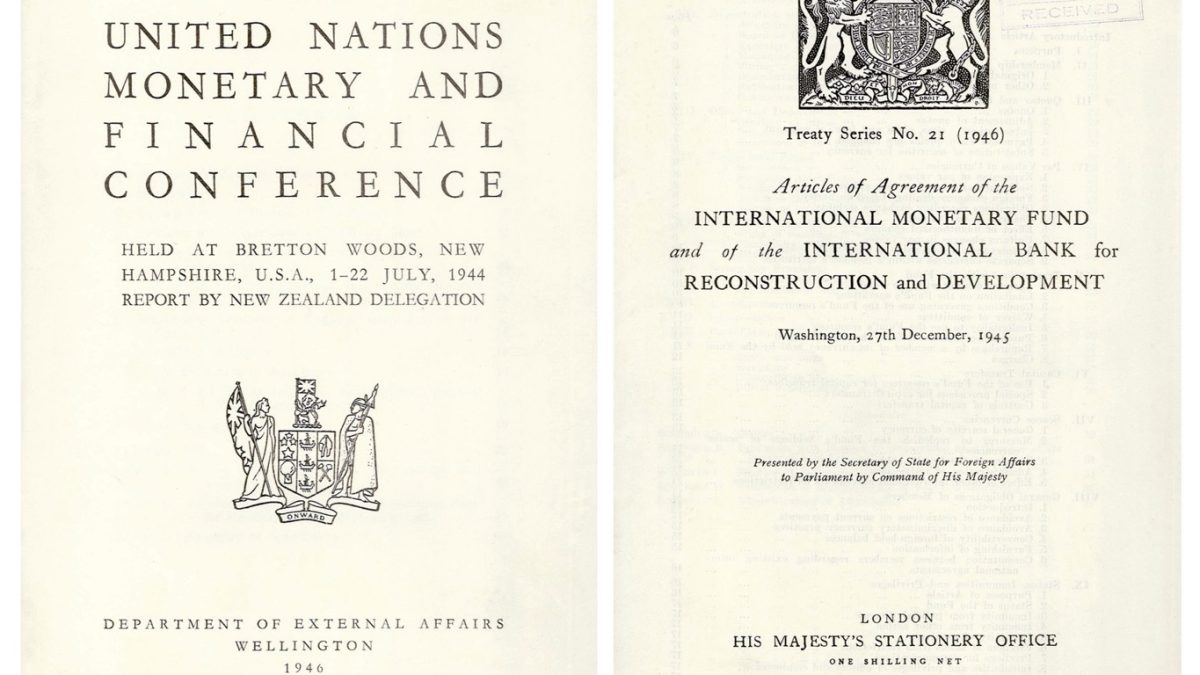
In the sweltering summer heat of July 1944, while Allied armies were fighting their way through the hedgerows of Normandy and Soviet forces were crushing the Wehrmacht in Operation Bagration, 730 delegates from forty-four nations assembled in the secluded mountain valleys of northern New Hampshire. Their gathering place was the grand, colonnaded Mount Washington Hotel in the remote resort village of Bretton Woods. They had not gathered to strategize military tactics, but to accomplish a task of equal historical magnitude: to design the post-World War II global economic architecture, rebuild international trade, and ensure that the economic nationalism, currency wars, and competitive devaluations that had spawned fascism and world war could never happen again.
The three-week conference witnessed one of the greatest intellectual and geopolitical showdowns in history: the clash of titans between the world’s most brilliant economic theorist, John Maynard Keynes, representing a bankrupt but proud British Empire, and Harry Dexter White, the shrewd, pugnacious chief international economist of the United States Treasury. The resulting Bretton Woods Agreement forged the modern global monetary system: it established the US Dollar as the global reserve currency backed by gold at $35 per ounce, anchored fixed exchange rates, and birthed the twin institutional guardians of globalization: the International Monetary Fund (IMF) and the World Bank.
The Diagnosis: Beggar-Thy-Neighbor and the Collapse of Interwar Trade
The delegates at Bretton Woods were haunted by the catastrophic collapse of the international monetary system between 1919 and 1939. Following the suspension of the gold standard in World War I, nations had engaged in destructive, zero-sum economic warfare:
- Competitive Devaluations: Nations deliberately slashed the value of their currencies to make exports artificially cheap and export domestic unemployment abroad—a predatory policy known as “beggar-thy-neighbor.”
- Bilateral Clearing & Autarky: Hjalmar Schacht in Nazi Germany developed restrictive bilateral trade pacts and exchange controls, forcing Eastern European and Latin American nations into subservient economic satellites.
- Imperial Tariff Blocs: Britain established the Imperial Preference system at the Ottawa Conference of 1932, ring-fencing the British Empire behind high protective tariffs and locking out foreign goods.
Between 1929 and 1932, the physical volume of world trade plummeted by an astonishing 66%. The architects at Bretton Woods recognized that economic autarky and currency volatility were the direct breeding grounds of political totalitarianism and aggressive militarism. The world required an institutional architecture that combined the stability of fixed exchange rates with the flexibility to prevent domestic depressions.
The Clash of Titans: Keynes’s Bancor vs. White’s Dollar
The conference resolved into a profound ideological duel between two men who held fundamentally divergent national interests and economic philosophies:
| Architectural Element | The Keynes Plan (British Proposal) | The White Plan (American Reality) |
|---|---|---|
| Central Institution: | International Clearing Union (ICU): A global bank of central banks with automated overdraft facilities. | Stabilization Fund (The IMF): A pooled quota fund providing conditional, subscription-based loans. |
| Global Reserve Currency: | The Bancor: A neutral, synthetic international unit of account independent of any sovereign nation. | The US Dollar: Linked directly to gold at $35/oz; all other currencies pegged to the dollar. |
| Adjustment Mechanism: | Symmetric Adjustment: Compulsory penalties and demurrage fees levied on chronic surplus nations (like the US). | Asymmetric Burden: The entire burden of fiscal austerity and devaluation falls exclusively on deficit nations. |
| Size of Reserves: | Massive overdraft quotas: approximately $26 billion to fund post-war recovery. | Constrained subscription fund: strictly capped at $8.8 billion to limit US liabilities. |
Keynes’s visionary proposal for the Bancor anticipated the fundamental flaw that would eventually destroy the Bretton Woods system decades later (the Triffin Dilemma). Keynes recognized that if a single national currency (the US dollar) served as global reserve money, that nation would be forced to run persistent trade and fiscal deficits to supply liquidity to the rest of the world, ultimately undermining confidence in its own gold backing.
To prevent this, Keynes designed the Bancor as a purely synthetic supranational credit unit. Crucially, Keynes insisted on symmetric adjustment: nations that ran persistent trade surpluses (like the United States in 1944) would be charged escalating negative interest rates on their idle Bancor balances, forcing them to reinvest profits, lower tariffs, and buy goods from deficit nations.
However, geopolitical power eclipsed economic theory. The United States held all the cards: by 1944, America possessed over 70% of the world’s official monetary gold reserves (over twenty thousand metric tons housed in Fort Knox), while Britain was deeply indebted, bombed-out, and dependent on American Lend-Lease shipments for survival. Harry Dexter White brushed aside the Bancor. The dollar, White insisted, was as good as gold. The American Empire would dictate the terms.
The Bretton Woods Architecture: The Gold-Exchange Standard
The final Articles of Agreement, signed on July 22, 1944, established the Gold-Dollar Standard. The architecture rested upon a two-tier mechanism:
$$text{Tier 1: } text{US Dollar is pegged to Gold: } 1 text{ Ounce of Gold} = $35.00 text{ USD}$$
$$text{Tier 2: } text{All Other Currencies are pegged to the US Dollar: } e_i = frac{text{Currency}_i}{$ text{ USD}} pm 1%$$
- The United States Treasury committed to convert US dollars held by foreign central banks into physical gold at the fixed statutory rate of $35 per ounce upon demand.
- All forty-three other member nations pegged their domestic currencies to the US dollar at fixed parities, agreeing to intervene in foreign exchange markets to maintain their exchange rates within a narrow band of (pm 1%).
- Exchange rates were “pegged but adjustable”: nations experiencing a “fundamental disequilibrium” in their balance of payments were permitted to devalue or revalue their currencies with the formal approval of the IMF, avoiding the agonizing, prolonged deflation of the classical gold standard.
- To allow domestic governments to pursue full employment policies without being overwhelmed by speculative hot-money flows, the agreement explicitly authorized capital controls to restrict cross-border speculative capital movements.
The Twin Institutions: The IMF and the World Bank
To administer this new economic order, Bretton Woods created two landmark permanent multilateral institutions headquartered in Washington, D.C.:
- The International Monetary Fund (IMF): Conceived as an international credit union. Member nations contributed quotas of gold and domestic currency. The Fund’s purpose was to provide short-term emergency liquidity loans to countries facing balance-of-payments crises, allowing them to stabilize their currencies without resorting to competitive devaluations or trade barriers. Voting power was proportional to financial quotas, ensuring that the United States maintained an effective veto over major decisions.
- The International Bank for Reconstruction and Development (IBRD / The World Bank): Conceived as a long-term developmental lender. Its initial mandate was to finance the physical reconstruction of war-torn Europe and Asia. Once European reconstruction was superseded by the Marshall Plan in 1948, the World Bank pivoted toward its enduring modern mission: providing long-term infrastructure and development capital to the emerging economies of the Global South.
Conclusion: The Golden Age of Postwar Growth
The Bretton Woods conference achieved its core objective: it established an environment of monetary stability that presided over the greatest period of sustained economic expansion in human history—the post-war “Golden Age of Capitalism” (known in France as Les Trente Glorieuses, 1945–1975). Global trade surged by an average of 8% annually, living standards skyrocketed, and Western economies enjoyed near-zero unemployment and rapid productivity growth.
Yet embedded within the foundations of Bretton Woods lay the very time bomb Keynes had prophesied: the dollar was a national currency forced to perform a global duty. As war-devastated Europe and Japan recovered, their burgeoning export economies would accumulate mountains of paper dollars, until the gold vaults of Fort Knox could no longer guarantee the promises made at the Mount Washington Hotel.