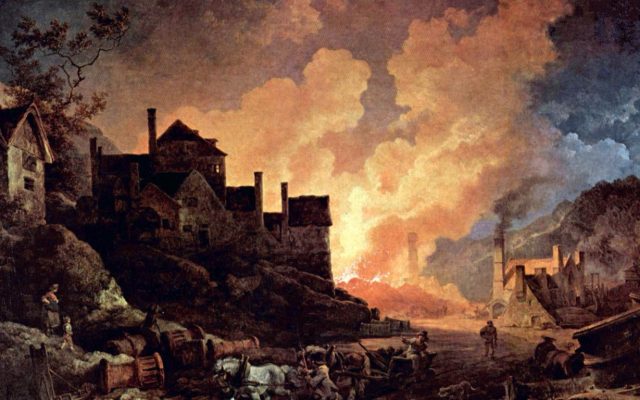
On Friday, May 11, 1866, the financial nerve center of the British Empire was gripped by blind, unreasoning terror. The venerable London discount house of Overend, Gurney and Company—known in the City of London as the “Bankers’ Bank,” an institution second in financial gravity only to the Bank of England itself—slammed its heavy oak doors and suspended payments with liabilities exceeding nineteen million pounds sterling. Known to history as “Black Friday,” the collapse triggered an immediate, catastrophic run across Lombard Street. Mobs of depositors besieged banking halls, demanding gold sovereigns; interest rates surged to panic highs; credit evaporated; and the entire commercial paper clearing system of global trade ground to a shuddering halt.
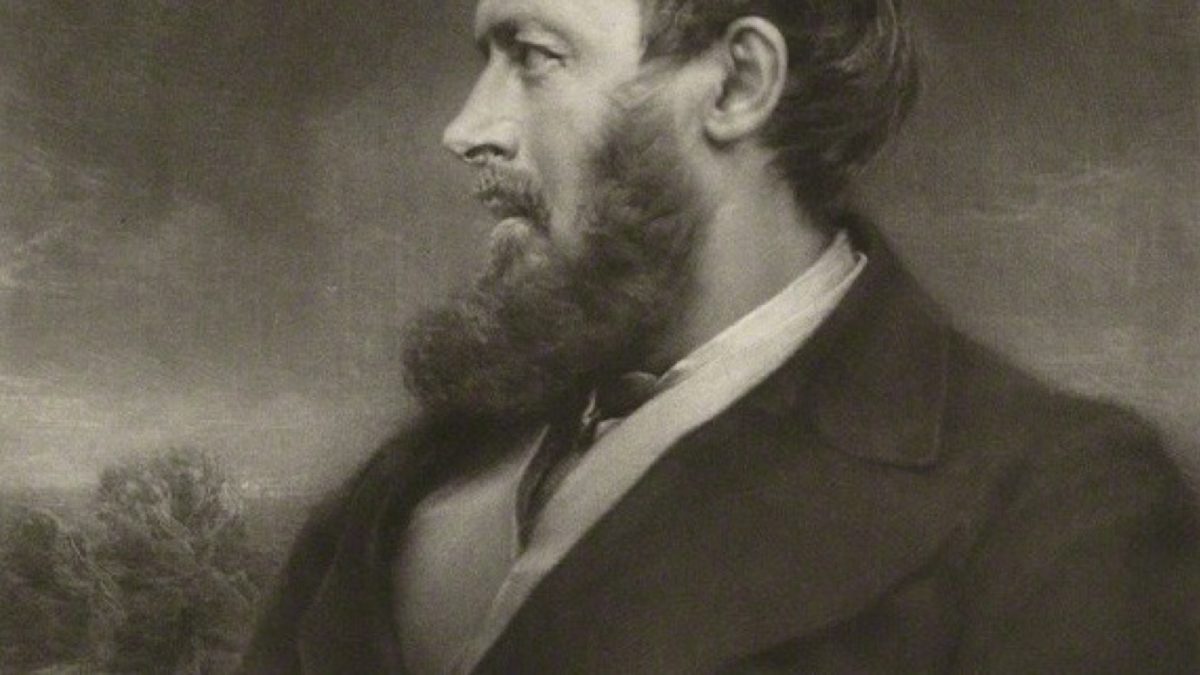
The Panic of 1866 brought to a head a fundamental institutional dilemma that had plagued fractional-reserve banking since its inception: when a systemic liquidity crisis strikes, who possesses the duty and the power to halt the contagion? In the aftermath of the crash, the brilliant Victorian journalist, political theorist, and editor of The Economist, Walter Bagehot (1826–1877), published an intellectual masterpiece that defined the architecture of modern central banking: Lombard Street: A Description of the Money Market (1873). In its pages, Bagehot codified the timeless operational doctrine of the Lender of Last Resort.
The Structural Vulnerability of Fractional-Reserve Banking
To comprehend why modern financial markets require a central lender of last resort, one must understand the inherent structural fragility of fractional-reserve banking. A commercial bank is fundamentally an institution engaged in maturity transformation: it borrows short-term liquid liabilities (demand deposits that customers can withdraw at any second) and converts them into long-term illiquid assets (mortgages, commercial loans, industrial bonds).
Under normal macroeconomic conditions, the law of large numbers shields the bank: only a tiny fraction of depositors ever withdraw their cash on any given day. But in moments of panic, this architecture becomes violently unstable. Let (D) be total deposits, (R) be physical cash reserves, and (A_{text{illiquid}}) be long-term assets, such that:
$$text{Balance Sheet: } D = R + A_{text{illiquid}} quad text{where } R ll D$$
If a rumor circulates that a bank is insolvent, every individual depositor faces a classic Game-Theoretic Prisoner’s Dilemma. If a customer queues first, they recover 100% of their cash; if they wait and the reserves (R) run dry, they receive nothing. Therefore, even if the bank’s underlying assets (A_{text{illiquid}}) are completely sound, the rational behavior of individual depositors generates a self-fulfilling stampede—a bank run—that forces the bank to liquidate its assets at fire-sale prices, turning an artificial liquidity crunch into fatal real insolvency.
Bagehot’s Dictum: The Rules of Crisis Management
Throughout the early nineteenth century, the Bank of England had viewed itself primarily as a private, profit-maximizing joint-stock corporation owned by its private shareholders. During panics (in 1825, 1837, and 1847), the Bank had frequently hoarded its own gold reserves and refused to discount bills for terrified commercial banks, exacerbating the panic and driving solvent businesses into the wall.
Bagehot mounted a fierce, uncompromising attack on this parochial selfishness. He argued that because the Bank of England held the nation’s ultimate gold reserve and enjoyed statutory government privileges, it owed an absolute fiduciary duty to the public: it must act as the systemic protector of the entire monetary order. In Chapter VII of Lombard Street, Bagehot laid down what has entered economic canon as Bagehot’s Dictum:
“In a panic, the Bank of England must advance its money on everything which in common times is considered good banking security… The advances should be made on all good banking securities, and as largely as the public ask for them… Secondly, that these loans should only be made at a very high rate of interest.”
— Walter Bagehot, Lombard Street (1873)
| Core Principle of Bagehot’s Dictum | Operational Mechanism | Macroeconomic & Psychological Objective |
|---|---|---|
| 1. Lend Freely (Open-Handed Liquidity): | Provide unlimited cash to any solvent institution facing a run. | Extinguish panic by demonstrating that liquidity is inexhaustible; fear evaporates when people see there is no shortage of cash. |
| 2. At a Penalty Rate of Interest ((r_{text{penalty}} gg r_{text{market}})): | Charge an interest rate significantly above normal market rates. | Discourages frivolous borrowing; ensures banks repay the emergency loans the instant the panic subsides. |
| 3. Against Good Collateral at Normal Values: | Accept any security that is considered sound in ordinary peacetime. | Prevents predatory fire-sales; values collateral at long-term intrinsic worth, not at temporary panic-distressed prices. |
| 4. Punish Insolvency, Rescue Illiquidity: | Liquidate unviable firms whose liabilities exceed assets. | Mitigates Moral Hazard; ensures the state does not bail out incompetent or fraudulent management. |
The Moral Hazard Dilemma: Solvency vs. Liquidity
The central intellectual challenge identified by Bagehot is the razor’s edge between liquidity and solvency:
- An Illiquid Institution: An enterprise whose total assets exceed its liabilities ((text{Assets} > text{Liabilities})), but whose assets cannot be converted into cash instantly without catastrophic losses. This institution must be saved.
- An Insolvent Institution: An enterprise whose liabilities permanently exceed the true value of its assets ((text{Liabilities} > text{Assets})), regardless of time. This institution must be allowed to fail.
If a central bank bails out insolvent banks, it creates catastrophic Moral Hazard ((text{MH})): commercial bankers recognize that they can privatize speculative profits during booms while socializing catastrophic losses to the taxpayer or central bank during busts. Bagehot’s penalty rate and strict collateral requirements were designed precisely to ensure that emergency assistance was painful enough to discourage reckless risk-taking.
From Lombard Street to the 21st Century: The Legacy of Bagehot
Bagehot’s principles fundamentally redefined the mandate of central banking worldwide. In the Baring Crisis of 1890—when the historic merchant bank Baring Brothers faced collapse over defaulted Argentine sovereign bonds—the Bank of England flawlessly executed Bagehot’s playbook, organizing an international syndicate and guaranteeing Baring’s commercial paper, completely averting panic.
When the Global Financial Crisis struck in September 2008, and again when the COVID-19 pandemic froze financial markets in March 2020, Federal Reserve Chairman Ben Bernanke and central bankers across the globe explicitly cited Walter Bagehot as their operational patron saint. The alphabet soup of emergency facilities—the Primary Dealer Credit Facility (PDCF), the Commercial Paper Funding Facility (CPFF), and emergency swap lines—were modern algorithmic implementations of Bagehot’s 1873 injunction: lend freely, on good collateral, at a penalty rate.
Conclusion: The Custodians of Monetary Trust
Walter Bagehot transformed central banking from an art of secretive corporate privilege into a science of public responsibility. He demonstrated that in moments of extreme financial terror, market forces alone cannot clear the wreckage; the sovereign state must stand ready to deploy its unbacked balance sheet to restore psychological certainty. By establishing the lender of last resort, Bagehot constructed the shock absorber that has permitted the complex engine of global capitalism to survive its inevitable panics for more than a century.