The twentieth century unfolded as the most violent, technologically accelerated, and geopolitically transformative epoch in the annals of civilization. Between 1914 and 1991, humanity navigated the apocalyptic industrial slaughter of two World Wars, the horror of the Holocaust, the detonation of atomic weaponry, and the worldwide collapse of European colonial empires. Locked in the ideological standoff of the Cold War, rival superpowers pushed science to the edge of thermonuclear annihilation while simultaneously launching humanity into the cosmos.
The Great War: The Suicide of Imperial Europe (1914–1918)
In August 1914, the intricate European balance of power shattered into World War I. Industrial manufacturing technology, which had promised progress and ease, was turned toward mechanized slaughter:
- Trench Stalemate: From the Swiss border to the North Sea, millions of soldiers dug into muddy, rat-infested trenches behind impenetrable barbed-wire entanglements.
- Industrialized Warfare: The lethal convergence of rapid-fire machine guns (Maxim guns), hydraulic recoil artillery firing millions of high-explosive shrapnel shells, chlorine and mustard poison gases, and the debut of the tank eliminated individual martial glory, reducing combat to industrial attrition.
- The Fall of Dynasties: The war liquidated four historic continental empires: the Romanovs in Russia (igniting the 1917 Bolshevik Revolution under Vladimir Lenin), the Hohenzollerns in Germany, the Habsburgs in Austria-Hungary, and the Ottomans in the Middle East.
The vengeful terms of the 1919 Treaty of Versailles, combined with the catastrophic financial collapse of the 1929 Great Depression, bred virulent totalitarian ideologies: Fascism under Benito Mussolini in Italy and Nazism under Adolf Hitler in Germany.
World War II: Total War and the Abyss of Genocide (1939–1945)
Spanning Europe, Asia, North Africa, and the Pacific, World War II became the deadliest conflict in human history, claiming an estimated seventy to eighty-five million lives, the majority of them civilians. Nazi Germany unleashed Blitzkrieg (lightning war) combining mechanized Panzer divisions with close air support, conquering continental Europe.
The zenith of ideological barbarism occurred in the Holocaust (Shoah)—the state-sponsored, industrialized genocide directed by the Nazi regime that systematically murdered six million European Jews and millions of Roma, Soviet prisoners of war, and dissidents utilizing railroad logistics, poisonous Zyklon B gas chambers, and industrial crematoria at extermination complexes like Auschwitz-Birkenau.
The war culminated in August 1945 when the United States Manhattan Project detonated two atomic bombs over Hiroshima and Nagasaki. The nuclear release of atomic binding energy announced a terrifying threshold: human civilization had acquired the technical means to extinguish all planetary life.
Decolonization: The Awakening of the Global South
Evolving alongside the ruins of European empires came the monumental historical triumph of Decolonization. Across Asia, Africa, and the Caribbean, indigenous populations mobilized to shatter centuries of colonial subjugation:
- South Asia (1947): Guided by Mahatma Gandhi’s mass non-violent resistance (Satyagraha) and mass civil disobedience, India won independence from the British Empire, accompanied by the traumatic Partition of India and Pakistan. In 1971, the people of East Pakistan fought the historic Liberation War of Bangladesh under the leadership of Bangabandhu Sheikh Mujibur Rahman, establishing a sovereign democratic republic.
- East Asia and Africa: The Chinese Communist Revolution under Mao Zedong proclaimed the People’s Republic of China in 1949; anti-colonial liberation wars erupted from Algeria and Kenya to Vietnam and Angola, dismantling the French, British, and Portuguese empires.
- The Non-Aligned Movement: Meeting at Bandung in 1955, post-colonial leaders declared neutrality, refusing to serve as pawns in the geopolitical rivalry between Washington and Moscow.
The Cold War and the Space Age (1947–1991)
Following 1945, world geopolitics crystallized into a bipolar ideological duel: American democratic capitalism against Soviet Marxist-Leninism. Though prevented from direct thermonuclear exchange by Mutually Assured Destruction (MAD), the Cold War manifested through proxy wars in Korea, Vietnam, and Afghanistan, global espionage, and psychological warfare.
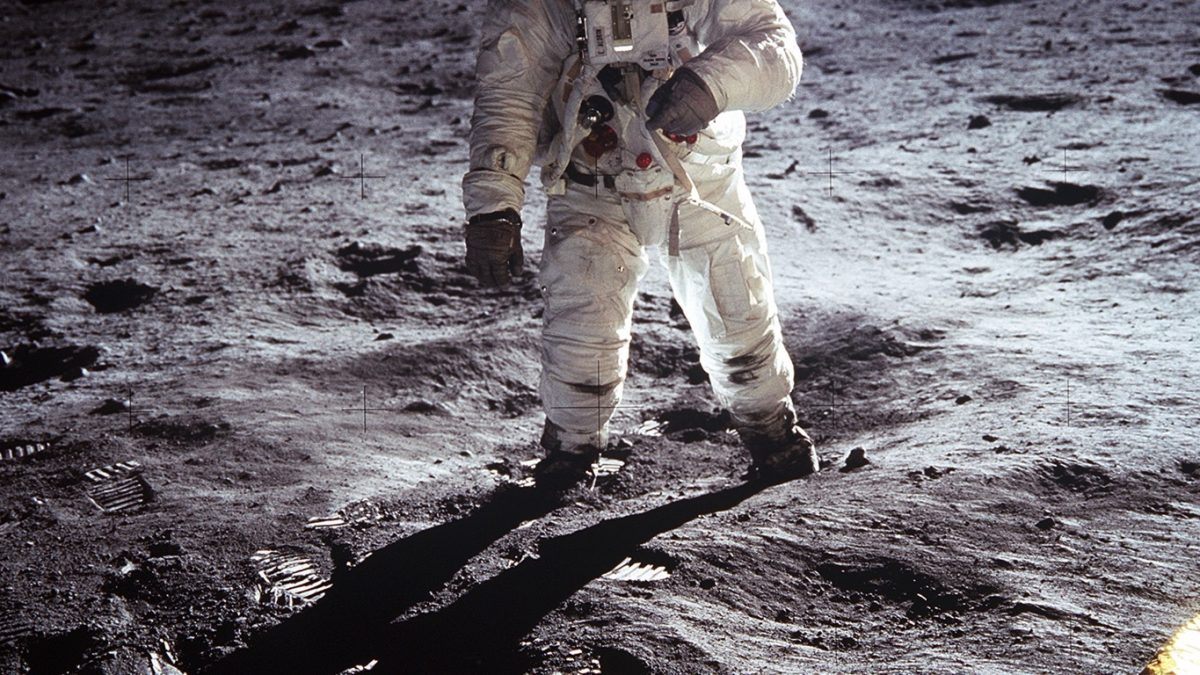
Yet competitive geopolitical rivalry also propelled civilization beyond terrestrial gravity. In October 1957, the Soviet Union launched Sputnik 1, the first artificial satellite; in April 1961, Yuri Gagarin became the first human in space. In July 1969, American astronaut Neil Armstrong stepped onto the lunar surface during Apollo 11: “That’s one small step for man, one giant leap for mankind.”
The iconic photograph Earthrise, captured from lunar orbit, provided humanity with its first planetary mirror: a fragile, luminous sapphire marble hanging suspended in cold, vacant cosmic darkness without national boundaries. When the Berlin Wall collapsed in 1989 and the Soviet Union dissolved in December 1991, the twentieth century closed having forged international institutions like the United Nations, establishing human rights charters to ensure that civilization survived its own catastrophic powers.