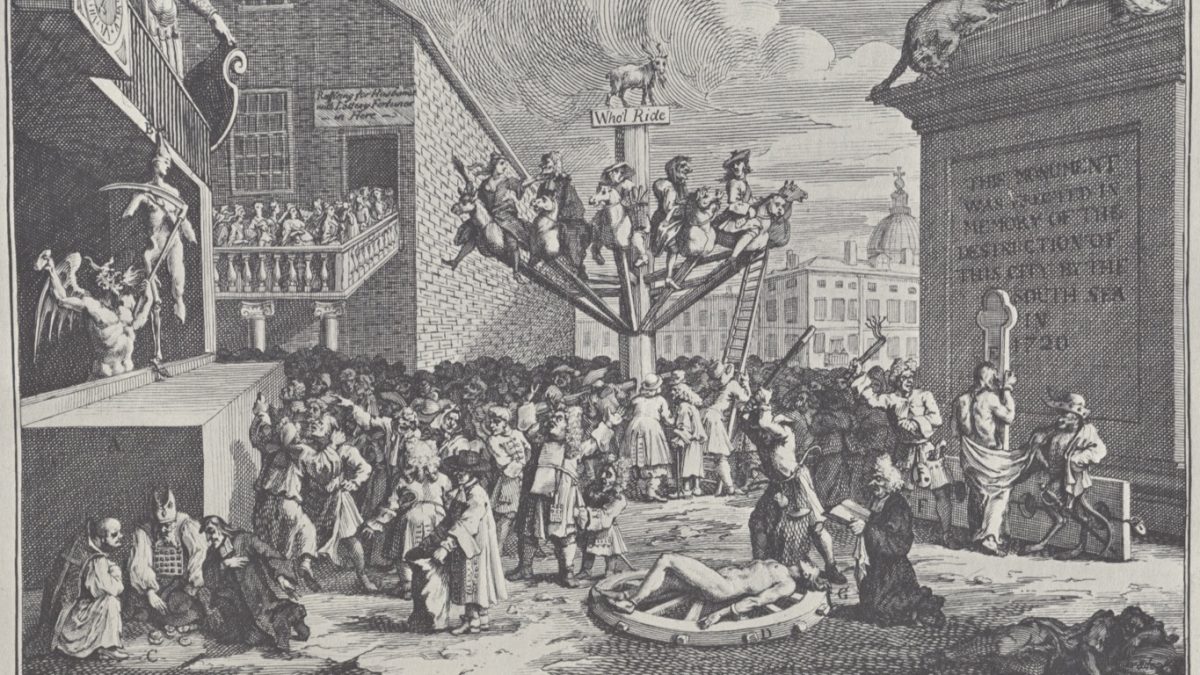
In the wake of the Glorious Revolution of 1688, which installed the Dutch Stadtholder William of Orange and his wife Mary upon the English throne, England found itself locked in an existential, multi-theatre war against the mighty continental superpower of Louis XIV’s France: the Nine Years’ War. The royal treasury was completely exhausted. Traditional fiscal expedients—forced loans, mortgaging customs revenues, and selling crown lands—had failed. The English Crown possessed such abysmal credit that London goldsmiths and international syndicates refused to lend to King William at interest rates lower than twelve to fourteen percent.
In 1694, a Scottish merchant and visionary promoter named William Paterson, working alongside Chancellor of the Exchequer Charles Montagu, proposed an ingenious financial pact between the private merchant elite and the state. That pact established the Governor and Company of the Bank of England. The creation of the Old Lady of Threadneedle Street did not merely fund the Royal Navy; it engineered the Financial Revolution—the institutional invention of funded sovereign national debt and the birth of modern fiat fractional-reserve paper banking.
The Grand Bargain of 1694: Founding the Bank of England
The foundational act of the Bank of England was an elegant corporate debt-for-equity swap. A syndicate of private wealthy merchants agreed to raise £1,200,000 in cash (gold and silver bullion) within ten days and lend the entire sum to the cash-starved government of King William III at an attractive annual interest rate of 8% (yielding £96,000 per year), plus an annual management allowance of £4,000.
In return for this crucial patriotic loan, the Crown granted the syndicate unprecedented statutory privileges:
- Corporate Charter: The lenders were legally incorporated as a perpetual joint-stock company: The Governor and Company of the Bank of England.
- Monopoly on Note Issuance: The Bank was granted the exclusive privilege of issuing printed banknotes payable to the bearer on demand, which functioned as official circulating currency throughout the realm.
- Government Banker: The Bank became the sole depository of state tax revenues and the authorized fiscal agent for servicing the sovereign debt of the United Kingdom.
This marked the invention of funded national debt. Prior to 1694, sovereign debt was personal to the monarch: when a king died or lost a war, debts were routinely repudiated. Under the British Financial Revolution, debt became an obligation of the sovereign state, guaranteed by Parliament and backed by permanent statutory excise taxes on beer, liquor, and shipping. Because British sovereign bonds (later institutionalized as Consols, or Consolidated Annuities) were liquid and backed by parliamentary taxation, Britain could borrow vast sums of money at 3% to 4% interest—a cost of capital less than half that of absolutist Bourbon France.
The South Sea Company and the Debt-for-Equity Scheme (1719–1720)
By 1719, following the War of the Spanish Succession, the British national debt had ballooned to an alarming £50 million. A massive portion of this debt consisted of irreducible government annuities—high-interest, 99-year pensions that the Treasury could not legally redeem early, locking the state into crushing annual interest liabilities.
Enter the South Sea Company, founded in 1711 by Lord Treasurer Robert Harley. Although ostensibly chartered to exploit a monopoly on trade with Spanish America (the Asiento slave contract granted by the Treaty of Utrecht), the company was in reality a shadow financial engineering vehicle. In late 1719, the company’s ambitious directors, led by John Blunt, proposed a colossal debt-conversion scheme: the South Sea Company would assume £31 million of the British national debt, converting high-interest government annuities directly into newly issued South Sea Company stock shares.
The mechanics of the scheme rested upon an intoxicating Ponzi-like logic:
- The company did not fix a specific exchange ratio of shares per pound of government debt. Instead, it agreed to convert a fixed nominal pound value of debt into shares at the prevailing market price of South Sea stock.
- Therefore, the higher the price of South Sea stock rose, the fewer shares the company had to issue to extinguish government annuities.
- The surplus shares could then be sold to the investing public at market highs, generating billions in cash profit for the directors and the company treasury.
| Date / Era (1720) | South Sea Share Price | Speculative Catalyst / Event |
|---|---|---|
| January 1720 | £128 | Proposal introduced to Parliament; aggressive bribery of MPs and Cabinet ministers. |
| April 1720 | £330 | Parliament passes the South Sea Act; subscription offered with low down-payments. |
| May 1720 | £550 | King George I and royal court invest; euphoria sweeps London coffee houses. |
| June 1720 | £890 | Parliament passes the Bubble Act to suppress rival speculative joint-stock companies. |
| August 1720 | £1,000 | Peak of mania; insider directors secretly dump shares on the open market. |
| September 1720 | £400 | Liquidity crisis; credit contraction; panic selling erupts across Exchange Alley. |
| December 1720 | £124 | Complete market collapse; parliamentary inquiry; confiscation of directors’ estates. |
The Madness of Crowds: Exchange Alley and the Bubble Companies
Throughout the spring and summer of 1720, London descended into an unprecedented speculative hysteria centered on the coffee houses of Exchange Alley, most famously Garraway’s and Jonathan’s. Nobles, bishops, domestic servants, poets, and cabinet ministers rubbed shoulders, frantically bidding up shares.
Riding the coattails of South Sea stock, hundreds of absurd, unregulated joint-stock “bubble companies” sprouted overnight. Promoters collected cash deposits for ventures ranging from importing jackasses from Spain, building floating mansions, turning quicksilver into malleable metal, to the immortal satire recorded in contemporary pamphlets: “A company for carrying on an undertaking of great advantage, but nobody to know what it is”—the promoter of which took five thousand pounds in deposits in a single morning and immediately fled the country.
Even the greatest scientific mind of the Western world was drawn into the vortex. Sir Isaac Newton, then Master of the Royal Mint, initially invested early in South Sea stock and cashed out in April 1720 with a handsome profit of £7,000. But as he watched his friends and acquaintances grow vastly richer over the summer, Newton succumbed to the fear of missing out (FOMO) and re-entered the market near its peak in August. When the bubble burst weeks later, Newton lost £20,000 (equivalent to several million pounds today). In the bitter aftermath, he uttered his legendary lament:
“I can calculate the motions of heavenly bodies, but not the madness of people.”
— Sir Isaac Newton, reflecting on the South Sea Crash (1720)
The Aftermath: The Bubble Act and the Rise of Robert Walpole
By late August 1720, the mathematical reality of the scheme asserted itself. Foreign investors from Amsterdam and Paris began taking profits and repatriating capital. When the directors launched a fourth subscription requiring 20% down, the liquidity of London’s credit market was completely drained. Panic selling erupted. South Sea stock crashed from £1,000 to £124 in less than four months.
The political fallout shook the British state to its foundations. A furious Parliament launched a secret committee of inquiry, discovering that the company had bribed the Chancellor of the Exchequer John Aislabie, the Postmaster General, and King George I’s royal mistresses with tens of thousands of pounds in fictitious stock options. Aislabie was expelled from Parliament and imprisoned in the Tower of London, and the private estates of the directors were confiscated to provide relief to ruined investors.
The crisis was stabilized by Robert Walpole, who restructured the bankrupt South Sea balance sheet by dividing its liabilities between the Bank of England and the East India Company. In doing so, Walpole established himself as Britain’s first true Prime Minister, cementing parliamentary supremacy. To prevent future speculation, Parliament enforced the Bubble Act of 1720, prohibiting the formation of joint-stock companies without an explicit Royal Charter—a legal restriction that lasted for over a century until 1825.
Conclusion: The Architecture of Public Credit
The South Sea Bubble was the painful adolescence of modern capitalism. It revealed the catastrophic danger of mixing sovereign debt conversion with unregulated corporate equity and corrupt insider leverage. Yet while the South Sea Company proved to be a speculative mirage, the institutional bedrock created in 1694—the Bank of England and the parliamentary funded national debt—survived completely intact. It was this sound, low-interest public credit architecture that financed Britain’s victory over Napoleon and underwrote the global expansion of the Industrial Revolution.