In the late autumn of 1910, a private luxury railroad car with frosted windows slipped silently out of a train station in Hoboken, New Jersey, embarking on an eight-hundred-mile southward journey shrouded in total secrecy. The passengers aboard were instructed not to dine together, not to be seen at windows, and to address one another solely by their first names: Nelson, Paul, Frank, Piatt, Henry, and Benjamin. Their destination was the exclusive, guarded redoubt of the Jekyll Island Club off the coast of Georgia—a winter retreat for America’s gilded elite whose members included the Vanderbilts, Morgans, Rockefellers, and Astors. The six men gathered around the fireplace in that secluded clubhouse represented an estimated one-fourth of the total wealth of the entire planet.
Over nine days of intense, secret deliberations, this clandestine conclave drafted the foundational blueprint for the most powerful financial institution in modern history: The Federal Reserve System of the United States. The Federal Reserve Act, signed into law three years later on December 23, 1913, by President Woodrow Wilson, ended nearly eight decades during which the world’s emergent industrial colossus had functioned without a central bank—resolving the chronic panics of the “Wildcat Banking” era and establishing the institutional machinery of the modern American Century.
America’s Historic Antipathy Toward Central Banks
To understand why the creation of the Federal Reserve required such elaborate secrecy, one must examine the deep, visceral hostility toward centralized financial power woven into the fabric of American political culture. From the founding of the Republic, American politics had been cleaved by an irreconcilable philosophical divide:
- The Hamiltonian Federalist Vision: Alexander Hamilton championed a strong national central bank (the First Bank of the United States, chartered 1791) to manage federal revenues, stabilize currency, and foster manufacturing and commercial capitalism.
- The Jeffersonian Agrarian Vision: Thomas Jefferson passionately opposed a national bank as an unconstitutional monopoly that would enrich northern urban speculators and British financiers while enslaving independent yeoman farmers: “Banking establishments are more dangerous than standing armies.”
In 1832, President Andrew Jackson waged his ferocious “Bank War,” vetoing the re-charter of the Second Bank of the United States and withdrawing federal deposits, proudly declaring on his deathbed: “I killed the Bank.” For the next seventy-five years, the United States was the only major industrialized nation without a central bank.
The result was the chaotic Free Banking Era (1837–1863) and the flawed National Banking Era. Over eight thousand private state-chartered banks issued their own wildly fluctuating paper currencies; counterfeiting ran rampant; and, above all, the American monetary system suffered from fatal inelasticity of currency. Every autumn, when Midwestern farmers required massive cash reserves to harvest and transport grain, money flowed out of New York banks, triggering sudden credit freezes, soaring interest rates, and cyclical agrarian depressions.
The Catalyst: The Panic of 1907 and the Power of J.P. Morgan
The breaking point arrived in October 1907. Following a failed attempt by copper speculators F. Augustus Heinze and Charles W. Morse to corner the stock of United Copper Company, a devastating run erupted on New York’s third-largest trust company, the Knickerbocker Trust Company. When Knickerbocker suspended payments on October 22, panic metastasized instantly across Wall Street. Lines of panicked depositors stretched for blocks; call money interest rates on the New York Stock Exchange spiked to an unimaginable 125%; and dozens of regional banks collapsed.
With no central bank in existence, the entire American financial system was salvaged by a single, seventy-year-old private citizen: John Pierpont Morgan.
Operating from his private, red-damask library on 36th and Madison Avenue, J.P. Morgan acted as a one-man central bank. He summoned the terrified presidents of New York’s commercial banks, locked the library doors, pocketed the key, and declared that no one would leave until they signed a joint pledge to raise $25 million in emergency cash to backstop failing trusts and brokerages. Morgan bullied the New York Clearing House into issuing loan certificates, pressured the US Treasury into depositing $25 million in federal funds, and personally organized the rescue of the City of New York from municipal bankruptcy.
While Morgan’s decisive intervention saved the nation from catastrophe, it provoked a profound political realization across the United States: an industrial nation of ninety million people could no longer rely on the private health and personal willpower of an aging oligarch to avert systemic economic collapse. Reform was no longer optional; it was an existential necessity.
The Jekyll Island Conclave (November 1910)
In 1908, Congress passed the Aldrich-Vreeland Act, establishing the National Monetary Commission headed by powerful Republican Senator Nelson W. Aldrich (father-in-law of John D. Rockefeller Jr.). After touring the central banks of London, Paris, and Berlin, Aldrich organized the secret expedition to Jekyll Island in November 1910.
| Participant at Jekyll Island | Institutional Role & Background | Contribution to the Central Bank Blueprint |
|---|---|---|
| Nelson W. Aldrich | US Senator (R-RI); Chairman of National Monetary Commission | Political architect; bridge to Capitol Hill and Wall Street titans. |
| Paul M. Warburg | Partner, Kuhn, Loeb & Co.; German-trained banker | Intellectual architect; designed the European-style rediscounting mechanism. |
| Frank A. Vanderlip | President, National City Bank of New York (Rockefeller) | Commercial banking expertise; framed commercial paper discount standards. |
| Henry P. Davison | Senior Partner, J.P. Morgan & Co. | Represented the Morgan banking interests and clearing-house infrastructure. |
| Benjamin Strong Jr. | Vice President, Bankers Trust Company | Operational genius; future first Governor of the Federal Reserve Bank of New York. |
| A. Piatt Andrew | Assistant Secretary of the US Treasury; Harvard economist | Federal liaison; aligned governmental fiscal policy with monetary architecture. |
The primary dilemma confronting Warburg and Aldrich was political marketing. The American public and populist agrarian Democrats, led by William Jennings Bryan, would violently reject any proposal for a single, centralized “Central Bank” in New York or Washington dominated by Wall Street. Warburg’s masterstroke was to propose a decentralized regional system, originally titled the “Aldrich Plan.”
Woodrow Wilson and the Compromise of 1913
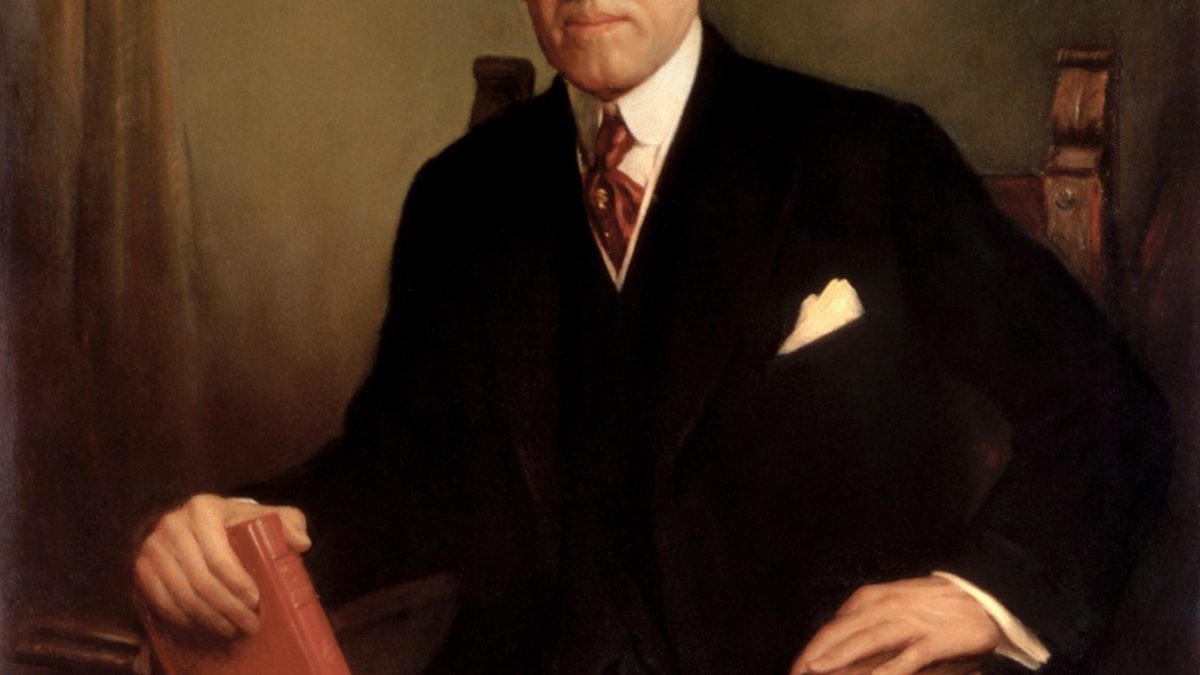
When the Democrat Woodrow Wilson won the presidency in 1912, the Aldrich Plan was politically dead; but its underlying institutional engineering was repurposed by Democratic Congressman Carter Glass and Senator Robert Owen. Wilson, a former professor of political science, insisted on a fundamental constitutional modification: the central governing board must be an entirely public agency appointed by the President and confirmed by the Senate, not controlled by private bankers.
On December 23, 1913, following marathon debates in Congress, President Wilson signed the Federal Reserve Act into law. The Act established a uniquely American tripartite compromise:
- The Federal Reserve Board: A 100% public, government-appointed regulatory body located in Washington, D.C., guaranteeing democratic political oversight.
- Twelve Regional Federal Reserve Banks: Located across the country (Boston, New York, Philadelphia, Cleveland, Richmond, Atlanta, Chicago, St. Louis, Minneapolis, Kansas City, Dallas, San Francisco), reflecting the economic diversity of the nation and preventing Wall Street monopoly.
- Elastic Currency (The Federal Reserve Note): Replaced rigid bond-backed notes with a currency that expanded and contracted dynamically based on commercial bills rediscounted by member banks:
$$text{Money Supply } M_t = f(text{Commercial Paper Demand}_t)$$
Conclusion: The Architecture of the American Century
The creation of the Federal Reserve in 1913 was the institutional foundation upon which American global hegemony was constructed. It arrived in the nick of time: within eight months of the Fed’s founding, Europe erupted into the flames of World War I. Backed by an elastic currency and a centralized lender of last resort, the American financial system was able to fund Allied war production, absorb billions in European gold, and transform the United States from a debtor nation into the supreme creditor superpower of the twentieth century.