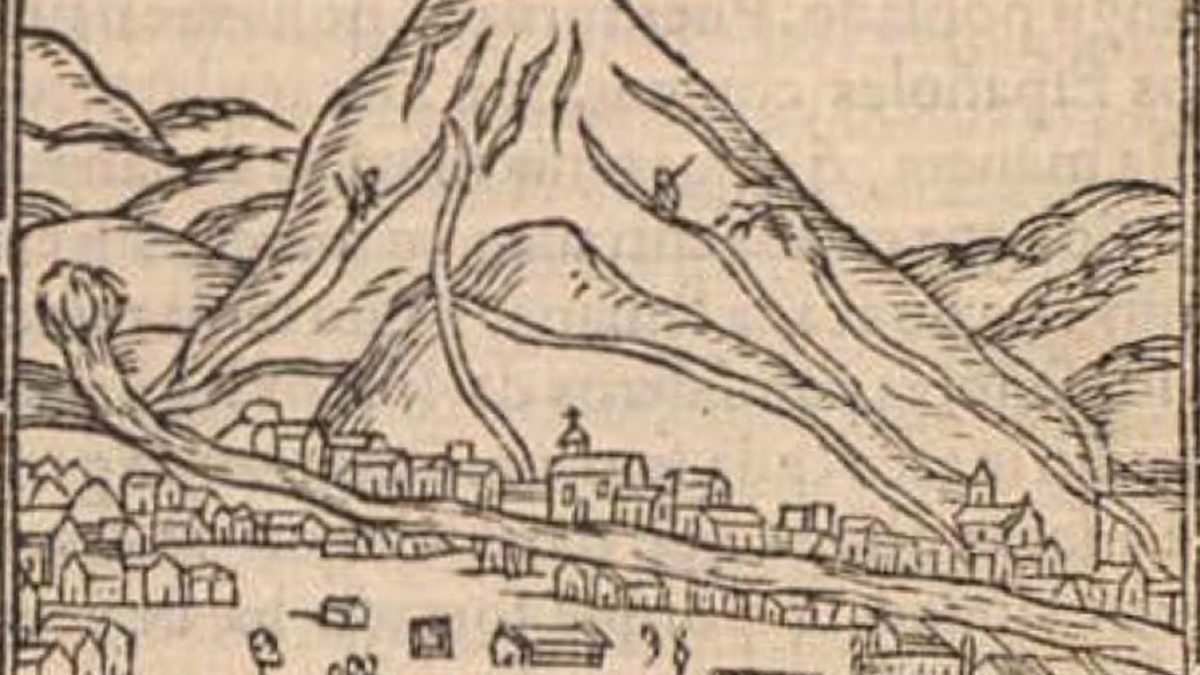
In the autumn of 1545, high in the windswept, barren Andes of Upper Peru (modern-day Bolivia), an indigenous Quechua laborer named Diego Gualpa pulled up an Andean bush on the slopes of an imposing conical peak and discovered thick threads of pure virgin silver glistening in the exposed roots. The mountain was known locally as Sumaq Urqu (“Beautiful Mountain”), but it would enter European annals under a name that became synonymous with unimaginable wealth and human misery: Cerro Rico de Potosí (“The Rich Mountain of Potosí”). Rising more than four thousand meters above sea level, Cerro Rico was the richest geological deposit of silver ever discovered on Earth, containing more than sixty thousand metric tons of precious metal.
The discovery of Potosí, combined with the northern Mexican silver strikes at Zacatecas and Guanajuato, unleashed an economic seismic wave that fundamentally transformed global capitalism. American bullion created the world’s first ubiquitous international currency—the Spanish silver dollar or Piece of Eight (Real de a Ocho)—which circulated from Madrid and London to the tea houses of Canton and the bazaars of Istanbul. Yet, in one of the greatest paradoxes of monetary history, the torrential deluge of Andean silver triggered the centuries-long Price Revolution, devastated Spanish domestic industry, and plunged the Habsburg Empire into repeated sovereign bankruptcies.
The Industrialization of Extractive Metallurgy: The Patio Process
During the first three decades of Spanish exploitation, high-grade surface ores were smelted by indigenous Andean miners using traditional wind furnaces known as huayras. However, by the 1570s, the rich surface veins were exhausted, leaving behind low-grade sulfide and chloride ores that could not be economically smelted with scarce timber.
The crisis was resolved through a profound technological leap: the introduction of the patio process (mercury amalgamation), invented in Mexico by Bartolomé de Medina and adapted to Potosí in 1572 by Viceroy Francisco de Toledo. The chemical architecture of the patio process relied upon the extraordinary affinity between mercury and precious metals:
- Crushed silver ore was pulverized into fine mud by massive water-powered stamp mills.
- The slurry was spread out onto vast stone courtyards (patios) and mixed with salt (sodium chloride), copper sulfate (magistral), and liquid mercury (quicksilver).
- Barefoot indigenous and African enslaved laborers trod the toxic chemical soup for weeks, causing the mercury to bind with microscopic silver particles to form a heavy amalgam:
$$text{Ag}_2text{S} + 2text{CuSO}_4 + 4text{NaCl} + text{Hg} rightarrow 2text{Ag}cdottext{Hg} text{ (Amalgam)} + text{Byproducts}$$ - The amalgam was washed and heated in conical furnaces (capellinas), boiling off the volatile mercury to leave behind pure silver ingots (93% to 95% fine).
To fuel this chemical colossus, the Spanish Crown mobilized the mercury mines of Huancavelica, five hundred miles to the north, and established the mita—a brutal system of forced rotational labor that conscripted over thirteen thousand indigenous men each year from across the Andean highlands. Between 1575 and 1600, Potosí’s annual silver production exploded by 600%, transforming a freezing mountain settlement into one of the largest and most populous cities in the Western hemisphere, with over one hundred and sixty thousand inhabitants—larger than London, Madrid, or Rome.
The First Global Currency: The Real de a Ocho (Piece of Eight)
From the mint of Potosí (the Casa de la Moneda), founded in 1572, poured hundreds of millions of silver coins known formally as the Real de a Ocho (the eight-real piece) and informally across the Anglophone world as the Spanish dollar or “Piece of Eight.” Stamped with the Pillars of Hercules and the motto Plus Ultra (“Further Beyond”), the coin was minted with uncompromising weight (27.468 grams) and high fineness (0.9305 fine silver).
| Trade Route / Destination | Transport Mechanism | Underlying Economic Motivation |
|---|---|---|
| Atlantic Flota System: Potosí (rightarrow) Portobelo (rightarrow) Seville | Armored Spanish Treasure Fleets (Galleons) | Funded the wars of the Habsburg Empire in the Netherlands, France, and Germany. |
| Manila Galleons: Acapulco (rightarrow) Manila (rightarrow) China | Trans-Pacific Galleon Convoy | Exchanged silver for Chinese silk, porcelain, tea, and lacquerware. |
| Mediterranean / Levant Route: Venice (rightarrow) Alexandria (rightarrow) India | Caravans and maritime shipping | Settled persistent European balance-of-trade deficits for Asian spices and textiles. |
The true destination of American silver was not Europe, but Ming Dynasty China. In the 1570s, the Ming government enacted the Single Whip Law (Yitiao Bianfa), consolidating all traditional agrarian taxes and labor corvée obligations into a single annual cash payment due exclusively in silver by weight. Because silver was scarce in China and traded at a bimetallic ratio of roughly 1:6 against gold (compared to 1:12 in Europe), American silver yielded an enormous arbitrage premium in the East. An estimated forty to fifty percent of all silver mined in Potosí and Mexico between 1500 and 1800 ended up permanently buried in China, serving as the monetary foundation of the Chinese commercial economy.
The Price Revolution: The Quantity Theory of Money in Practice
While silver flowed eastward to Asia, the massive injection of bullion into Western Europe produced an unprecedented macroeconomic convulsion known to economic historians as the Price Revolution. Between 1500 and 1650, the overall volume of silver circulating in Europe quadrupled, rising from approximately twenty thousand metric tons to over eighty thousand metric tons.
Across the continent, commodity prices—especially for grain, meat, and housing—climbed by an average of 300% to 500%. In Spain, where the bullion made landfall at the port of Seville, prices surged earliest and highest. The French jurist and philosopher Jean Bodin, observing this phenomenon in his 1568 treatise Response to the Paradoxes of Malestroit, formulated the earliest explicit version of the Quantity Theory of Money:
“The principal and almost only cause of the rise in prices… is the abundance of gold and silver, which is today greater in this kingdom than it has ever been in past centuries.”
— Jean Bodin, Response to Malestroit (1568)
Bodin’s insight can be formalized through the classical Fisher equation: (M cdot V = P cdot Y). Because the agricultural productive capacity of early modern Europe ((Y)) was technologically constrained by pre-industrial farming methods, and velocity ((V)) remained relatively constant, the massive, exogenous expansion of the money stock ((M)) translated directly and inexorably into a quadrupling of the domestic price level ((P)).
The Resource Curse and Spanish Imperial Sovereign Defaults
Why did the possession of the greatest silver mountain on Earth not make Spain the richest and most industrially advanced nation in Europe? Instead, Spain fell victim to the earliest and most dramatic historical manifestation of the Resource Curse (or “Dutch Disease”).
The flood of easy silver distorted the Spanish economy beyond repair:
- Loss of Industrial Competitiveness: Severe domestic inflation caused Spanish wages and production costs to soar far above those of England, France, and the Low Countries. Spanish textiles, agriculture, and metalworks could not compete with cheaper foreign imports. Spain became an economy that manufactured nothing, consuming foreign goods financed entirely by silver.
- The Rentier Mindset: Wealth was associated with conquering colonies, extracting mineral royalties, and securing royal pensions, rather than investing in domestic manufacturing, commercial technology, or scientific innovation.
- Military Imperial Overstretch: King Charles V and his son Philip II viewed American silver as an inexhaustible divine subsidy for ideological warfare. Spain engaged in concurrent, multi-decade conflicts: crushing the Dutch Revolt in the Eighty Years’ War, fighting the Ottoman Empire in the Mediterranean (Battle of Lepanto, 1571), financing the French Catholic League, and launching the ill-fated Spanish Armada against England (1588).
The annual cost of maintaining Spanish standing armies in Flanders and armada fleets vastly outstripped even the immense revenues of Potosí. To fund these deficits, the Spanish Crown borrowed astronomical sums from Genoese, German (Fugger), and Flemish merchant-bankers at usurious interest rates, pledging future treasure fleet silver as collateral.
When fleets were delayed by Atlantic hurricanes, or when silver revenues proved insufficient to service the mounting compounding debt, the Crown simply repudiated its obligations. King Philip II declared sovereign bankruptcy four times during his reign: in 1557, 1575, 1596, and 1607. Each bankruptcy ruined international banking syndicates, froze European credit markets, and forced the restructuring of sovereign debt into long-term annuities (juros). By the early seventeenth century, the silver mountain of Potosí had produced not imperial supremacy, but de-industrialization, fiscal exhaustion, and the irreversible decline of the Spanish Empire.
Conclusion: The Mirage of Bullion
The history of Potosí silver shattered the fundamental mercantilist illusion that money and wealth are synonymous. Gold and silver are merely claims on real goods and human labor; when an abundance of metal enters an economy without a commensurate expansion of productive capacity, the metal simply dilutes the purchasing power of the unit of account. Spain mined the mountains of the New World, but it was the rising merchant republics of the Netherlands and England—possessing no mines, but mastering industrial manufacturing, shipping, and corporate finance—that captured the true fruits of global trade.