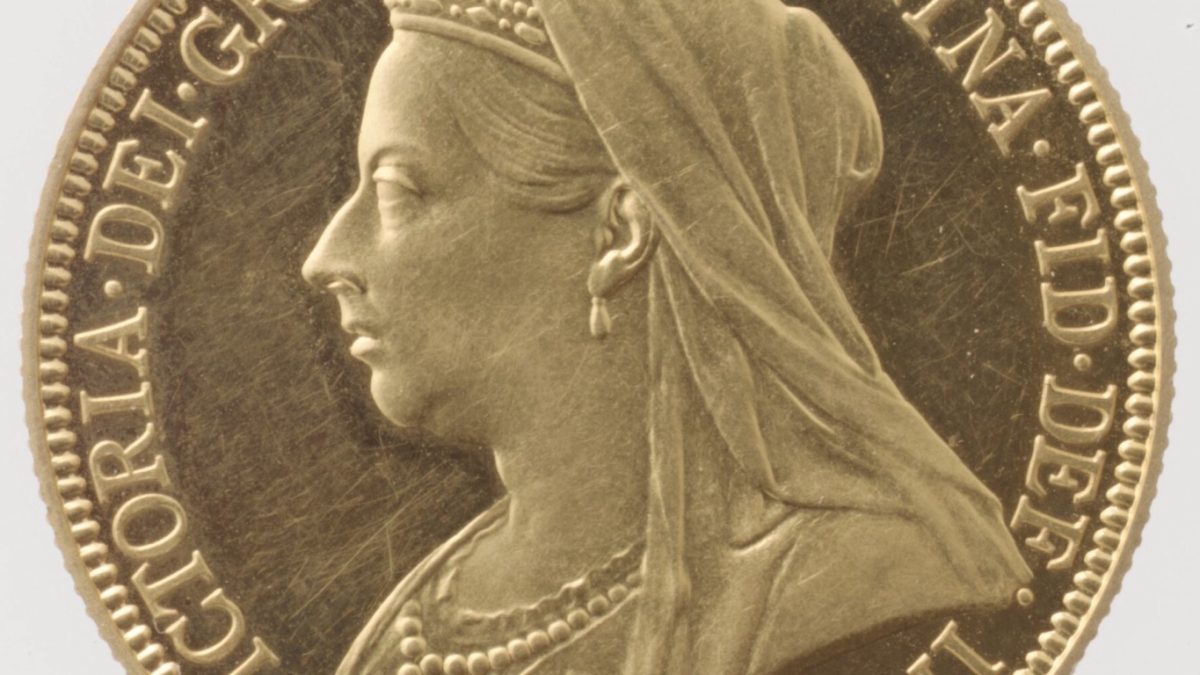
Between the Franco-Prussian War of 1870 and the fateful gunshots of Sarajevo in August 1914, the civilized world operated under the most disciplined, integrated, and self-equilibrating monetary architecture ever constructed by humanity: the Classical Gold Standard. Across this golden half-century of Pax Britannica, international borders posed virtually no barrier to capital. A merchant in Buenos Aires could invoice a cargo of wheat to London, discount the bill of exchange in Frankfurt, and settle the transaction in gold bullion in Paris without encountering floating exchange rates, currency risk, or capital controls. At the center of this planetary clockwork stood the British Empire, the Bank of England, and the supreme currency of the earth: the Pound Sterling.
The classical gold standard was far more than an agreement between finance ministers; it was an ideological and institutional commitment to sound money. It anchored paper banknotes to an unyielding physical reality: an exact, unvarying statutory weight of refined gold, legally redeemable on demand at the counter of a central bank. To understand how the Victorian world harmonized global prices, we must examine the accidental origins of the British gold standard, the intellectual warfare of Peel’s Bank Charter Act, and the physics of David Hume’s Price-Specie Flow Mechanism.
The Accidental Architect: Sir Isaac Newton’s 1717 Valuation
Historically, Britain—like most of medieval and early modern Europe—operated on a de jure silver standard, with gold circulating at fluctuating market premiums. The transition to the gold standard was not the result of deliberate grand design, but an accidental mathematical byproduct of a royal masterwork by Sir Isaac Newton.
In 1717, while serving as Master of the Royal Mint, Newton was commissioned by the Crown to resolve the chronic chaos between British silver pennies and the golden guinea. Newton established the official legal valuation of the gold guinea at:
$$text{1 Guinea} = 21 text{ Shillings of Silver}$$
In doing so, Newton inadvertently committed a fatal pricing error: his valuation set the gold-to-silver price ratio in London at 15.21 to 1, whereas the prevailing market ratio on continental European bourses (particularly Amsterdam and Paris) was roughly 14.5 to 1. In London, gold was legally overvalued relative to silver.
The iron logic of Gresham’s Law took effect instantly. Continental traders brought gold to London, where the Royal Mint happily bought it at the inflated statutory rate of £3 17s 10½d per ounce, exchanged it for heavy, full-weight British silver coins, and shipped the silver back to the continent to be sold at higher market prices. Over the course of the eighteenth century, silver was systematically drained from Britain, leaving the island nation de facto anchored to gold.
Peel’s Bank Charter Act of 1844: Currency vs. Banking School
Following the Napoleonic Wars—during which Britain had been forced to suspend gold convertibility for twenty-four years (the Bank Restriction Period, 1797–1821)—British political economists engaged in a ferocious intellectual debate over the nature of paper money:
- The Banking School (Thomas Tooke, John Fullarton): Argued that the quantity of banknotes should be flexible and determined organically by the commercial needs of trade (“the needs of business”). As long as banks discounted genuine short-term commercial bills, over-issuance was impossible because excess notes would naturally reflux back to the bank.
- The Currency School (Lord Overstone, Robert Torrens): Argued that paper money must behave exactly as if it were pure metallic currency. If private banks were permitted to issue notes at will, human optimism would inevitably generate credit booms, reckless speculation, bank runs, and currency depreciation. Note issuance had to be rigidly constrained by gold reserves.
The Currency School triumphed decisively with the passage of Prime Minister Sir Robert Peel’s landmark Bank Charter Act of 1844. Peel’s Act structurally split the Bank of England into two separate, legally firewalled departments:
| Bank of England Division (1844 Act) | Operational Mandate & Balance Sheet Constraints |
|---|---|
| The Issue Department: | Permitted to issue a strictly limited £14 million in “fiduciary” notes backed by government securities; every single banknote issued beyond £14 million had to be backed 100% by physical gold bullion in the vaults. |
| The Banking Department: | Operated as an ordinary commercial bank, managing private deposits, discounting commercial paper, and extending advances, but possessing zero power to print currency. |
Peel’s Act established the British Gold Sovereign (containing 7.322 grams of pure gold, or 113 grains) as the unshakeable bedrock of the global economy. One troy ounce of gold was legally fixed at £3 17s 10½d—a statutory parity that remained unaltered for nearly a century.
David Hume’s Price-Specie Flow Mechanism
How did an uncoordinated international system composed of dozens of sovereign nations maintain global balance-of-payments equilibrium without central direction? The classical theoretical answer had been formulated in 1752 by the Scottish philosopher David Hume: the Price-Specie Flow Mechanism.
Suppose Country (A) (e.g., Britain) ran a persistent trade surplus with Country (B) (e.g., France), exporting more manufactured goods than it imported wine and silks. Under the rules of the gold standard, the trade deficit could not be financed by printing paper or accumulating debt; France was obligated to settle the net balance by physically shipping gold bullion ((Delta M > 0)) across the English Channel to Britain.
Hume demonstrated that this physical flow of gold triggered an automatic, self-correcting macroeconomic cycle:
$$text{In Britain (Gold Inflow } uparrowtext{): } M uparrow implies P uparrow implies text{Exports become expensive } downarrow, text{ Imports become cheap } uparrow$$
$$text{In France (Gold Outflow } downarrowtext{): } M downarrow implies P downarrow implies text{Exports become cheap } uparrow, text{ Imports become expensive } downarrow$$
As British domestic prices rose due to the influx of gold, British goods became less competitive abroad. Simultaneously, as French prices fell due to monetary contraction, French goods became cheap and attractive to foreign buyers. The trade balance reversed organically until gold flows ceased and trade was restored to equilibrium—an automatic, self-regulating international thermostat.
The Global Hegemony of Sterling and the Rules of the Game
Following the Franco-Prussian War of 1871, when a newly unified German Empire used its 5-billion-franc French war indemnity to adopt the gold standard (the gold Mark), the rest of the world followed suit in rapid succession: the United States (the “Crime of 1873” and the Gold Standard Act of 1900), France, Italy, Austria-Hungary, Russia, and Japan (1897). By the turn of the twentieth century, virtually the entire globe was locked into a fixed-exchange-rate monetary grid.
Yet in practice, the classical gold standard was not run by physical shipments of bullion; it was a Sterling Exchange Standard operated by the Bank of England. The Bank of England held an astonishingly tiny physical gold reserve—rarely exceeding £30 to £40 million, a mere fraction of the gold hoards held in Paris or St. Petersburg. Instead, London ruled the world through its master control lever: the Bank Rate (the discount rate on commercial bills).
When gold began leaking out of London due to a balance-of-payments deficit, the Bank of England simply raised its Bank Rate from 3% to 4% or 5%. As the saying went across European exchanges: “A 7% Bank Rate will bring gold from the moon.” Higher interest rates in London immediately attracted billions in global liquid capital, reversing gold outflows without disturbing domestic employment or requiring physical shipments across oceans.
Conclusion: The Paradise Lost of 1914
To late-Victorian and Edwardian citizens, the Classical Gold Standard appeared to be a permanent law of nature—an unyielding guarantee that contracts, savings, and prices would retain their integrity across generations. As John Maynard Keynes would look back with poignant nostalgia in The Economic Consequences of the Peace (1919):
“The inhabitant of London could order by telephone, sipping his morning tea in bed, the various products of the whole earth… and he could at the same moment and by the same means adventure his wealth in the natural resources and new enterprises of any quarter of the world… He regarded this state of affairs as normal, certain, and permanent, except in the direction of further improvement.”
— John Maynard Keynes (1919)
That golden paradise evaporated in the first week of August 1914. Within days of the outbreak of World War I, European nations suspended gold convertibility to unleash the printing press of total war. The classical gold standard was broken; and despite desperate inter-war attempts to resurrect it, the golden anchor of Pax Britannica would never return.