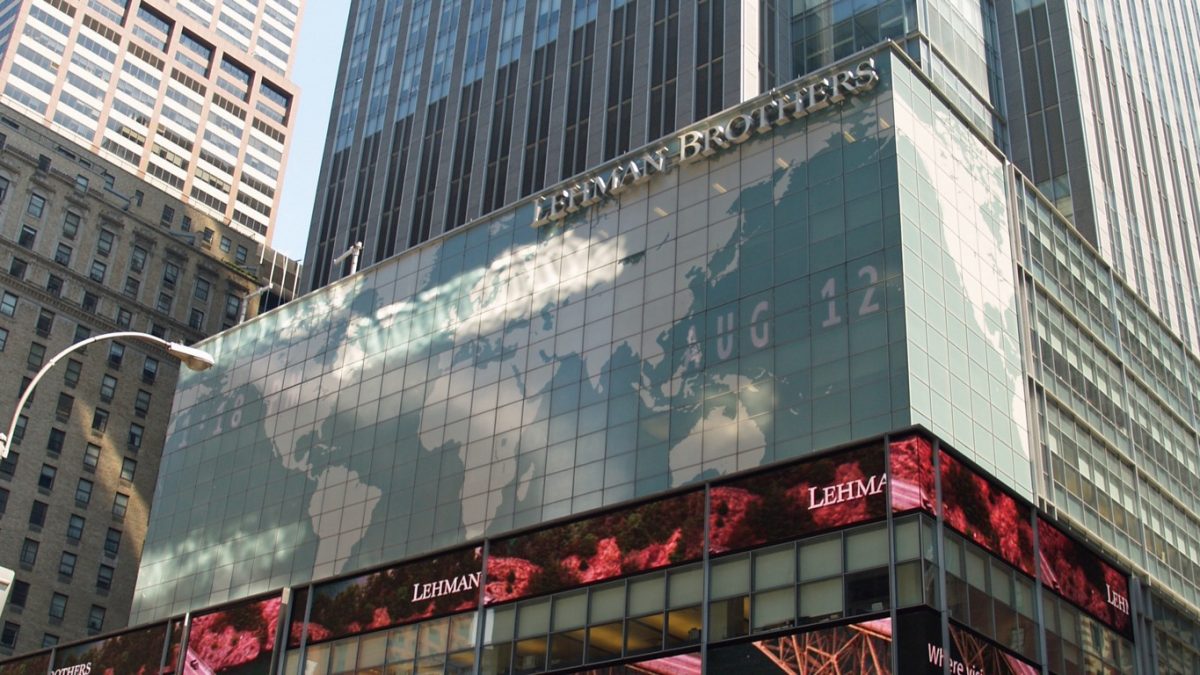
On Monday, September 15, 2008, Lehman Brothers—a 158-year-old titan of Wall Street investment banking—filed for Chapter 11 bankruptcy protection with $613 billion in liabilities, marking the largest corporate bankruptcy in global history. Within hours, the multitrillion-dollar short-term wholesale repo markets froze solid, bringing the interconnected engine of Western capitalism to the precipice of absolute liquidation. The 2008 Global Financial Crisis (GFC) exposed the lethal alchemy of financial securitization, obliterated orthodox economic dogma, and forced central banks into an unprecedented era of zero interest rates and multi-trillion-dollar Quantitative Easing (QE).
The Alchemy of Securitization: MBS, CDOs, and CDS
The genesis of the 2008 catastrophe lay in a radical structural mutation of the banking business model. Traditional banking operated on an “originate-to-hold” paradigm: banks assessed a borrower’s creditworthiness rigorously because the risk of default remained on the bank’s own balance sheet. In the early 2000s, driven by deregulation and computational financial engineering, Wall Street pivoted to the “originate-to-distribute” model.
Mortgage brokers originated millions of high-risk “subprime” residential mortgages to unvetted borrowers, often requiring no documentation, no income verification, and zero down-payment (NINJA loans). Investment banks purchased these mortgages, pooled them into Mortgage-Backed Securities (MBS), and sliced them into tiered tranches known as Collateralized Debt Obligations (CDOs):
Credit rating agencies (Moody’s, Standard & Poor’s, Fitch)—compensated by the very banks issuing the debt—slapped top-tier ‘AAA’ credit ratings on senior CDO tranches, asserting that geographical diversification eliminated systemic risk. To compound the systemic leverage, insurance giant AIG sold hundreds of billions of dollars in Credit Default Swaps (CDS), functioning as uncapitalized insurance policies against bond defaults.
The Shadow Banking System and the Liquidity Freeze
Modern credit creation was no longer concentrated in retail commercial banks holding insured deposits; it had migrated into the unregulated Shadow Banking System. Investment banks (Bear Stearns, Lehman Brothers, Merrill Lynch) relied on overnight repurchase agreements (repo) to finance balance sheets leveraged up to 35-to-1:
At a leverage ratio of 35:1, a mere 3% decline in asset values wipes out 100% of an institution’s equity capital, rendering it completely insolvent. When American housing prices peaked in 2006 and subprime delinquencies soared in 2007, mortgage-backed securities collapsed in value. No institution knew which counterparty held toxic debt. Overnight haircuts spiked, liquidity vanished, and repo lenders refused to roll over overnight loans.
Bear Stearns fell in March 2008, rescued via a fire-sale acquisition by JPMorgan Chase backed by the Federal Reserve. Six months later, Treasury Secretary Henry Paulson and Fed Chairman Ben Bernanke allowed Lehman Brothers to collapse, expecting the market to absorb the shock. Instead, the Reserve Primary Fund “broke the buck,” commercial paper markets ceased functioning, and credit around the world ground to a total halt.
TARP, the Fed’s Balance Sheet, and Quantitative Easing
Faced with an economic abyss rivaling the Great Depression of 1929, the U.S. Congress passed the $700 billion Troubled Asset Relief Program (TARP), injecting preferred equity directly into the nation’s largest banks. American International Group (AIG) received an unprecedented $180 billion federal rescue to prevent the immediate collapse of global counterparty networks.
Having reduced the federal funds rate to the Zero Lower Bound (0.00% – 0.25%), Federal Reserve Chairman Ben Bernanke deployed non-conventional monetary artillery: Quantitative Easing (QE). In QE, the central bank creates new electronic reserve money to purchase long-term government debt and agency mortgage-backed securities directly from commercial banks:
The Fed’s balance sheet, which had remained around $800 billion for decades, exploded past $2 trillion under QE1, eventually exceeding $4.5 trillion after QE2 and QE3. The European Central Bank, Bank of England, and Bank of Japan followed suit, flooding global capital markets with trillions in newly printed fiat liquidity and depressing sovereign bond yields into negative territory.
| Failed / Rescued Institution | Type | Peak Assets Under Risk | Resolution Mechanism | Systemic Impact |
|---|---|---|---|---|
| Bear Stearns (March 2008) | Investment Bank | $395 Billion | Sold to JPMorgan Chase ($10/share) + $29B Fed guarantee | First major Wall Street collapse |
| Fannie Mae & Freddie Mac (Sept 2008) | Government Sponsored Enterprises | $5.4 Trillion in Mortgages | Placed into Federal Conservatorship | Nationalization of U.S. mortgage market |
| Lehman Brothers (Sept 15, 2008) | Investment Bank | $639 Billion | Chapter 11 Bankruptcy (Liquidation) | Total freeze of global wholesale credit markets |
| AIG (Sept 16, 2008) | Global Insurance Giant | $1.0 Trillion | Federal Reserve / Treasury Bailout ($182B) | Saved Wall Street CDS counterparties |
The Transformation of Political Economy
The 2008 crisis fundamentally altered public trust in financial elites and central institutions. While millions of working-class citizens lost homes, jobs, and life savings, the architects of the financial crisis were insulated by state-sponsored capital injections under the doctrine of “Too Big to Fail.”
This deep moral hazard generated immense social and political reverberations: the rise of the Occupy Wall Street movement on the political left, the Tea Party on the right, and a growing skepticism of state-manipulated fiat money. Most profoundly, on October 31, 2008, amid the smoking wreckage of the banking system, an anonymous cryptographer operating under the pseudonym Satoshi Nakamoto published a nine-page whitepaper proposing a purely peer-to-peer electronic cash system: Bitcoin.