As the first quarter of the 21st century draws to a close, Bengal stands at a profound historical crossroads of technological modernity, monumental civil engineering, and revolutionary democratic renewal. Over the past two decades, Bangladesh achieved remarkable economic growth, fulfilling United Nations criteria for graduation from Least Developed Country (LDC) status and erecting transformational mega-infrastructure—symbolized by the self-financed Padma Multipurpose Bridge and the Dhaka Metro Rail. Yet mounting governance crises and suppressed civil liberties culminated in the seismic July-August 2024 Mass Student-Citizen Uprising, which overthrew an authoritarian regime and installed an interim administration led by Nobel Peace Laureate Professor Muhammad Yunus. Today, looking toward the horizon of 2026 and beyond, Bengal navigates climate resilience, technological innovation, and constitutional rebirth to realize its ancient dream of an equitable, sovereign, and democratic civilization.
1. The Economic Surge and Infrastructure Marvels
Between 2008 and 2023, Bangladesh transformed from an agrarian-dominated economy into an emerging lower-middle-income industrial manufacturing hub. Real GDP growth consistently surpassed six to seven percent annually, driven by three powerful engines: the $45+ billion readymade garment export sector, $20+ billion in annual remittances sent by millions of hardworking expatriate workers in the Middle East, Southeast Asia, and the West, and an agrarian sector that achieved national food self-sufficiency despite high population density.
This economic confidence found physical manifestation in world-class mega-infrastructure projects that redrew the map of the delta:
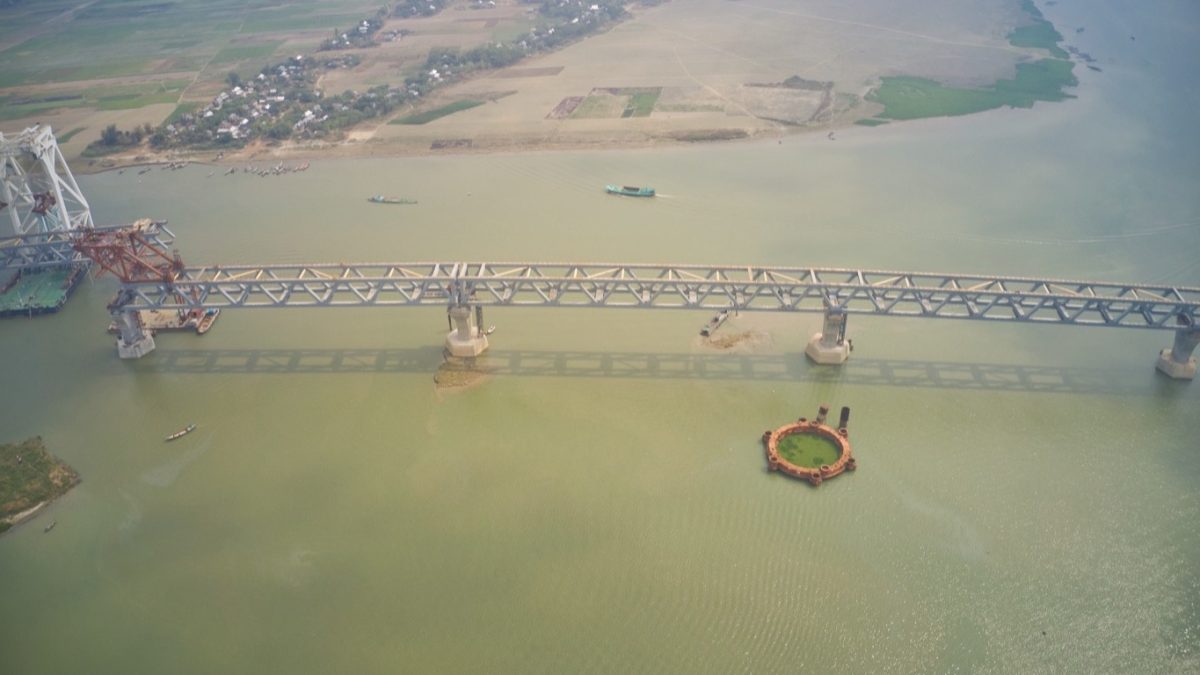
- The Padma Multipurpose Bridge: The defining engineering triumph of modern Bangladesh. Spanning 6.15 kilometers across the mighty, treacherous Padma River—the second most turbulent river on Earth—this two-level steel truss bridge was constructed entirely with sovereign domestic financing after international lenders withdrew in 2012. Inaugurated on June 25, 2022, the bridge connected twenty-one neglected southwestern districts directly to Dhaka, slashing transit times, integrating the national market, and contributing over 1.2% to annual GDP growth.
- Dhaka Metro Rail (MRT Line 6): The nation’s first high-speed electric rapid transit system, transforming mobility in one of the world’s most densely populated urban centers.
- The Bangabandhu Tunnel: South Asia’s first underwater four-lane road tunnel, bored under the seabed of the Karnaphuli River in Chittagong to create a “One City, Two Towns” maritime economic corridor.
- Strategic Power and Maritime Gateways: The Rooppur Nuclear Power Plant (2,400 MW), developed with Russian collaboration, and the deep-sea maritime port at Matarbari, transforming the Bay of Bengal into a global energy and shipping highway.
2. The Rohingya Humanitarian Shelter (2017–Present)
In late August 2017, the humanitarian conscience of Bengal was summoned when the Myanmar military launched a brutal campaign of ethnic cleansing and crimes against humanity in Rakhine State. In an act of unparalleled global compassion, Bangladesh opened its borders to over 750,000 fleeing Rohingya refugees, joining hundreds of thousands who had arrived in earlier waves.
Today, over 1.1 million Rohingya people find sanctuary in Kutupalong and surrounding camps in Cox’s Bazar—the largest refugee camp complex on Earth. Sheltering, feeding, and providing healthcare to this persecuted population placed an immense financial, ecological, and security strain on Bangladesh, yet it demonstrated to the international community the extraordinary moral generosity of the Bengali nation.
3. The July-August 2024 Mass Student-Citizen Uprising
Despite visible physical infrastructure, the political landscape of Bangladesh deteriorated under protracted authoritarian governance. The abolition of the neutral Caretaker Government system via the 15th Constitutional Amendment in 2011 led to three heavily disputed national elections in 2014, 2018, and 2024, characterized by voter disenfranchisement, severe suppression of the opposition, widespread allegations of enforced disappearances, politicization of the judiciary, and massive capital flight through illicit banking syndicates.
The breaking point arrived in July 2024. What began as a peaceful campus demonstration led by the Students Against Discrimination movement demanding reform of an outdated 56% civil service quota system transformed into a nationwide revolution when state security forces and ruling party cadres deployed lethal live ammunition against unarmed students. The iconic, arms-spread martyrdom of student Abu Sayed in Rangpur on July 16, followed by the shooting of Mir Mahfuzur Rahman Mugdho in Dhaka, ignited an unstoppable volcanic uprising.
Defying military curfews, internet blackouts, and helicopter gunfire, millions of students, parents, garment workers, and ordinary citizens flooded the streets in a single-point demand for democratic liberation. On August 5, 2024, as hundreds of thousands marched toward the Prime Minister’s official residence (Ganabhaban) in the historic March to Dhaka, Prime Minister Sheikh Hasina resigned and fled the country, bringing a sudden, dramatic end to fifteen consecutive years of rule.
4. The Interim Government and the 2026 Horizon
In the revolutionary vacuum, the student coordinators and civil society called upon the nation’s most internationally respected moral figure, Nobel Peace Laureate Professor Muhammad Yunus, to steer the country. On August 8, 2024, Professor Yunus was sworn in as Chief Adviser of the Interim Government.
The Interim Government launched comprehensive reform commissions covering the Constitution, Electoral System, Judiciary, Anti-Corruption Commission, Police, and Public Administration, aimed at dismantling institutionalized autocracy and guaranteeing an irreversible framework for democratic accountability, freedom of speech, and economic stability.
Bengal in 2026 and Beyond: The Civilizational Future
As Bengal navigates the threshold of 2026, it faces the defining civilizational questions of the 21st century:
- Climate Resilience in the Delta: Sitting at the frontline of global climate change, the Bengal delta must pioneer adaptive technologies against sea-level rise, salinity intrusion, and extreme weather, transforming from a vulnerable victim into a global leader in climate innovation.
- Demographic Dividend and Artificial Intelligence: With over sixty percent of its population under the age of thirty-five, Bangladesh possesses a dynamic, tech-savvy youth cohort. Transitioning from basic garment sewing to advanced software development, robotics, green manufacturing, and artificial intelligence represents the economic imperative of the next decade.
- Democratic Pluralism and Human Dignity: The ultimate lesson of Bengal’s 2,500-year history—from Sasanka and the Pala election to the 1952 Language Movement, the 1971 Liberation War, and the 2024 Uprising—is that the people of this land will never permanently tolerate tyranny or the erasure of their voice.
From prehistoric stone tools carved in the Lalmai hills to the 6-kilometer spans of the Padma Bridge; from the bronze gears of ancient merchants to the democratic youth shaping the future in 2026, the history of Bengal is an unbroken epic of endurance, cultural genius, and an unquenchable thirst for human liberty.
Primary Academic References
- World Bank. (2022). Bangladesh Development Update: Navigating the New Normal. World Bank Group, Washington D.C.
- United Nations. (2021). Committee for Development Policy: Report on the Triennial Review of LDC Graduation (Bangladesh). UN ECOSOC.
- Amnesty International. (2024). Human Rights in Bangladesh: Accountability and Institutional Reform. London.
- Sobhan, R. (2016). Challenging the Injustice of Poverty: Agendas for Inclusive Development in South Asia. SAGE Publications.
- Ali, R. M. (2023). Padma Bridge: Engineering and Economic Genesis of a National Monument. Dhaka.