During the 19th and early 20th centuries, amidst the crushing economic subjugation of British colonial rule, the soil of Bengal gave birth to one of the most astonishing cultural, intellectual, and scientific awakenings in modern world history: the Bengal Renaissance (বাংলার নবজাগরণ). Ignited by the collision of ancient Eastern philosophical traditions and Western enlightenment rationalism, this epoch shattered archaic dogmas through daring social reforms, created modern Bengali literature and poetry, pioneered breakthrough advances in electromagnetic physics and chemistry, and produced universal giants like Rabindranath Tagore and Kazi Nazrul Islam who redefined human consciousness.
1. Raja Ram Mohan Roy: The Morning Star of Modernity
The dawn of the Bengal Renaissance is inseparable from the towering intellect of Raja Ram Mohan Roy (1772–1833). A profound scholar of Sanskrit, Persian, Arabic, Hebrew, Greek, and English, Ram Mohan challenged the suffocating religious orthodoxy of his day by arguing that ancient Upanishadic philosophy taught a pure, rational monotheism.
Ram Mohan’s most celebrated human rights achievement was his relentless crusade against the horrific practice of Sati (the burning alive of Hindu widows on their husbands’ funeral pyres). Marshaling scriptural proofs and philosophical tracts, he rallied civil society, compelling Governor-General Lord William Bentinck to enact the Sati Abolition Act of 1829. Ram Mohan founded the Brahmo Samaj in 1828, established the Hindu College (1817) to promote modern scientific education, and defended the freedom of the native press, earning the title “The Father of Modern India.”
Young Bengal and Henry Derozio
In the 1820s, a brilliant Anglo-Indian poet and teacher at Hindu College, Henry Louis Vivian Derozio (1809–1831), inspired a radical movement of young Bengali intellectuals known as Young Bengal. Preaching unrestrained free thought, atheism, and rationalist inquiry, Derozio’s disciples openly defied orthodox caste taboos, declaring that truth must be sought through empirical reason rather than blind tradition.
2. Ishwar Chandra Vidyasagar: Compassion and Reform
If Ram Mohan was the philosopher of the Renaissance, Ishwar Chandra Vidyasagar (1820–1891)—honored with the title Dayar Sagar (“Ocean of Compassion”)—was its relentless ethical warrior. Born into impoverished orthodoxy in Midnapore, Vidyasagar rose through sheer genius to become the principal of Sanskrit College.
Horrified by the plight of child widows condemned to lives of wretched destitution, Vidyasagar published groundbreaking polemics proving that widow remarriage was sanctioned by ancient Smriti texts. Braving violent death threats from conservative oligarchs, he secured the passage of the Hindu Widows’ Remarriage Act of 1856. Concurrently, Vidyasagar was the supreme pioneer of female education in Bengal, personally funding and establishing thirty-five girls’ schools alongside John Elliot Drinkwater Bethune. He modernized and standardized the Bengali typography and alphabet, authoring Borno Porichoy (বর্ণপরিচয়), the foundational primer through which generations of Bengalis learned to read.
3. The Literary Explosion: Michael to Bankim
The Renaissance unleashed a torrential linguistic transformation, elevating Bengali from medieval verse to a world-class literary vehicle:
- Michael Madhusudan Dutt (1824–1873): A bohemian genius who abandoned an English career to reinvent Bengali poetry. Dutt smashed traditional rhyming couplets, introducing blank verse (Amritrakshar Chhanda), Western sonnets, and classical drama. His magnum opus, the epic poem Meghnad Badh Kavya (১৮৬১), inverted the Valmiki Ramayana to portray the patriotic demon prince Meghnad as a tragic, heroic martyr defending his motherland against treacherous invaders.
- Bankim Chandra Chatterjee (1838–1894): The creator of the modern Bengali novel. Through masterworks like Durgeshnandini, Kapalkundala, and Anandamath (1882), Bankim blended romantic realism with fierce patriotic devotion. His hymn Vande Mataram (“I bow to thee, Mother”), published in *Anandamath*, became the sacred national anthem of India’s anti-colonial freedom movement.
- Mir Mosharraf Hossain (1847–1912): Foremost Muslim novelist and playwright of 19th-century Bengal, author of the immortal tragic masterwork Bishad Sindhu (বিষাদ-সিন্ধু), recounting the epic tragedy of Karbala in sublime, emotional Bengali prose.
4. The Scientific Revolution: J.C. Bose and P.C. Ray
In the late 19th century, Bengali scholars proved that the Indian mind could master the highest pinnacles of empirical experimental science:
- Acharya Sir Jagadish Chandra Bose (1858–1937): The polymath father of wireless radio communication and biophysics. In 1895, at Kolkata’s Town Hall, Bose publicly transmitted millimeter radio waves through solid walls, ringing a bell and detonating gunpowder using a spark transmitter—preceding Marconi’s commercial demonstrations. Bose pioneered microwave horn antennas, dielectric lenses, and galena crystal semiconductor detectors (anticipating solid-state electronics). He later invented the Crescograph, demonstrating that plant tissue exhibits electrical responses and sensations identical to animal nervous systems.
- Acharya Sir Prafulla Chandra Ray (1861–1944): The father of Indian chemical sciences. Discoverer of mercurous nitrite (1896) and author of the landmark History of Hindu Chemistry, Ray established Bengal Chemical & Pharmaceutical Works in 1901—India’s first indigenous industrial pharmaceutical company, fostering national self-reliance.
5. Universal Titans: Rabindranath Tagore and Kazi Nazrul Islam
The zenith of the Bengal Renaissance culminated in two poetic giants whose works transcend national boundaries:
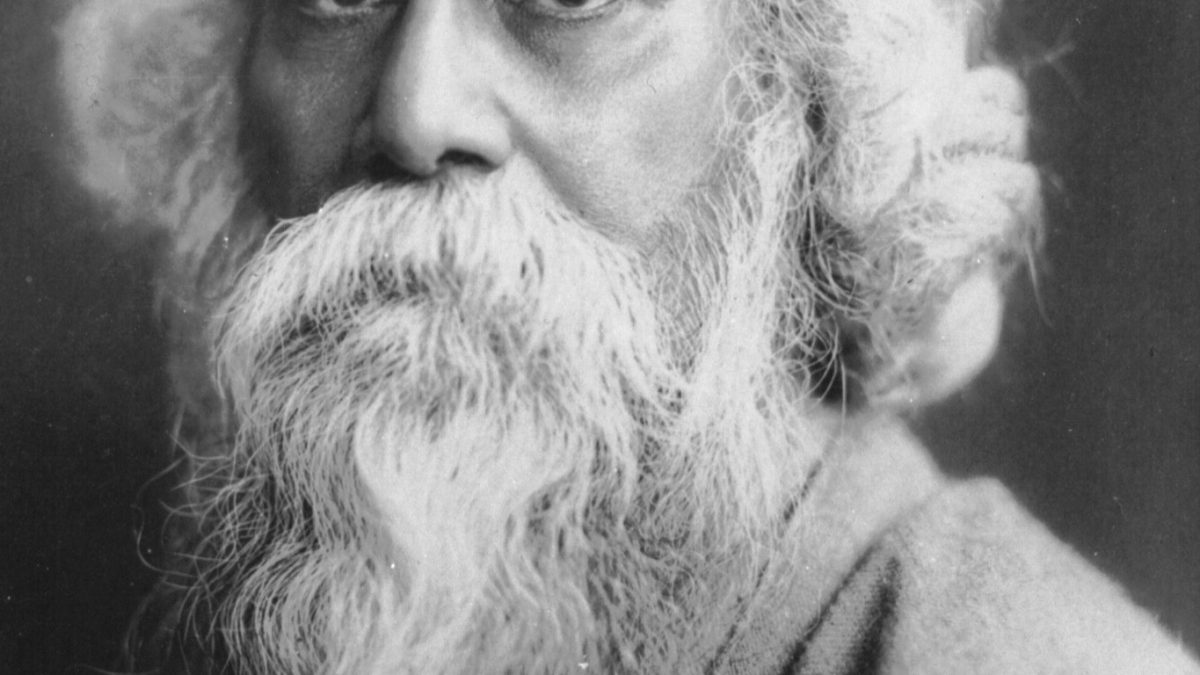
Rabindranath Tagore (1861–1941): Poet, philosopher, novelist, composer, painter, and educator. In 1913, Tagore became the first non-European to be awarded the Nobel Prize in Literature for his luminous collection Gitanjali (Song Offerings). Tagore founded Visva-Bharati University at Santiniketan, cultivating a global humanism that united the finest traditions of East and West. He achieved the unique distinction in world history of composing the national anthems of two sovereign nations: Amar Sonar Bangla for Bangladesh and Jana Gana Mana for India.
Kazi Nazrul Islam (1899–1976): The Bidrohi Kobi (Rebel Poet) and National Poet of Bangladesh. Bursting upon the literary scene with his volcanic 1922 poem Bidrohi (The Rebel), Nazrul proclaimed eternal defiance against British imperialism, social inequality, religious bigotry, and feudal oppression:
“বলো বীর—
বলো উন্নত মম শির!
শির নেহারি’ আমারি, নত-শির ওই শিখর হিমাদ্রির!”
(“Proclaim, O Hero— / Proclaim: My head is ever high! / Seeing my head, the peaks of the Himalayas bow down in reverence!”)
— Kazi Nazrul Islam, Bidrohi (1922)
Nazrul composed over 4,000 songs (*Nazrul Geeti*), harmonizing classical ragas, Bengali folk tunes, and Perso-Arabic ghazals, while spending months in British prisons for sedition. Together, Tagore and Nazrul forged the modern secular, humanist, and fiercely freedom-loving identity of the Bengali soul.
Primary Academic References
- Kopf, D. (1969). British Orientalism and the Bengal Renaissance: The Dynamics of Indian Modernization. University of California Press.
- Sarkar, S. (1970). The Bengal Renaissance and Other Essays. People’s Publishing House.
- Dutta, K., & Robinson, A. (1995). Rabindranath Tagore: The Myriad-Minded Man. St. Martin’s Press.
- Muzaffar Ahmad. (1960). Kazi Nazrul Islam: Smritikatha. National Book Agency, Calcutta.
- Sen, A. (1977). Iswar Chandra Vidyasagar and His Elusive Milestones. Riddhi-India, Calcutta.