The opening four decades of the 20th century transformed Bengal into the flaming crucible of India’s anti-colonial struggle. In 1905, imperial Viceroy Lord Curzon engineered the First Partition of Bengal under the guise of administrative efficiency, deliberately scheming to split the politically conscious Bengali populace along communal lines. The resulting popular outrage ignited the fiery Swadeshi Movement, birthed modern mass political mobilization, and spawned an underground vanguard of fearless armed revolutionaries—epitomized by Masterda Surya Sen and the legendary 1930 Chittagong Armoury Raid—who shook the foundations of the British Empire with their blood and sacrifice.
1. Curzon’s “Divide and Rule”: The Partition of 1905
By 1900, the British colonial administration viewed the politically vocal, educated Bengali intelligentsia as the most dangerous threat to imperial rule in India. In secret official minutes, Home Secretary H. H. Risley laid bare the cynical imperial strategy behind partition: “Bengal united is a power; Bengal divided will pull several different ways… One of our main objects is to split up and thereby to weaken a solid body of opponents to our rule.”
On October 16, 1905, Viceroy Lord Curzon formally partitioned the province into two separate administrative units: Eastern Bengal and Assam (with its capital at Dhaka, encompassing a Muslim-majority population) and Western Bengal (with its capital at Calcutta, encompassing a Hindu-majority population along with Bihar and Orissa). While Muslim leaders in eastern Bengal—foremost among them Nawab Sir Khwaja Salimullah of Dhaka—welcomed the move as an opportunity for regional economic and educational uplift after centuries of neglect, nationalist leaders in Calcutta condemned it as a deliberate vivisection of the Bengali motherland.
2. The Swadeshi Movement and National Awakening
The announcement of partition provoked an unprecedented eruption of mass resistance known as the Swadeshi Movement. On the day partition took effect (October 16, 1905), millions observed Arandhan (cooking fires extinguished in mourning), while Rabindranath Tagore led mass processions through the streets of Calcutta, singing patriotic hymns and tying sacred Rakhi threads on the wrists of Hindus and Muslims as a pledge of fraternal unity.
The Swadeshi campaign introduced revolutionary techniques of resistance:
- Boycott of British Goods: Massive bonfires of imported Manchester cotton and Liverpool salt; consumers refused to patronize British shops, and local washermen refused to wash foreign garments.
- Indigenous Enterprise: Swadeshi textile mills, soap factories, national banks, and steamship lines emerged to achieve economic self-reliance.
- National Education: Creation of the National Council of Education to bypass colonial government schools.
Simultaneously, recognizing the need for an independent political platform to articulate Muslim interests, Nawab Salimullah hosted the All-India Muhammadan Educational Conference in Dhaka. On December 30, 1906, at Shahbagh in Dhaka, the delegates founded the All-India Muslim League—a political birth that would fundamentally alter the destiny of the subcontinent four decades later.
Overwhelmed by relentless urban agitation, economic boycotts, and targeted political assassinations, the British Crown capitulated. In December 1911, King George V announced the Annulment of the Partition of Bengal at the Delhi Durbar, while simultaneously shifting the imperial capital from Calcutta to Delhi. To placate aggrieved Muslims of eastern Bengal who lost their provincial capital, the British established the University of Dhaka in 1921, which rapidly became the intellectual cradle of Bengali emancipation.
3. Armed Revolution: Anushilan, Jugantar, and Surya Sen
Disillusioned by the moderate constitutional petitions of mainstream politicians, thousands of young Bengalis turned to revolutionary armed struggle. Underground secret societies—the Anushilan Samiti (founded by Pramathanath Mitra and Pulin Behari Das in Dhaka) and Jugantar (led by Barindra Kumar Ghosh and Bagha Jatin)—recruited youth for physical culture, bomb-making, and targeted assassinations of tyrannical British magistrates.
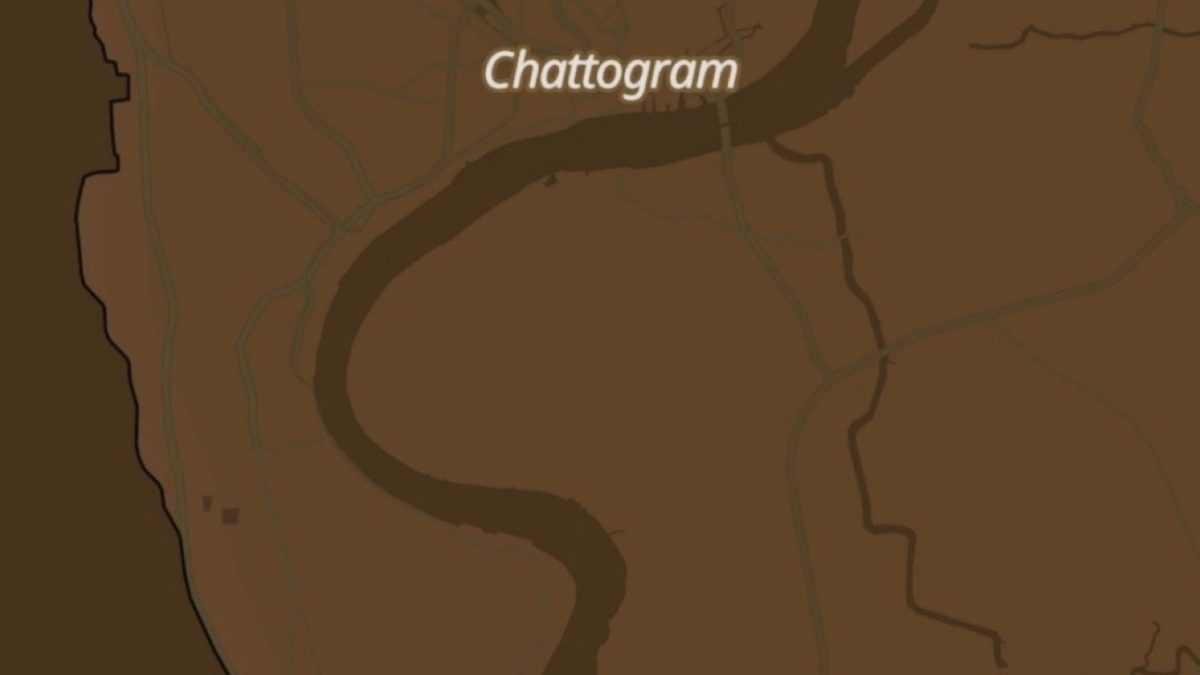
The supreme zenith of revolutionary heroism occurred on April 18, 1930, in the port city of Chittagong. A former schoolteacher named Surya Sen (revered as Masterda), commanding the Chittagong branch of the Indian Republican Army, orchestrated a breathtaking, synchronized military assault:
- Surya Sen’s cadre of sixty-four armed revolutionaries simultaneously attacked the Police Armoury at Dampara, the Auxiliary Force Armoury, the telegraph office, and cut the railway lines connecting Chittagong to the rest of Bengal.
- Having seized hundreds of .303 rifles, Lewis machine guns, and ammunition, Surya Sen raised the National Flag and solemnly proclaimed the Provisional Revolutionary Government of Free India.
- Retreating to the rugged terrain of Jalalabad Hill, the revolutionaries fought an epic pitched battle on April 22, 1930, against heavily armed British imperial regiments, repelling multiple assaults before vanishing into the surrounding countryside to wage three years of guerrilla warfare.
- Pritilata Waddedar: On September 24, 1932, a brilliant twenty-one-year-old female revolutionary, Pritilata Waddedar, led a daring armed raid on the notorious Pahartali European Club (which displayed the racist sign: “Dogs and Indians not allowed”). Wounded during the attack, Pritilata swallowed potassium cyanide rather than surrender, becoming the first female martyr of the revolutionary movement.
Betrayed in February 1933, Masterda Surya Sen was subjected to brutal physical torture—his teeth smashed, his nails torn out—before being executed by hanging in Chittagong Central Jail on January 12, 1934. His body was loaded into a metal cage and secretly dumped into the Bay of Bengal. His martyrdom inspired an entire generation of freedom fighters.
4. Netaji Subhas Chandra Bose and the Path of Fire
In the mainstream political arena, Bengal produced one of the most charismatic leaders in world history: Netaji Subhas Chandra Bose (1897–1945). Elected President of the Indian National Congress in 1938 and 1939, Netaji broke with Mahatma Gandhi’s philosophy of non-violent compromise, insisting upon uncompromising, militant struggle for complete independence.
Placing him under house arrest in Calcutta, the British were outwitted when Netaji executed his legendary Great Escape in January 1941, traveling in disguise across Afghanistan, the Soviet Union, and Nazi Germany before arriving in Southeast Asia by submarine. Taking command of the Indian National Army (Azad Hind Fauj), Netaji mobilized 60,000 Indian prisoners of war and civilian expatriates, raising the immortal battle cry: “Give me blood, and I will give you freedom!” The INA marched across the Burmese jungle, planting the flag of free India at Moirang in Manipur in 1944. Though the military campaign ended in defeat, the subsequent INA trials ignited mutinies across the Royal Indian Navy in 1946, convincing London that the British Indian Armed Forces could no longer be trusted to enforce colonial rule.
Primary Academic References
- Sarkar, S. (1973). The Swadeshi Movement in Bengal, 1903–1908. People’s Publishing House.
- Gordon, L. A. (1990). Brothers Against the Raj: A Biography of Sarat and Subhas Chandra Bose. Viking.
- Chakravarty, G. (1974). Surya Sen O Chattagram Astragar Lunthan. Sahitya Samsad, Calcutta.
- Ray, R. K. (1984). Social Conflict and Political Unrest in Bengal, 1875–1927. Oxford University Press.