In the year 1204 CE, a daring military commander of the Khalaj tribe from Ghur, Ikhtiyar al-Din Muhammad Bakhtiyar Khalji, galloped through the dense jungles of Jharkhand and burst into the royal residence of Nadia with a vanguard of eighteen horsemen. This lightning raid shattered the fragile political order of the Sena dynasty, opening a transformative epoch in Bengal’s history: the arrival of Islamic administrative governance, the establishment of the capital at Lakhnauti (Gaur), and a grassroots socio-spiritual revolution championed by charismatic Sufi dervishes that forever altered the demographic, cultural, and spiritual destiny of the delta.
1. The Lightning Raid on Nadia (1204 CE)
Bakhtiyar Khalji’s conquest is vividly chronicled in the contemporary Persian historical chronicle Tabaqat-i-Nasiri written by Minhaj-i-Siraj Juzjani, who visited Lakhnauti four decades later and interviewed elderly soldiers who fought beside Bakhtiyar:
“Muhammad-i-Bakhtiyar pressed forward so rapidly that no more than eighteen horsemen could keep pace with him; the main body followed behind. Arriving at the city gate of Nadia, he was mistaken for a horse merchant. He entered the royal palace at midday, when Rai Lakhmaniah was seated at his meal. The cry arose that the Turks had arrived; Rai Lakhmaniah slipped out through the back door and fled by river towards Bang (Vikrampur)…”
— Minhaj-i-Siraj Juzjani, Tabaqat-i-Nasiri (1260 CE)
While colonial-era accounts exaggerated this incident as the total conquest of Bengal by eighteen men, modern historical analysis reveals a calculated military strike. Bakhtiyar had surprised an undefended winter palace; King Lakshmanasena retreated to his fortified ancestral citadel at Vikrampur (near modern Munshiganj/Dhaka), where he and his sons, Vishvarupasena and Keshavasena, maintained independent sovereign Hindu rule over eastern and southern Bengal for several decades.
2. Lakhnauti and the Geography of “Balghakpur”
Bakhtiyar Khalji consolidated control over north and western Bengal, establishing his military headquarters at Lakhnauti (the ancient city of Lakshmanavati, later known as Gaur). He erected mosques, madrasas, and caravanserais, securing the border passes with Bihar.
For the subsequent century and a half, Bengal remained a volatile, rebellious province nominally subordinate to the Delhi Sultanate. The imperial rulers in Delhi—from Ghiyasuddin Balban to Alauddin Khalji and Muhammad bin Tughluq—struggled incessantly to control Bengal. Divided by impenetrable rivers and submerged by torrential monsoon rains six months of every year, Bengal was naturally defended against imperial cavalry. Governors repeatedly declared outright independence, coining their own money and raising royal umbrellas, leading Delhi historians like Ziauddin Barani to bestow upon Lakhnauti the permanent imperial moniker Balghakpur—“The City of Rebellions.”
3. The Sufi Spiritual Vanguard: Transformation of the Delta
While military garrisons established territorial control in urban citadels, the deep cultural and demographic transformation of rural Bengal was propelled by Sufi saints, pirs, and dervishes. Arriving from Central Asia, Persia, and Arabia, these spiritual teachers practiced a compassionate, egalitarian mysticism that resonated profoundly with the rural peasantry who were marginalized by caste hierarchies:
- Hazrat Shah Jalal of Sylhet (1303 CE): Arriving with 360 disciples via Yemen and Delhi, Hazrat Shah Jalal defeated the oppressive local chieftain Raja Gour Govinda of Srihatta (Sylhet). His hermitage became a beacon of spiritual learning, agrarian clearing, and interfaith hospitality that shaped the culture of northeastern Bengal.
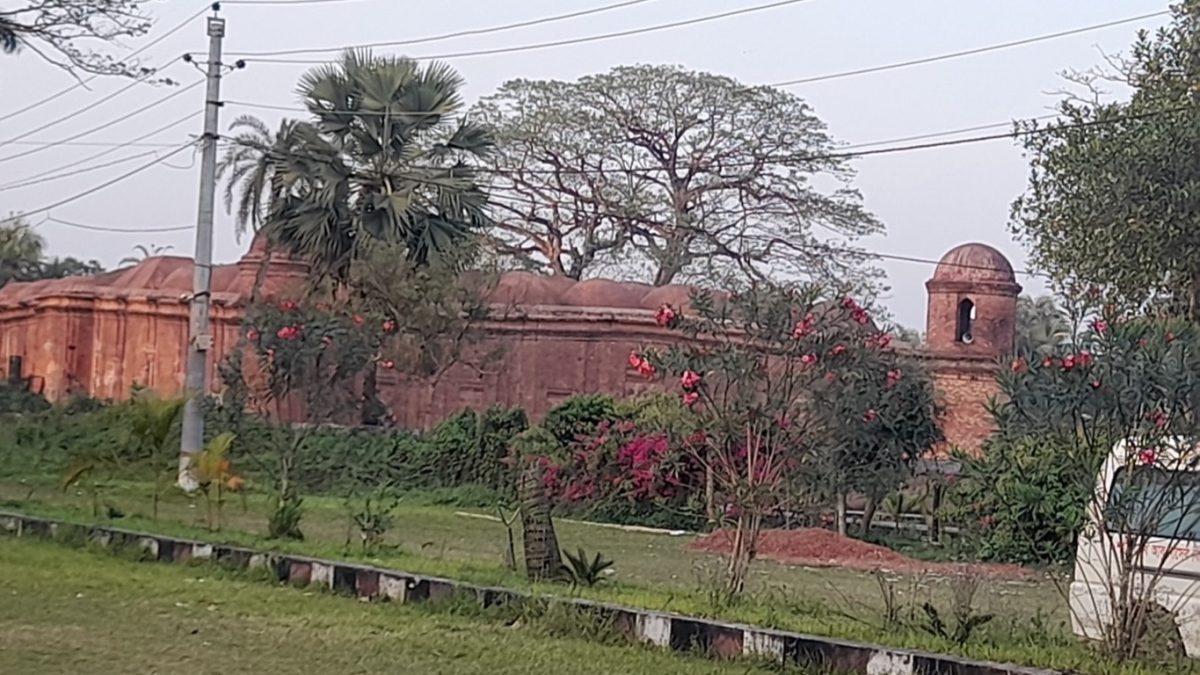
- Khan Jahan Ali of Bagerhat (15th Century): A military administrator turned Sufi pioneer, Khan Jahan Ali cleared the impenetrable mangrove forests of the Sundarbans in southern Bengal, founding the city-state of Khalifatabad (modern Bagerhat). He dug hundreds of massive freshwater reservoirs (Dighis) for disease-ridden villagers and engineered over three hundred brick mosques, crowned by the UNESCO World Heritage Sixty Dome Mosque (Shat Gombuj Masjid).
- Baba Adam Shahid (Rampur, Vikrampur) and Makhdum Shah Daula (Shahjadpur, Pabna): Early pioneers who built agrarian settlements and mediated local disputes along major river arteries.
As documented by the eminent historian Richard Eaton in The Rise of Islam and the Bengal Frontier, these Sufi pirs acted not merely as religious evangelists, but as pioneering agrarian colonizers. Armed with royal charters, they organized forest clearing, drained alluvial swamplands, built brick mosques that served as community centers, and incorporated indigenous forest populations into settled rice-cultivation communities. In doing so, they forged a unique synthesis of Islamic spirituality and deltaic Bengali culture.
Primary Academic References
- Minhaj-i-Siraj Juzjani. (1260). Tabaqat-i-Nasiri (Trans. H. G. Raverty, 1881). Asiatic Society of Bengal.
- Eaton, R. M. (1993). The Rise of Islam and the Bengal Frontier, 1204–1760. University of California Press.
- Habib, M., & Nizami, K. A. (1970). A Comprehensive History of India: The Delhi Sultanat. People’s Publishing House.
- Karim, A. (1959). Social History of the Muslims in Bengal (Down to A.D. 1538). Asiatic Society of Pakistan.