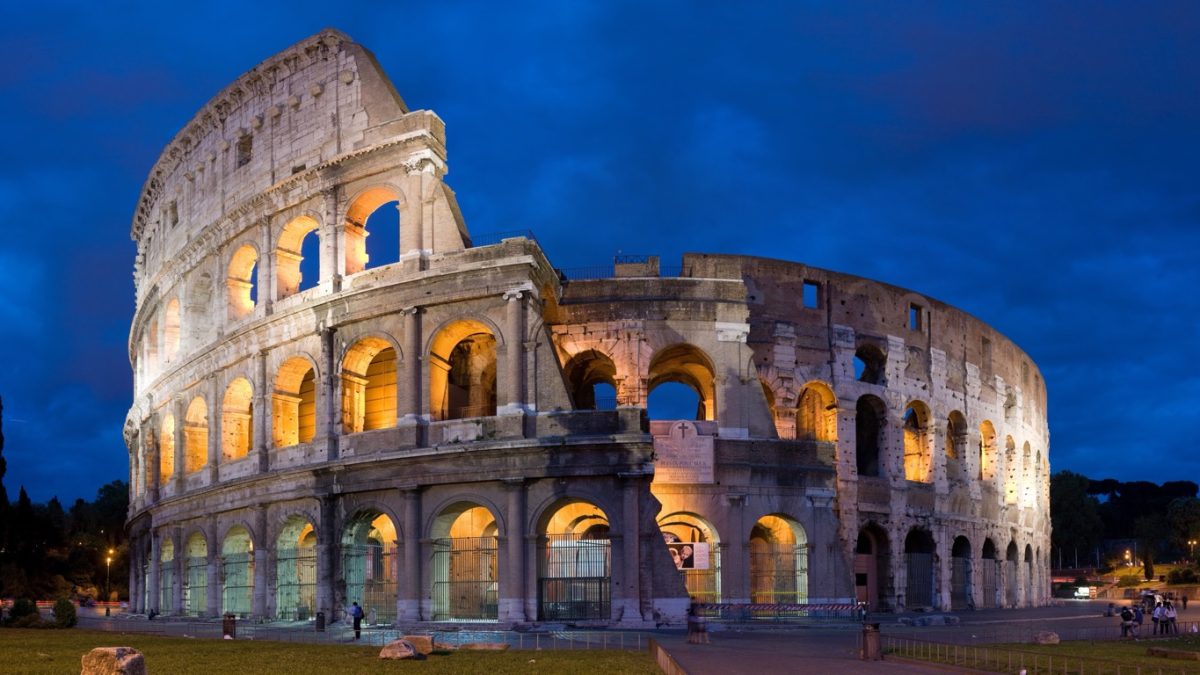
From a humble, mud-brick pastoral village founded on the muddy banks of the Tiber River among seven rolling hills, there arose the most formidable, disciplined, and enduring institutional empire in Western history: Ancient Rome. Over a millennium, Rome evolved through three tectonic epochs: the archaic Kingdom, the fiercely competitive senatorial Republic (Res Publica), and the autocratic yet administrative marvel of the Principate and Empire. Rome bequeathed to humanity the foundational architecture of civil jurisprudence (Roman Law), the engineering mastery of arched concrete aqueducts and amphitheaters, and the golden, interconnected century of peace known as the Pax Romana.
The Genius of the Republic: Mixed Constitutionalism
In 509 BCE, according to Roman founding tradition, the citizens expelled their despotic Etruscan monarch Tarquin the Proud and swore a sacred oath never again to tolerate a king. In his place, they established the Res Publica—literally “the public affair” or commonwealth—inscribed across standards and monuments with the iconic motto SPQR: Senatus Populusque Romanus (“The Senate and the People of Rome”).
The Greek historian Polybius famously analyzed the miraculous stability of the Roman Republic as the world’s first successful Mixed Constitution, balancing the three pure forms of government:
- The Monarchical Element: Two annually elected Consuls wielding supreme civil and military executive authority (imperium), accompanied by bodyguards carrying the rods and axes of the fasces.
- The Aristocratic Element: The Senate, an advisory council of several hundred former magistrates and patrician elders who controlled the state treasury, foreign policy, and provincial assignments.
- The Democratic Element: Popular Assemblies of citizens (Comitia Centuriata and Concilium Plebis) that voted on legislation, declared war, and elected magistrates, protected by the SACROSANCT Tribunes of the Plebs possessing absolute veto power (Veto, “I forbid”).
Through two centuries of internal political struggle known as the Conflict of the Orders, plebeians forced the patricians to engrave the laws onto bronze tablets publicly displayed in the Roman Forum: The Twelve Tables (450 BCE), establishing the supremacy of written, equal law over arbitrary aristocratic whim.
The Iron Legions and the Fall of the Republic
The instrument of Roman expansion was the Roman Legion. Unlike the rigid Greek phalanx that broke on uneven terrain, the Roman army operated as an adaptable, modular machine organized into maniples and cohorts. Protected by the rectangular curved plywood shield (scutum), legionaries broke enemy lines with the heavy armor-piercing javelin (pilum) before closing for ruthless hand-to-hand combat with the short stabbing sword (gladius hispaniensis).
Through three catastrophic Punic Wars (264–146 BCE) against the maritime empire of Carthage, Rome survived the military genius of Hannibal Barca, razed Carthage to the ground, and transformed the entire Mediterranean basin into an imperial lake: Mare Nostrum (“Our Sea”).
Yet imperial conquest destroyed the republican social fabric. Influxes of millions of enslaved war captives bankrupted free Roman smallholder farmers, creating sprawling aristocratic slave plantations (latifundia). Ambitious warlords (Marius, Sulla, Pompey, and Julius Caesar) recruited landless proletarians into private client armies loyal to their general rather than the Senate. In 49 BCE, Julius Caesar crossed the Rubicon River, igniting civil war, declaring himself Dictator Perpetuo, and sealing the doom of the Republic before being assassinated on the Ides of March (44 BCE) by senators seeking in vain to restore liberty.
Augustus, the Principate, and the Pax Romana
Out of the ashes of civil war, Caesar’s adopted heir, Gaius Octavius, re-engineered the state with consummate political genius. In 27 BCE, he accepted the sacred title Augustus. Feigning the restoration of the traditional Republic, Augustus consolidated absolute military, executive, and tribunician powers under the modest guise of Princeps (“First Citizen”)—founding the Principate.
Augustus inaugurated the Pax Romana (Roman Peace), an extraordinary two-century era of relative stability, economic prosperity, and cultural flourishing stretching from Scotland to Mesopotamia across 50,000 miles of paved highways. Under the “Five Good Emperors” (Nerva, Trajan, Hadrian, Antoninus Pius, and Marcus Aurelius), the empire reached its territorial zenith and peak administrative brilliance.
Concrete, Arches, and the Architecture of Immensity
Rome did not merely conquer space; it engineered it. The secret of Roman architecture was the invention of hydraulic concrete: Opus Caementicium, manufactured by combining lime, volcanic ash from Pozzuoli (pozzolana), and aggregate rubble. Capable of setting even underwater, Roman concrete was light, fireproof, and extraordinarily durable.
By perfecting the true semi-circular arch, the barrel vault, and the dome, Roman architects built spaces of unprecedented volumetric scale:
- The Colosseum (Flavian Amphitheatre, 80 CE): A freestanding elliptical mountain of concrete and travertine standing four stories high, capable of seating 50,000 spectators evacuated in ten minutes through eighty numbered arched exits (vomitoria).
- The Pantheon (125 CE): Rebuilt under Emperor Hadrian, featuring the world’s largest unreinforced concrete dome (43.3 meters in diameter), crowned with a central nine-meter open eye (oculus) illuminating an awe-inspiring rotunda of pure geometric harmony.
- Aqueducts: Multi-tiered monumental arched arcades carrying hundreds of millions of gallons of pristine mountain water daily into urban bathhouses, fountains, and private homes over dozens of miles powered purely by gravity gradients (averaging 1 in 500 slope).
The Supreme Monument: The Corpus Juris Civilis
Rome’s most enduring gift to the modern world was not its legions or gladiators, but its legal jurisprudence: Roman Law. Codified in its definitive form in the sixth century CE under Byzantine Emperor Justinian as the Corpus Juris Civilis, Roman law established foundational legal principles that govern the civil codes of modern Europe, Latin America, and international law:
- Presumption of Innocence: Ei incumbit probatio qui dicit, non qui negat (“The burden of proof lies upon the accuser, not the accused”).
- Equity and Reasonableness: Laws must be interpreted with fairness, proportionality, and consideration of intent rather than blind literalism.
- Inviolability of Contract and Property: Private agreements between consenting legal persons carry the full binding force of law.
Rome fell to internal decay, economic crisis, and Germanic migrations in 476 CE, but its ghost haunts the modern world. Every time a citizen votes in a republic, walks beneath a stone arch, cites a legal statute, or reads the Latin alphabet, they are speaking the dialect of eternal Rome.