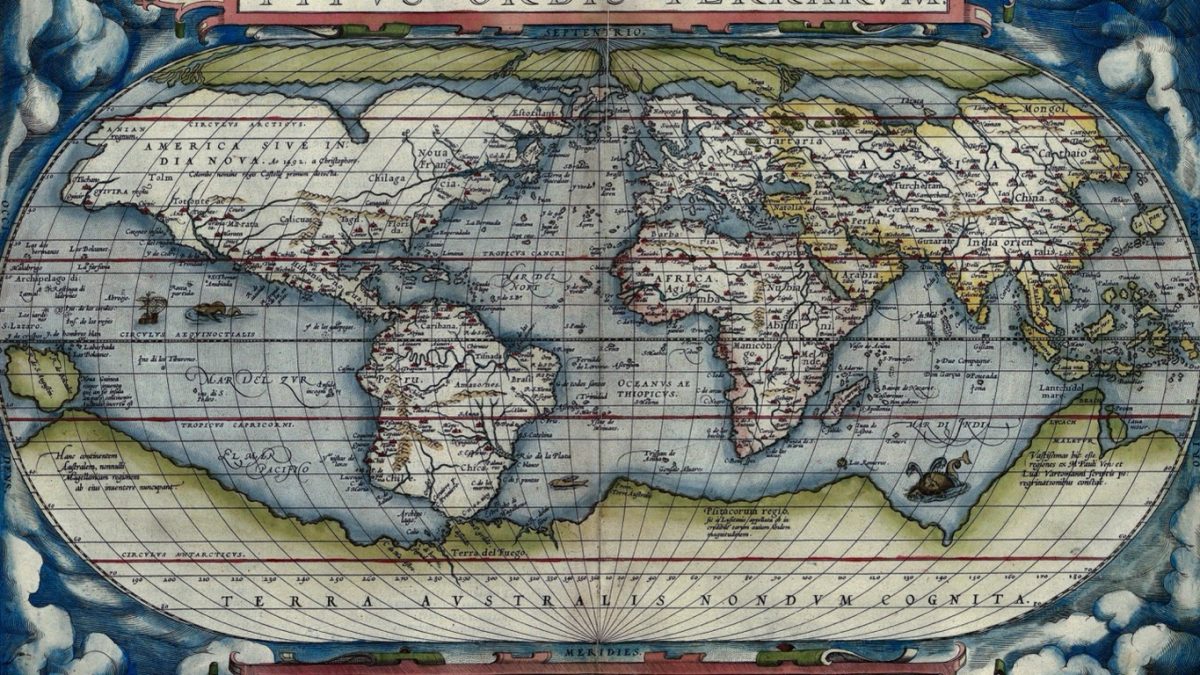
In the late fifteenth century, propelled by maritime engineering breakthroughs and motivated by the Ottoman closure of traditional overland Silk Road routes, European mariners launched into uncharted oceanic waters. The Age of Discovery (c. 1492–1700) transformed global geography through Iberian oceanic exploration led by Portugal and Spain. The fateful convergence of the Old and New Worlds inaugurated the Columbian Exchange—a monumental ecological and biological reallocation of crops, pathogens, and populations that laid the economic architecture of modern globalization.
The Oceanic Leap: Caravels, Lateen Sails, and the Volta do Mar
For millennia, Mediterranean and European seafaring was confined to coastal cabotage. Venturing into the open Atlantic required solving perilous navigational and mechanical problems:
- The Caravel: Developed by Portuguese shipwrights under the patronage of Prince Henry the Navigator, the caravel combined a shallow-draft hull with a hybrid sail configuration: square sails for sustained running before Atlantic trade winds, and triangular Arabic lateen sails that enabled the ship to tack into the wind (sail close-hauled).
- Celestial Navigation: Portuguese mariners adapted the astrolabe and quadrant to measure the meridian altitude of the North Star (Polaris) or the midday sun, utilizing solar declination tables to calculate precise latitude in the featureless oceanic expanse.
- The Volta do Mar: Rather than fighting persistent southward headwinds along the African coast, Portuguese navigators discovered the counterintuitive circular oceanic gyre: sailing far west into the open Atlantic until catching prevailing westerly winds back to Lisbon.
In 1488, Bartolomeu Dias rounded the stormy Cape of Good Hope; a decade later, in 1498, Vasco da Gama traversed the Indian Ocean to land at Calicut in India, breaking the Venetian-Mamluk monopoly on the lucrative spice trade.
1492: Columbus and the Collision of Hemispheres
Simultaneously, Genoese navigator Christopher Columbus, sailing under the Spanish crown of Ferdinand and Isabella, calculated that Asia could be reached by sailing westward across the Atlantic. Underestimating the Earth’s circumference by twenty-five percent and entirely unaware of an intervening continental landmass, Columbus made landfall in the Bahamas on October 12, 1492.
This encounter unleashed catastrophic conquest across Mesoamerica and South America. Spanish conquistadors led by Hernán Cortés dismantled the Aztec Empire of Tenochtitlan (1519–1521), while Francisco Pizarro conquered the Inca Empire in the Andean highlands (1532–1533). Through the 1494 Treaty of Tordesillas, mediated by Pope Alexander VI, Spain and Portugal divided the entire non-European globe along an oceanic meridian 370 leagues west of the Cape Verde Islands:
The Columbian Exchange: The Biological Transformation of Earth
The most consequential outcome of oceanic expansion was not political conquest, but the global ecological revolution termed by historian Alfred Crosby as the Columbian Exchange. Having evolved in complete biological isolation since the Beringia land bridge submerged fifteen thousand years earlier, the ecosystems of Afro-Eurasia and the Americas collided:
- American Crops to the Old World: The introduction of calorically dense American domesticates—potatoes, maize, sweet potatoes, cassava, tomatoes, chili peppers, and cacao—fundamentally transformed Eurasian agriculture. The potato sparked a demographic boom across northern and eastern Europe, while maize and sweet potatoes supported population explosions in Ming and Qing dynasty China.
- Eurasian Livestock and Sugar to the Americas: Europeans introduced horses, cattle, pigs, sheep, wheat, coffee, and sugarcane to the Americas, reshaping indigenous hunting and establishing monoculture plantation landscapes.
- The Great Dying (The Epidemiological Catastrophe): Indigenous Americans possessed zero acquired immunological resistance to Afro-Eurasian pathogens: smallpox, measles, typhus, and influenza. Within a single century of European arrival, epidemic waves killed an estimated eighty to ninety percent of the native population—an existential demographic catastrophe totaling fifty to sixty million lives.
Silver, Mercantilism, and the Atlantic Triangle
In 1545, Spanish prospectors discovered the mountain of silver at Potosí in modern Bolivia (the “Rich Mountain”), alongside the mines of Zacatecas in Mexico. Exploiting the brutal indigenous draft labor system (the Mita) and mercury amalgamation refining, Spain extracted thousands of tons of silver.
Spanish “Pieces of Eight” (Reales de a Ocho) became the world’s first global reserve currency, shipped aboard the Manila Galleons across the Pacific to purchase Chinese silk, porcelain, and tea, while fueling inflation across European markets.
To replace the decimated indigenous labor force on tropical sugar plantations in the Caribbean and Brazil, European mercantilist powers instituted the horrific Transatlantic Slave Trade. Over the next three centuries, more than twelve million enslaved Africans were forcibly transported across the Middle Passage under unspeakable conditions, permanently altering the demographics, cultures, and economies of the Atlantic basin.
The Age of Discovery permanently erased the geographic fragmentation of ancient civilizations. In uniting the world’s oceans, European explorers initiated an interdependent planetary system whose commercial wealth, ecological shifts, and human migrations laid the foundations of the modern capitalist world-system.