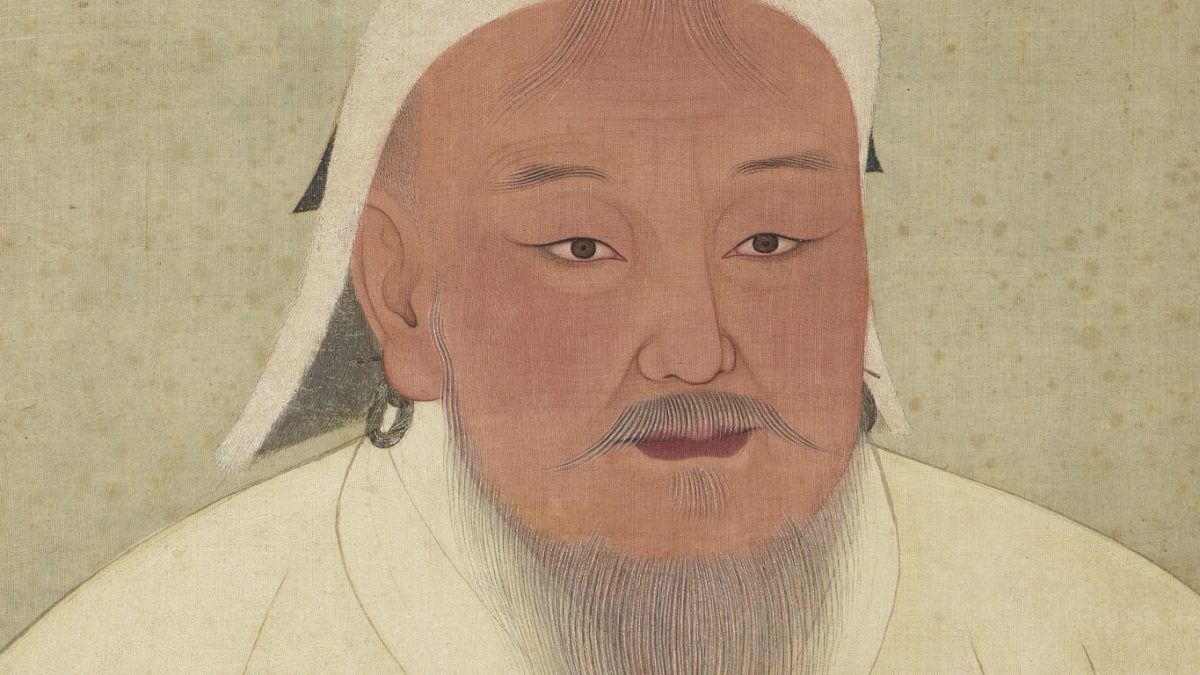
From the wind-scoured grasslands of the Inner Asian steppe emerged the most colossal contiguous land empire in human history. Under the charismatic genius of Genghis Khan (Temüjin) and his imperial descendants, the Mongol Empire (1206–1368 CE) unified the disparate worlds of China, Central Asia, Persia, the Rus principalities, and Eastern Europe beneath a single imperial overarching sovereignty. In doing so, the Mongols created the Pax Mongolica—a transcontinental zone of secure diplomatic exchange, religious freedom, and commercial connectivity that permanently bridged East and West.
The Nomadic Machine: Stirrups, Composite Bows, and Decimal Cohorts
The military supremacy of the nomadic Mongols was rooted in an exquisite synthesis of equestrian biology, tactical psychology, and draconian administrative discipline. Mongol society was nomadic pastoralism organized for total continental mobility:
- The Composite Reflex Bow: Fabricated from laminated layers of birch wood, animal sinew, horn, and waterproof fish bladder glue, the Mongol bow generated an extraordinary draw weight exceeding 150 pounds, capable of piercing armor at distances over two hundred meters while shot at full gallop using thumb rings.
- Equine Endurance: Every Mongol cavalryman campaigned with strings of three to five mares. Surviving on wild prairie grasses and mares’ fermented milk (airag), Mongol armies could traverse sixty to eighty miles of mountainous terrain in a single day without cumbersome supply wagons.
- The Decimal Military Structure (Arban to Tumen): Genghis Khan eliminated clan-based tribal loyalties, organizing his army into strictly disciplined decimal units: squads of 10 (Arban), companies of 100 (Zuun), regiments of 1,000 (Mingghan), and autonomous divisions of 10,000 (Tumen). Retreat under orders was punishable by execution for the entire cohort.
The Yam Postal Courier Network: The Medieval Internet
To administer an empire stretching from the Danube River to the Sea of Japan—spanning nearly twelve million square miles and over one-fifth of the globe—the Great Khans established the Yam (Örtöö) postal relay system.
Every twenty-five to thirty miles along imperial arteries stood fortified staging posts stocked with fresh relay horses, provisions, and armed garrisons. Imperial couriers wearing bells and carrying the Paiza—a bronze, silver, or gold passport tablet inscribed with the Khan’s divine authority—could ride continuously day and night, switching exhausted mounts within minutes:
The Yam allowed imperial dispatches and high-value merchants to cross the entire Eurasian landmass in weeks rather than months, functioning as the high-speed communications backbone of the medieval world.
The Pax Mongolica: The Trans-Eurasian Superhighway
While the initial waves of Mongol conquest were marked by terrifying calculated destruction—razing recalcitrant cities like Nishapur, Merv, and Samarkand to enforce psychological terror—the consolidation of imperial rule inaugurated an era of unprecedented institutional stability known as the Pax Mongolica.
Under the universal customary law of the Yassa codified by Genghis Khan, banditry was ruthlessly eradicated along the ancient Silk Road routes. A contemporary chronicler famously marveled that “a maiden bearing a golden tray could walk unharmed from the lands of the setting sun to the rising sun.”
The economic and intellectual consequences of this integration were revolutionary:
- Technological Transfer: Chinese printing, paper money concepts, navigational compasses, and gunpowder weapons traveled across the steppe to Persia, the Arab world, and Europe.
- Scientific Collaboration: At the Maragheh astronomical observatory in northwestern Iran, established under the Ilkhanid ruler Hulegu Khan and directed by polymath Nasir al-Din al-Tusi, Persian, Arab, and Chinese astronomers collaborated to draft new planetary tables and revise Ptolemaic trigonometry.
- Global Travel: Western merchants like the Venetian Marco Polo and Moroccan jurist Ibn Battuta traversed thousands of miles under the protection of Mongol passports, bringing first-hand documentation of the vast wealth and sophistication of East Asia back to fascinated Mediterranean audiences.
The Four Khanates and the Imperial Legacy
Following the death of Möngke Khan in 1259, the unified empire fractured into four autonomous successor states: the Yuan Dynasty in China founded by Kublai Khan; the Chagatai Khanate in Central Asia; the Ilkhanate in Persia and the Middle East; and the Golden Horde across the Russian steppes.
In China, Kublai moved the capital to Dadu (modern Beijing), embraced Chinese administrative statecraft, and promoted agricultural relief. In Persia and Russia, the Mongols gradually assimilated into the local Islamic and Turkic populations. Though the Black Death of the mid-fourteenth century disrupted transcontinental overland routes, the Pax Mongolica had irrevocably woven the isolated civilizational spheres of Eurasia into a single interdependent world history, planting the seeds of early global modernity.