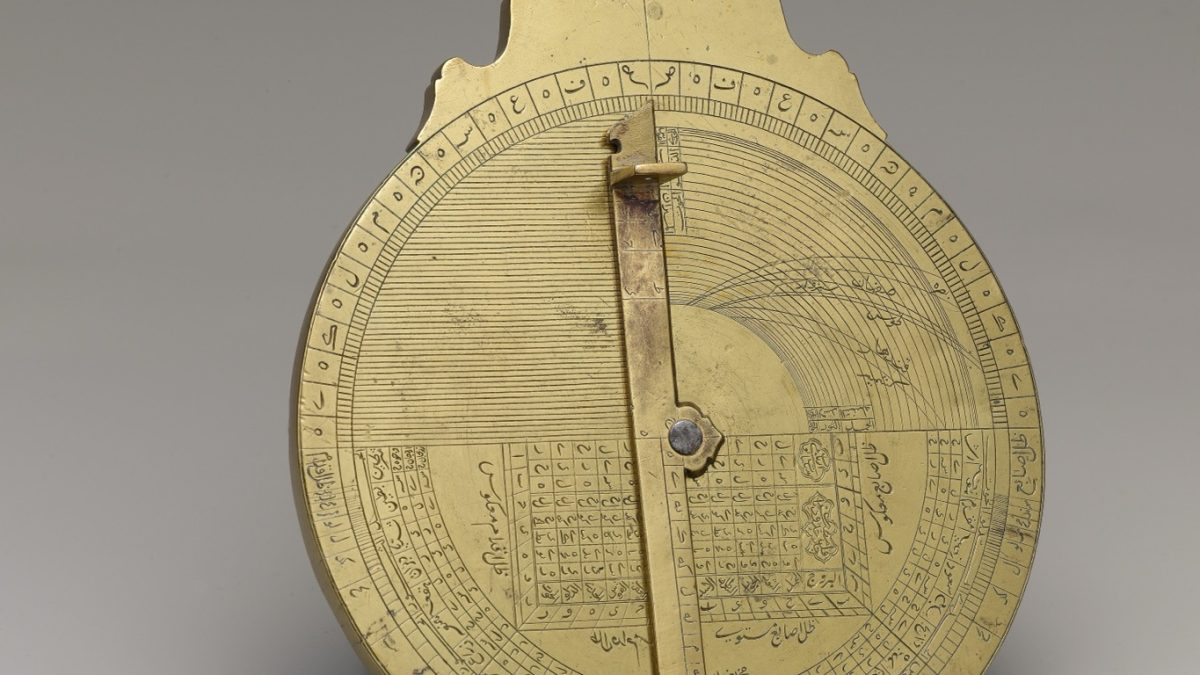
Between the eighth and thirteenth centuries, while Western Europe navigated fragmented feudal polities, the Islamic world sparked an unprecedented intellectual, scientific, and cultural renaissance known as the Islamic Golden Age. Centered within the cosmopolitan Abbasid metropolis of Baghdad at the legendary House of Wisdom (Bayt al-Hikmah), Muslim, Christian, Jewish, and Persian scholars systematically translated the philosophical and scientific inheritance of Greece, Persia, and India into Arabic, creating a revolutionary synthesis of experimental inquiry, algebra, optics, and empirical medicine that transformed global civilization.
The Round City: Baghdad as the Navel of the World
In 762 CE, the Abbasid Caliph Abu Ja’far al-Mansur founded a new imperial capital on the fertile banks of the Tigris River, naming it Madinat al-Salam (the City of Peace), universally known as Baghdad. Designed as a perfect concentric circle over two kilometers in diameter, bounded by double brick walls and surrounded by deep water moats, the Round City symbolized cosmic balance and universal sovereignty.
Baghdad occupied the grand logistical crossroads of Afro-Eurasian trade, intersecting the Silk Road caravans from China and Central Asia, the spice fleets sailing from India and Oman across the Persian Gulf, and the Mediterranean maritime lanes. Within decades, Baghdad swelled into the first metropolis of the post-classical world to exceed one million inhabitants, boasting paved illuminated streets, advanced sanitation, public hospitals (bimaristans), paper mills, and public libraries.
The House of Wisdom and the Grand Translation Movement
Under Caliphs Harun al-Rashid and his visionary son al-Ma’mun (r. 813–833 CE), the Abbasid state funded one of the most ambitious intellectual enterprises in human history: the Translation Movement, headquartered at the Bayt al-Hikmah (House of Wisdom).
Al-Ma’mun sent diplomatic envoys to Constantinople and across the Middle East to acquire original manuscripts in Greek, Pahlavi (Middle Persian), Sanskrit, and Syriac. Scholars of all faiths worked side by side. The Nestorian Christian scholar Hunayn ibn Ishaq and his translation academy translated the complete works of Aristotle, Plato, Galen, Hippocrates, and Euclid into lucid scientific Arabic:
- Arabic transformed into the undisputed international lingua franca of science, mathematics, and philosophy.
- Translations were not passive copies; scholars critically tested ancient assertions, corrected mathematical errors, and appended voluminous original commentaries.
- The adoption of Chinese rag-paper manufacturing technology (acquired following the Battle of Talas in 751 CE) radically lowered book production costs compared to European animal vellum, democratizing reading culture across thousands of public and private libraries.
The Birth of Algebra: Al-Khwarizmi and Algorithmic Thinking
Working in Baghdad’s House of Wisdom, the Persian mathematician and astronomer Muhammad ibn Musa al-Khwarizmi (c. 780–850 CE) revolutionized mathematical thought with his seminal treatise al-Kitab al-mukhtasar fi hisab al-jabr wal-muqabala (“The Compendious Book on Calculation by Completion and Balancing”). From the title word al-jabr (“restoration” or “completion”) stems the modern word Algebra.
Al-Khwarizmi liberated mathematics from geometric limitations, introducing systematic algebraic operations to solve linear and quadratic equations:
- Al-Jabr (Restoration): Removing negative terms by adding equivalent quantities to both sides of an equation ($x – 2 = 10 implies x = 12$).
- Al-Muqabala (Balancing): Reducing positive terms of the same power on both sides ($x^2 + 5 = 2x + 5 implies x^2 = 2x$).
- Introduction of Hindu-Arabic Numerals: In his treatise On the Calculation with Hindu Numerals, al-Khwarizmi introduced the positional decimal system and zero to the Middle East and later Europe. His Latinized surname gave humanity the word Algorithm.
The Scientific Method and Optics: Ibn al-Haytham
In eleventh-century Cairo, the polymath Ibn al-Haytham (Alhazen) (965–1040 CE) revolutionized experimental physics with his seven-volume masterpiece, the Kitab al-Manazir (Book of Optics). Classical philosophers, including Euclid and Ptolemy, believed in the “emission theory”—that vision occurred because rays of light emanated outward from the eye to illuminate objects.
Through systematic, controlled darkroom experiments using a Camera Obscura (al-Bayt al-Muthlim), Ibn al-Haytham disproved emission theory, establishing the modern “intromission theory”: vision occurs when external light rays reflect off objects and enter the pupil straight into the retina. In doing so, Ibn al-Haytham formulated the essential principles of the modern scientific method centuries before Francis Bacon or René Descartes:
“The duty of the man who investigates the writings of scientists, if learning the truth is his goal, is to make himself an enemy of all that he reads, and… attack it from every side. He should also suspect himself as he performs his critical examination.”
Medicine and Philosophy: Ibn Sina and Ibn Rushd
In medicine, the polymath Ibn Sina (Avicenna) (980–1037 CE) authored Al-Qanun fi al-Tibb (The Canon of Medicine). Spanning over a million words, this encyclopedic masterpiece classified diseases, identified the contagious nature of tuberculosis, introduced clinical quarantine to prevent epidemiological spread, and formulated over 760 pharmacological remedies. The Canon remained the standard medical textbook across European universities from Montpellier to Oxford until the mid-seventeenth century.
In philosophy, the dialogue between Islamic thought and classical antiquity reached its peak in Islamic Spain (Al-Andalus) through Ibn Rushd (Averroes) of Córdoba (1126–1198 CE). Averroes’ profound commentaries reconciling Aristotelian rationalism with religious revelation deeply influenced Christian scholastic thinkers like Thomas Aquinas and Jewish philosophers like Maimonides.
Though the Mongol sacking of Baghdad in 1258 destroyed the physical House of Wisdom, the intellectual currents forged during the Islamic Golden Age were already firmly anchored in European universities, Renaissance observatories, and the global scientific lexicon—from azimuth, zenith, and nadir to chemistry, alkali, and cipher.