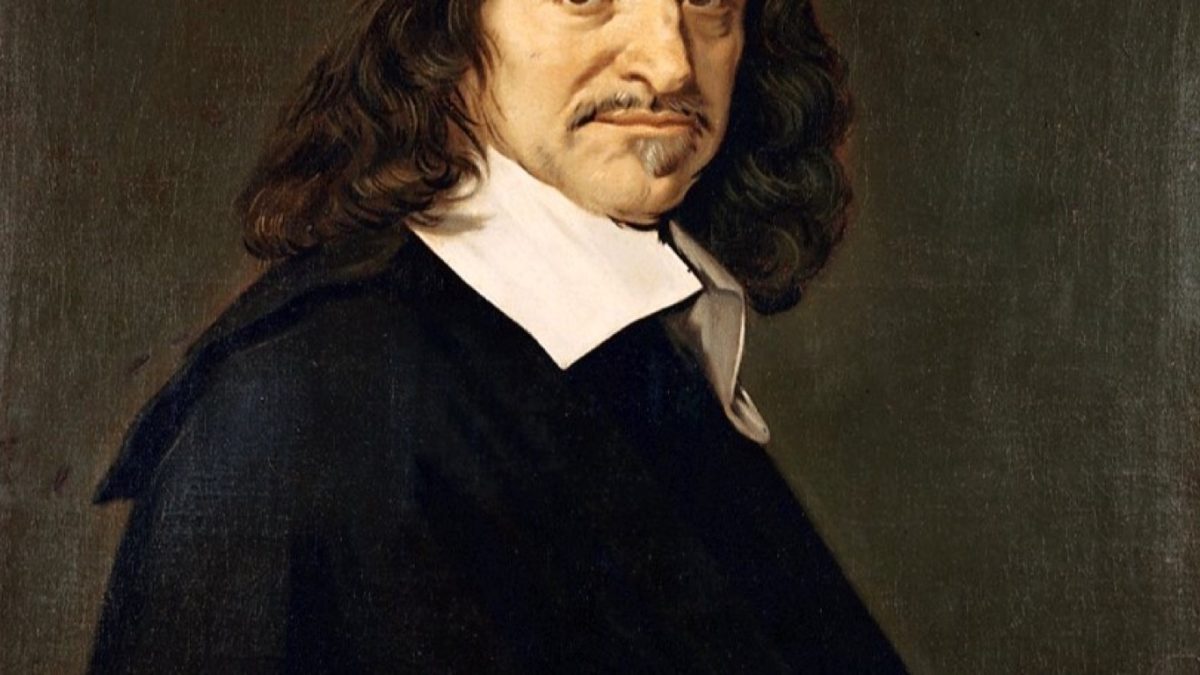
In 1641, seated by a winter stove in the Dutch countryside, French philosopher and mathematician René Descartes published his Meditations on First Philosophy. In a relentless quest for indubitable certainty, Descartes stripped away every sensory illusion until he reached an bedrock epistemological foundation: Cogito, ergo sum (“I think, therefore I am”). But in securing the reality of the thinking self, Descartes cleaved reality into two utterly irreconcilable ontological realms—substance dualism—creating the profound conundrum that has haunted philosophy and neuroscience ever since: the Mind-Body Problem.
Radical Doubt and the Discovery of the Cogito
Descartes began with methodical skepticism: our senses routinely deceive us in optical illusions; we cannot definitively prove we are not dreaming; an omnipotent ‘evil demon’ (malin génie) might be manipulating our perceptions of geometry, space, and our own flesh. Yet in the very act of doubting everything, one truth stood invincible: to doubt requires thought, and to think requires an existing entity doing the thinking:
“I noticed that while I wished to think everything false, it was necessarily true that I who was thinking this was something. And observing that this truth: I think, therefore I am, was so firm and secure that the most extravagant suppositions of the skeptics could not shake it, I judged that I could accept it without scruple as the first principle of the philosophy I was seeking.” — René Descartes, 1637
Res Cogitans versus Res Extensa
From this foundational certainty, Descartes constructed a bifurcated cosmology divided into two fundamentally distinct substances:
- Res Cogitans (Thinking Substance): The conscious mind or soul. It is non-physical, indivisible, unextended in space, possesses no mass, shape, or location, and is characterized by subjective awareness, will, rational thought, and feeling.
- Res Extensa (Extended Substance): The physical material universe, including rocks, planets, animals, and the human body itself. It has dimensions, volume, shape, motion, occupies space, and operates like clockwork mechanism governed strictly by deterministic mechanical laws.
Descartes viewed non-human animals as pure biological automata (bêtes-machines)—complex hydraulic automatons possessing no subjective experience, pain, or conscious awareness. Human bodies were similarly mechanical: reflexes were hydraulic loops where animal spirits flowed through hollow nerves like water through the automated fountains of the royal gardens at Saint-Germain-en-Laye.
The Pineal Gland: The Conarion Crossroads
If mind is non-physical and body is purely physical, how do they interact? How does an immaterial thought (“I wish to raise my arm”) cause physical muscles to contract? And how does physical light striking the retina produce immaterial subjective perception?
Descartes searched the anatomy of the brain for a unique gateway. He noted that nearly every cerebral structure—hemispheres, thalamus, ventricles—is duplicated bilaterally. Only one tiny pinecone-shaped structure near the center of the third ventricle appeared singular and unpaired: the pineal gland (conarion or epiphysis cerebri).
Descartes hypothesized that the pineal gland was the physical throne of the rational soul. Suspended in the flow of animal spirits, the immaterial mind could exert subtle mental steering forces on the gland, deflecting the pneumatic fluid into specific nerve tubes to actuate the body, while incoming sensory vapors jostled the gland to transmit perceptual impressions to the mind.
The Legacy of the Ghost in the Machine
Descartes’ solution was immediately attacked by his contemporaries. Princess Elisabeth of Bohemia wrote to Descartes in 1643, demanding to know how an unextended, non-physical soul could possibly possess physical contact surfaces to push physical matter without violating the conservation of motion. Baruch Spinoza rejected dualism altogether, proposing neutral monism: mind and matter are simply two attributes of a single unified substance.
In 1949, British philosopher Gilbert Ryle dismantled Cartesian dualism as a fundamental “category mistake,” famously labeling it the dogma of the “Ghost in the Machine.” Yet despite its scientific abandonment, Descartes bequeathed to humanity the sharpest definition of the central enigma of existence: how does subjective, first-person awareness arise from objective, third-person physical matter?