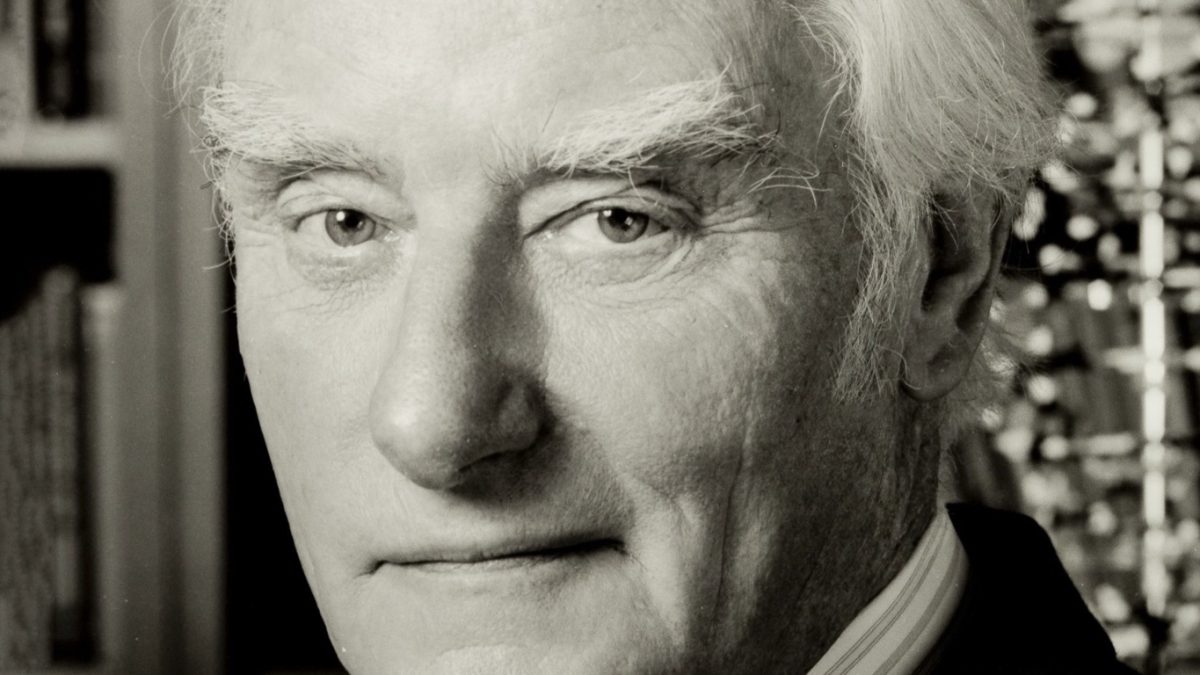
By the late 1980s, the study of consciousness was considered academic suicide for serious neuroscientists—a squishy, unmeasurable philosophical swamp best left to retirement musings or mystic poets. That all changed when Francis Crick, the legendary Nobel laureate who had co-discovered the double helix of DNA in 1953, decided to dedicate the final quarter-century of his life to solving the mystery of the soul. Partnering with brilliant young Caltech biophysicist Christof Koch, Crick published a 1990 manifesto that legitimized the field, launching the empirical quest for the Neural Correlates of Consciousness (NCC).
Crick’s Astonishing Hypothesis
In 1994, Crick articulated his uncompromising materialist philosophy in The Astonishing Hypothesis:
“‘You’, your joys and your sorrows, your memories and your ambitions, your sense of personal identity and free will, are in fact no more than the behavior of a vast assembly of nerve cells and their associated molecules. As Lewis Carroll’s Alice might have phrased it: ‘You’re nothing but a pack of neurons.'” — Francis Crick, 1994
Crick and Koch argued that science should set aside the philosophical “Hard Problem” for a generation and focus on pragmatic empirical discovery: identifying the minimal neuronal mechanisms jointly sufficient for any one specific conscious percept.
Binocular Rivalry: Decoupling Stimulus from Awareness
To isolate the NCC, neuroscientists needed a paradigm where physical sensory input remains perfectly constant while subjective conscious awareness flips back and forth. The premier experimental tool became binocular rivalry:
Using stereoscopic goggles, experimenters present an image of a red face to the left eye and a green house to the right eye. The brain cannot fuse these incompatible images. Instead of seeing a mixed blend, subjective consciousness alternates spontaneously: for a few seconds you see only the face; then it abruptly vanishes and you see only the house.
By recording single neurons in awake primates (Nikos Logothetis) and fMRI in humans, scientists searched for the inflection point where neural activity stops tracking the physical retinal input and begins tracking subjective awareness:
- The Frontoparietal Camp: Argues that consciousness requires prefrontal cortical networks driving cognitive report and executive access.
- The Posterior Hot Zone Camp: Led by Christof Koch and Giulio Tononi, arguing that the true NCC resides in a sensory-rich parietal-occipital-temporal “hot zone” in the back of the head. Massive bilateral prefrontal lesions do not abolish conscious experience; but damage to the posterior hot zone extinguishes visual and sensory awareness entirely.
Francis Crick demonstrated that the soul can be brought into the laboratory. The search for the Neural Correlates of Consciousness has mapped the physical shores of the mind, setting the stage for modern mathematical theories of awareness.
- In primary visual cortex (V1), neurons continue firing steadily in response to their retinal input, whether the subject consciously perceives the image or not. V1 is not part of the NCC!
- As signals ascend into higher ventral stream areas—the fusiform face area (FFA) and parahippocampal place area (PPA)—neural activity mirrors subjective perception with over 90% fidelity.
Gamma-Band 40-Hz Synchrony and the Binding Problem
How does the brain bind the color, shape, motion, and location of an object—processed in widely separated cortical areas—into a unified perceptual whole? In the early 1990s, Wolf Singer and Charles Gray discovered that neurons processing different attributes of the same object synchronize their action potentials in high-frequency gamma oscillations (30 to 70 Hz, peaking around 40 Hz):
$$text{Phase Synchrony: } Delta phi(t) approx 0 implies text{Unified Percept}$$
Crick and Koch initially championed 40-Hz oscillations as the physical mechanism of conscious binding, arguing that synchronized spikes allow distributed neuronal assemblies to stand out against asynchronous background noise.
The Posterior Hot Zone versus Prefrontal Networks
In his final paper, dictated on his deathbed in July 2004, Crick focused on the claustrum—a thin, enigmatic sheet of subcortical neurons that connects bidirectionally to nearly every area of the cortex, proposing it functioned as the master conductor coordinating the cortical orchestra of consciousness.
Today, the hunt for the NCC has coalesced into a fierce empirical showdown between two neuroanatomical camps:
- The Frontoparietal Camp: Argues that consciousness requires prefrontal cortical networks driving cognitive report and executive access.
- The Posterior Hot Zone Camp: Led by Christof Koch and Giulio Tononi, arguing that the true NCC resides in a sensory-rich parietal-occipital-temporal “hot zone” in the back of the head. Massive bilateral prefrontal lesions do not abolish conscious experience; but damage to the posterior hot zone extinguishes visual and sensory awareness entirely.
Francis Crick demonstrated that the soul can be brought into the laboratory. The search for the Neural Correlates of Consciousness has mapped the physical shores of the mind, setting the stage for modern mathematical theories of awareness.