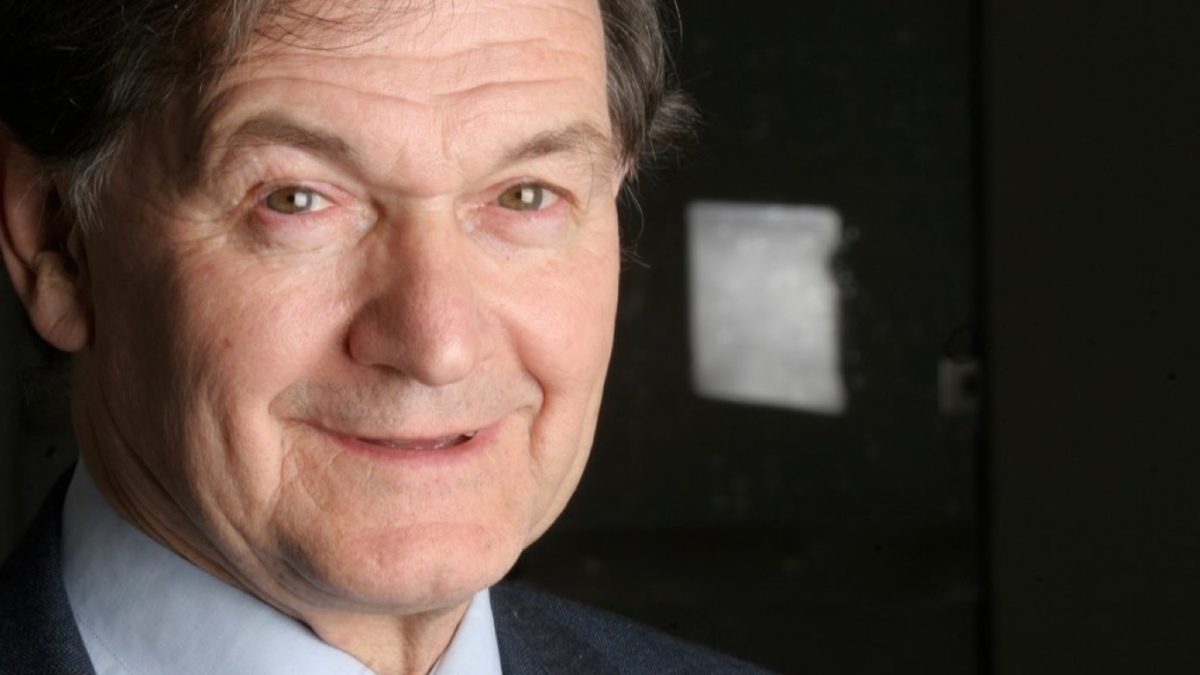
Could the human mind be nothing more than a wet, biological digital computer executing an algorithmic program? In 1989, world-renowned Oxford mathematical physicist Sir Roger Penrose published a monumental intellectual treatise, The Emperor’s New Mind, arguing that genuine human understanding and conscious insight are fundamentally non-computable. Drawing upon Kurt Gödel’s Incompleteness Theorems and the unresolved foundations of quantum mechanics, Penrose joined forces with American anesthesiologist Stuart Hameroff to propose one of the most audacious, controversial hypotheses in science: Orchestrated Objective Reduction (Orch-OR) in neuronal microtubules.
Gödel’s Incompleteness and Non-Computability
In 1931, logician Kurt Gödel proved that any consistent axiomatic mathematical system capable of doing arithmetic contains mathematical truths that can never be proven within the rules of the system itself:
“Human mathematicians can perceive the truth of Gödelian propositions that lie beyond the algorithmic reach of any formal computational program. Therefore, human consciousness cannot be a computational machine.” — Roger Penrose
If human thinking is non-algorithmic, standard classical physics—Newtonian mechanics, Maxwell’s equations, and deterministic computation—is structurally incapable of generating consciousness. The only physical phenomenon in nature that breaks determinism is the collapse of the quantum wavefunction.
Penrose’s Objective Reduction (OR)
In standard quantum mechanics (the Copenhagen interpretation), a particle exists in a linear superposition of multiple states until an external “observer” measures it. Penrose rejected this subjective observer requirement, proposing Objective Reduction (OR): a physical, objective collapse driven by quantum gravity.
According to General Relativity, every mass curves the spacetime fabric. A particle in quantum superposition of two locations curves spacetime in two distinct geometries simultaneously. As the gravitational self-energy difference ($E_G$) between these two spacetime geometries grows, the superposition becomes unstable, collapsing spontaneously into a single classical reality at a timescale governed by the Heisenberg uncertainty principle:
$$tau approx frac{hbar}{E_G}$$
Crucially, Penrose argued that this gravitational collapse is not random noise: it selects classical states based on non-computable principles woven into the fundamental geometry of spacetime at the Planck scale.
Hameroff’s Microtubules: The Biological Lattice
Penrose had a mathematical mechanism, but lacked a biological substrate: where in the warm, wet, noisy brain could delicate quantum superpositions survive long enough without decohering? Stuart Hameroff, studying how general anesthetics erase consciousness without stopping basic cellular metabolism, had the answer: microtubules.
Microtubules are cylindrical protein polymer lattices that form the internal cytoskeleton of every eukaryotic cell, especially dense inside neuronal dendrites and axons. Each cylinder (25 nm outer diameter) is constructed from spiraling arrays of tubulin dimers. Hameroff proposed that tubulin dipoles behave like quantum bits (qubits), oscillating in coherent quantum superpositions shielded inside hydrophobic channels.
Orchestrated Objective Reduction (Orch-OR)
Under the Orch-OR model:
- Quantum coherence builds across tubulin lattices in millions of neurons, synchronized by gap junctions.
- The quantum state is “orchestrated” by synaptic inputs, memory traces, and cellular biology.
- When the combined mass reaches the gravitational threshold ($tau approx hbar / E_G$), a spontaneous Objective Reduction collapse occurs (roughly 40 times per second, matching gamma EEG rhythms!).
- Each collapse is a discrete moment of conscious experience—a proto-conscious quantum event embedding non-computable insight directly from the geometry of the universe into human cognition.
The Decoherence Debate and Quantum Biology
Orch-OR was fiercely attacked by mainstream physicists. In 2000, MIT physicist Max Tegmark calculated that thermal collisions in the warm, wet brain would destroy quantum superpositions in less than $10^{-13}$ seconds—ten trillion times too fast for neurobiological timescales!
Yet in recent years, the emerging field of quantum biology has proven that nature routinely exploits quantum coherence in warm, wet environments—from avian magnetoreception in migrating birds to near-100% quantum efficiency in photosynthetic reaction centers (Fenna-Matthews-Olson complexes). Furthermore, experiments by Anirban Bandyopadhyay at NIMS in Japan detected quantum resonance states and megahertz electrical conductivity inside isolated neuronal microtubules.
Whether Orch-OR is fully vindicated or not, Penrose and Hameroff forced science to confront a profound possibility: our conscious awareness may not be an accidental computational trick of biological meat, but a direct resonant bridge to the deepest quantum geometry of the cosmos.