For nearly a century, biological dogma held that the adult human brain was hardwired and immutable. In 1928, Santiago Ramón y Cajal famously declared: “In the adult centers, the nerve paths are something fixed, ended, and immutable. Everything may die, nothing may be regenerated.” The brain was viewed as an intricate telephone switchboard whose cables, once laid down in childhood, could never be restrung. In the late twentieth century, Austrian-American neurobiologist Eric Kandel demolished this static dogma by probing the simple nervous system of a giant marine sea snail, revealing that consciousness is physically sculpted by experience: neuroplasticity.
Hebb’s Postulate: Cells That Fire Together Wire Together
In 1949, Canadian psychologist Donald Hebb published The Organization of Behavior, proposing an audacious theoretical mechanism for learning. Hebb hypothesized that when an axon of cell A repeatedly and persistently takes part in firing cell B, some growth process or metabolic change occurs in one or both cells such that A’s efficiency in firing B is increased:
“When two neurons fire together, they wire together.” — The Hebbian Rule
In 1973, Terje Lømo and Timothy Bliss in Per Andersen’s laboratory in Oslo confirmed Hebb’s postulate empirically in the rabbit hippocampus: high-frequency electrical tetanic stimulation induced a long-lasting, hours-long increase in synaptic transmission efficiency: Long-Term Potentiation (LTP), mediated by calcium influx through NMDA glutamate receptors.
Aplysia californica: The Sea Slug Revolution
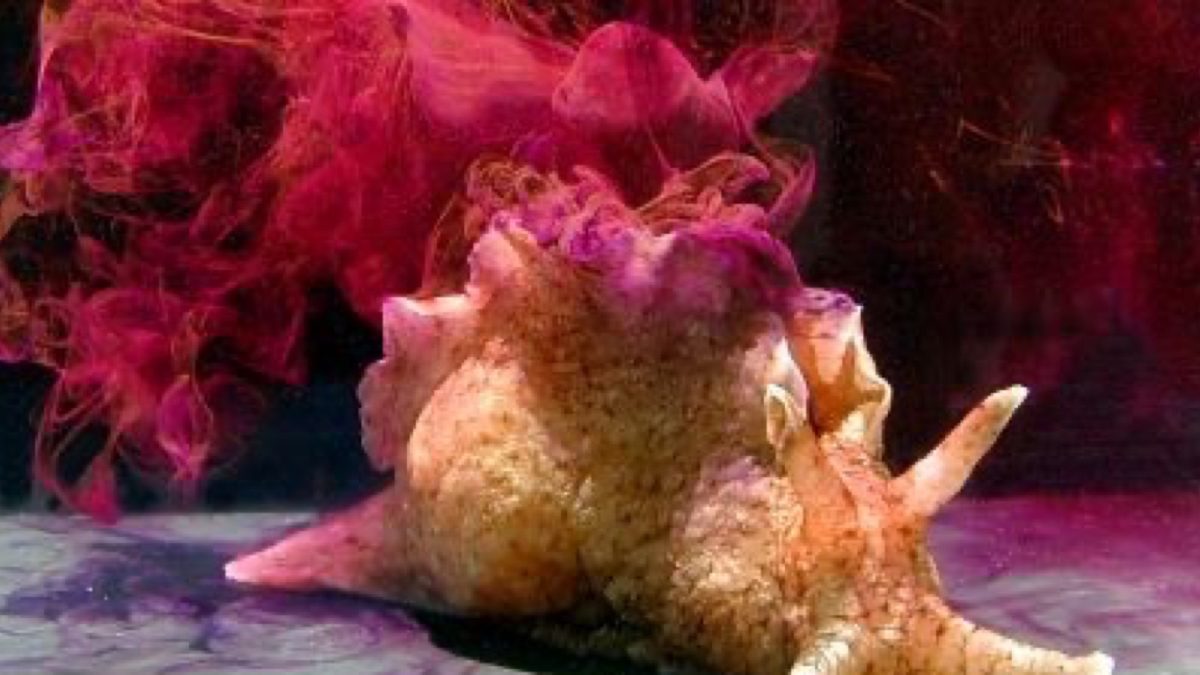
While most neuroscientists sought the molecular basis of memory in complex mammalian brains, Eric Kandel at Columbia University took a daring reductionist turn: he chose Aplysia californica, a giant marine mollusk weighing several pounds.
Aplysia possessed immense experimental advantages: its central nervous system consists of barely 20,000 neurons (compared to 86 billion in humans), clustered into distinct ganglia with gargantuan, brightly pigmented cell bodies up to 1 millimeter in diameter—easily impaled with multiple microelectrodes and identifiable individually from animal to animal.
Short-Term versus Long-Term Memory at the Synapse
Kandel investigated the gill and siphon withdrawal reflex: spraying water on the siphon causes the snail to retract its fragile respiratory gill defensively.
- Habituation: Repeated gentle tactile taps teach the snail that the stimulus is harmless; the reflex gradually diminishes. Kandel proved this was caused by presynaptic depression: voltage-gated calcium channels become less responsive, reducing glutamate release onto motor neurons.
- Sensitization: Pairing a gentle tap with a noxious electrical shock to the tail triggers dramatic reflex amplification. Modulatory interneurons release serotonin, activating adenylate cyclase to produce cyclic AMP (cAMP) and Protein Kinase A (PKA), which blocks potassium channels, prolongs the action potential, and floods the terminal with calcium, boosting transmitter release.
- Long-Term Plasticity (Structural Remodeling): Repeated sensitization training causes PKA to translocate into the cell nucleus, phosphorylating the transcription factor CREB-1 (cAMP response element-binding protein). This activates gene expression, synthesizing new proteins that physically sprout new synaptic varicosities and dendritic terminals!
Short-term memory involves the chemical modification of pre-existing proteins; long-term memory requires the synthesis of new physical synapses. Experience literally reconstructs the biological hardware of the brain.
Adult Neurogenesis: New Neurons in the Adult Mind
In the late 1990s, Elizabeth Gould at Princeton and Fred Gage at the Salk Institute overturned Cajal’s final prohibition, proving that the adult human brain continuously generates new neurons throughout life: adult neurogenesis, localized to the subgranular zone of the hippocampal dentate gyrus and the subventricular zone.
Consciousness is not an immutable stone monument, but an ever-shifting, self-sculpting river. Every novel experience, every book read, and every memory formed physically alters the synaptic topography of the mind.