Is the brain an undifferentiated, holistic organ where every part participates equally in every mental act—as the influential French physiologist Marie-Jean-Pierre Flourens insisted—or is the cerebral cortex a modular federation of specialized processing engines? In the nineteenth century, neurology answered this question not through pure theory, but through dramatic clinical catastrophes: an iron rod blasted through the frontal lobe of a Vermont railroad foreman, and stroke victims in Parisian asylums who lost the power of articulate speech while retaining their sanity.
The Pseudoscience of Phrenology: Gall’s Intuition and Folly
At the dawn of the nineteenth century, Viennese physician Franz Joseph Gall proposed organology (later termed phrenology by Johann Spurzheim). Gall made a brilliant foundational leap: he argued that the brain is the sole organ of the mind, and that distinct mental faculties—linguistic ability, cautiousness, destructiveness, veneration—reside in distinct cerebral organs.
However, Gall committed a fatal methodological error: he claimed that the development of these cerebral faculties caused corresponding bumps and depressions on the external bony cranium. Phrenology degenerated into a popular Victorian parlor trick, but it introduced the revolutionary concept of cortical localization.
Phineas Gage: The Iron Rod Through the Soul
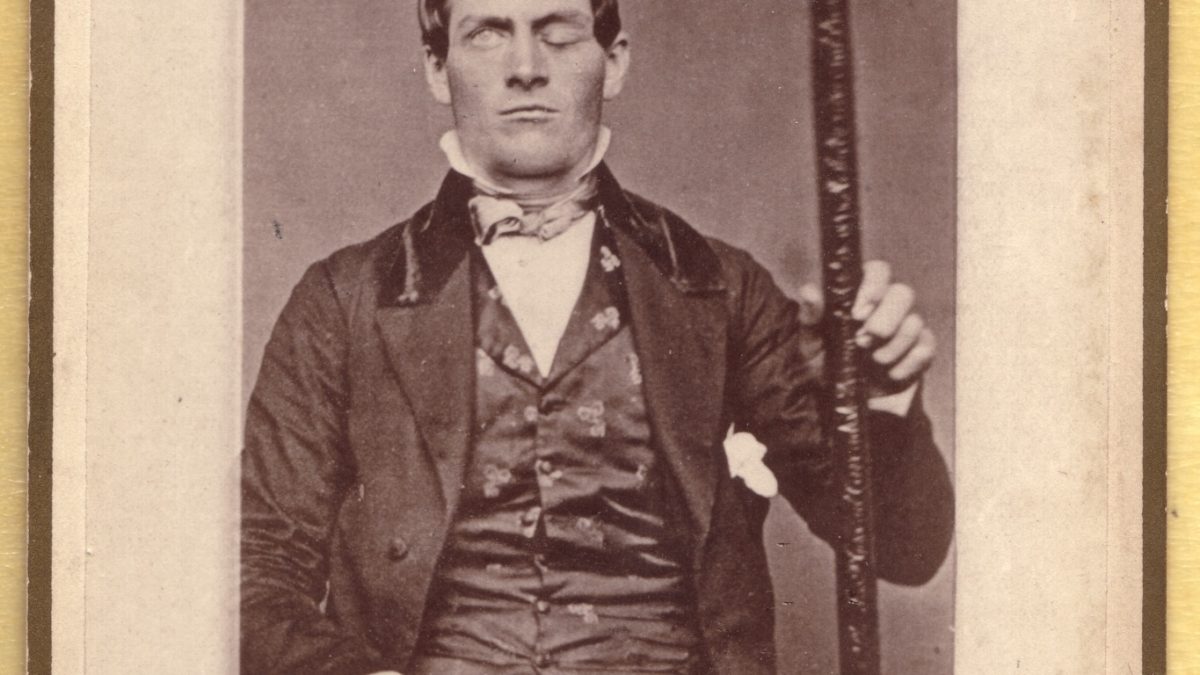
On September 13, 1848, near Cavendish, Vermont, twenty-five-year-old railroad construction foreman Phineas Gage was tamping gunpowder into a blasting hole. A spark ignited the charge, rocketing a 3-foot-7-inch, 13-pound iron tamping rod directly through his left cheek, piercing his frontal lobes, and exiting the top of his cranium, landing eighty feet away smeared with blood and brain tissue.
Gage not only survived the catastrophic trauma, but remained conscious and conversant within minutes. Yet his recovery revealed a chilling psychological truth: while his memory, speech, perception, and motor coordination were completely intact, his personality had been radically shattered. Formerly polite, industrious, and a responsible leader, Gage became capricious, irreverent, profane, and unable to plan for the future. His physician, John Martyn Harlow, famously observed: “Gage was no longer Gage.”
Gage provided the first dramatic clinical evidence that the prefrontal cortex is the biological seat of executive control, social inhibition, emotional regulation, and ethical judgment.
Paul Broca and Patient ‘Tan’
In 1861, at the Bicêtre Hospital near Paris, French surgeon and anthropologist Paul Broca encountered fifty-one-year-old Louis Victor Leborgne. For twenty-one years, Leborgne had suffered from an extraordinary speech deficit: he understood everything said to him, but could utter only a single repetitive monosyllable: “Tan” (accompanied by expressive hand gestures).
When Leborgne died days later, Broca performed an immediate autopsy. He found a distinct syphilitic lesion localized to the posterior inferior frontal gyrus of the left cerebral hemisphere—now celebrated worldwide as Broca’s Area:
“Nous parlons avec l’hémisphère gauche!” (“We speak with the left hemisphere!”) — Paul Broca, 1861
Carl Wernicke and Receptive Aphasia
Thirteen years later, in 1874, German neurologist Carl Wernicke discovered a mirror pathology. His patients could articulate words with fluid, effortless grammatical cadence, but their speech was nonsensical “word salad” (e.g., “The barking dog baked a telegraph down the sky”), and they could not comprehend spoken or written language.
Wernicke identified the lesion in the posterior superior temporal gyrus of the left hemisphere: Wernicke’s Area. Wernicke constructed the first connectivity model of neurological processing: auditory speech sounds are processed in Wernicke’s area, transmitted via a white matter fiber tract called the arcuate fasciculus to Broca’s area, which programs the motor articulation sequences transmitted to the primary motor cortex.
Penfield’s Homunculus: The Cortical Map
In the 1930s and 40s at the Montreal Neurological Institute, neurosurgeon Wilder Penfield performed awake craniotomies on patients with intractable epilepsy under local anesthesia. Applying a gentle electrical probe to the precentral and postcentral gyri, Penfield mapped the motor and sensory homunculus:
The human body is mapped onto the cerebral cortex not by physical surface area, but by biological importance: vast cortical expanses are dedicated to the sensitive fingertips, lips, tongue, and vocal apparatus, while the torso and legs occupy tiny slivers. Consciousness was revealed to be a magnificent mosaic of specialized, interconnected cortical provinces.