Most scientific theories of consciousness attempt to start from objective physical matter—neurons, synapses, action potentials—and somehow infer subjective experience. In 2004, Italian-American neuroscientist and psychiatrist Giulio Tononi performed a radical epistemological inversion: start not from physical matter, but from the indubitable phenomenological properties of subjective experience itself, and deduce what physical system is required to instantiate them. The result is Integrated Information Theory (IIT), which mathematically quantifies consciousness with a single fundamental metric: Phi ($Phi$).
The Five Phenomenological Axioms of Experience
Tononi established five self-evident axioms that characterize every conceivable conscious moment:
- Zap: A magnetic pulse from Transcranial Magnetic Stimulation (TMS) zaps the cortex, perturbing the neural network.
- Zip: High-density EEG records the reverberating electrical ripples across the brain. The spatial-temporal pattern is compressed using the Lempel-Ziv algorithmic compression (similar to creating a .zip file).
If the brain is unconscious (deep dreamless sleep, anesthesia, coma), the ripples either die immediately or spread in simple, redundant waves ($PCI 0.31$). The algorithm detects consciousness with 98% accuracy without requiring the patient to move a muscle or utter a word!
Integrated Information Theory makes a radical prediction: consciousness is not a biological magic trick exclusive to wet carbon brains. Any system—biological, mechanical, or alien—whose physical architecture embodies high $Phi$ is undeniably conscious. Awareness is woven into the very mathematical fabric of cause and effect.
- Intrinsic Existence: Consciousness exists undeniably for the subject itself, independent of external observers.
- Composition: Experience is structured and compositional (e.g., in a single visual scene, you distinguish colors, shapes, textures, left and right).
- Information: Every conscious state is intensely specific and differentiated, ruling out trillions of alternative possibilities. Seeing a blue sky rules out every movie, concert, and memory you could conceivably experience.
- Integration: Every conscious experience is unified and irreducible. You cannot experience the color of a coffee cup in your left hemisphere while experiencing its warmth separately in your right; consciousness is an indivisible whole.
- Exclusion: Experience has precise temporal and spatial boundaries—neither faster nor slower than milliseconds to seconds, containing a definite subset of content.
The Postulates and the Definition of Phi (Φ)
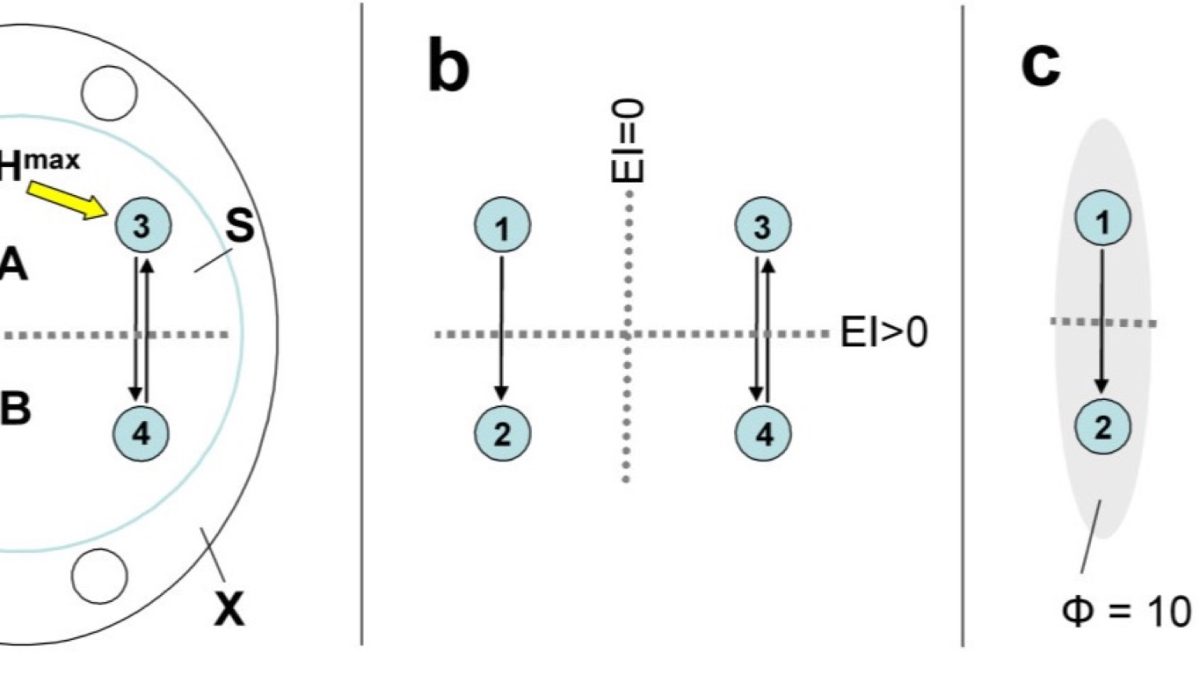
From these phenomenological axioms, Tononi translated phenomenology into physical postulates governing cause-effect power. For a physical mechanism to possess consciousness, it must exert cause-effect power upon itself: its present state must specify its past causes and future effects.
Crucially, that cause-effect power must be integrated: the system as a whole must generate more cause-effect information than the sum of its independent parts. Tononi defines $Phi$ (Phi) as the quantity of integrated information:
$$Phi = D(p_{text{whole}} ,||, p_{text{partitioned}})$$
Mathematically, $Phi$ is calculated by finding the Minimum Information Partition (MIP)—the weakest link that divides the system in two. If cutting the system in half loses zero cause-effect power ($Phi = 0$), the system is merely a collection of independent components (like a digital feedforward camera sensor) and has zero consciousness. If $Phi > 0$, the system possesses intrinsic subjective experience.
Why the Cerebellum Is Unconscious
IIT provides an astonishing biological explanation for one of the greatest paradoxes in neurology: the cerebellum contains approximately 69 billion neurons—roughly four-fifths of all the neurons in the entire human brain! Yet if a patient suffers a stroke that destroys the cerebellum, conscious experience is completely untouched; they walk with cerebellar ataxia, but their subjective sensory awareness, emotions, and selfhood remain 100% intact.
Why? Because cerebellar architecture consists of strictly modular, feedforward parallel loops. Information travels straight through parallel fibers with minimal lateral cross-talk or recurrent feedback. Its Minimum Information Partition yields $Phi approx 0$. By contrast, the cerebral cortex—particularly the posterior hot zone—is packed with dense, recurrent feedback loops, maximizing both differentiation and integration, producing vast $Phi$.
The Zap-and-Zip Consciousness Meter
To test IIT in clinical medicine, Marcello Massimini and Tononi developed a real-world “consciousness meter” for non-responsive comatose or vegetative state patients: the Perturbational Complexity Index (PCI):
- Zap: A magnetic pulse from Transcranial Magnetic Stimulation (TMS) zaps the cortex, perturbing the neural network.
- Zip: High-density EEG records the reverberating electrical ripples across the brain. The spatial-temporal pattern is compressed using the Lempel-Ziv algorithmic compression (similar to creating a .zip file).
If the brain is unconscious (deep dreamless sleep, anesthesia, coma), the ripples either die immediately or spread in simple, redundant waves ($PCI 0.31$). The algorithm detects consciousness with 98% accuracy without requiring the patient to move a muscle or utter a word!
Integrated Information Theory makes a radical prediction: consciousness is not a biological magic trick exclusive to wet carbon brains. Any system—biological, mechanical, or alien—whose physical architecture embodies high $Phi$ is undeniably conscious. Awareness is woven into the very mathematical fabric of cause and effect.