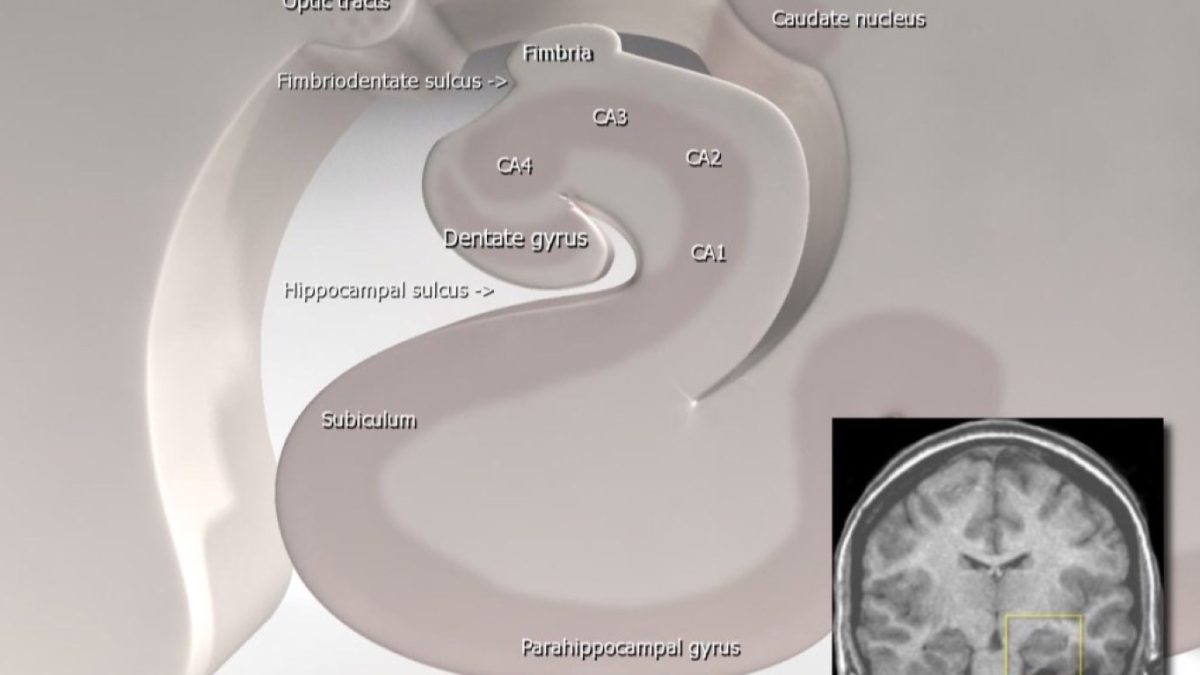
Without memory, what is consciousness? Can an awareness trapped in a perpetual, thirty-second present possess an identity, a narrative self, or a soul? On September 1, 1953, in Hartford, Connecticut, a twenty-seven-year-old assembly-line worker named Henry Gustav Molaison lay on an operating table hoping to cure incapacitating epileptic seizures. Neurosurgeon William Beecher Scoville suctioned out bilateral sections of his medial temporal lobes, including two seahorse-shaped structures: the hippocampi. The surgery cured Molaison’s seizures, but it created the most famous case in the history of neuroscience: Patient H.M., whose profound amnesia revolutionized our understanding of human memory.
Trapped in the Eternal Present
When Henry Molaison awoke from surgery, his intellectual faculties, vocabulary, personality, and perceptual IQ were completely preserved. He could recall his childhood, his family history, and events that occurred before 1953. But he had lost the ability to convert any ongoing conscious experience into permanent long-term memory: severe, irreversible dense anterograde amnesia.
Every person he met was a stranger, even after decades of daily interaction. Every meal he ate was immediately forgotten; he would read the same magazine dozens of times with fresh fascination. Molaison poignantly described his subjective existence to Canadian psychologist Brenda Milner:
“Right now, I’m wondering, have I done or said anything amiss? You see, at this moment everything looks clear to me, but what happened just before? That’s what worries me. It’s like waking from a dream; I just don’t remember.” — Henry Molaison (Patient H.M.)
Brenda Milner and the Mirror-Drawing Breakthrough
For nearly four decades, Brenda Milner of the Montreal Neurological Institute traveled regularly to Hartford to test H.M. In 1962, she devised a deceptively simple motor task: drawing a line between the boundaries of a double-contoured star while looking only at the reflection of his hand and the paper in a mirror.
For any normal person, mirror drawing is infuriatingly difficult: visual feedback is reversed, causing pencils to jerk off-course. Over three consecutive days, H.M. performed ten trials per day. His performance improved dramatically: errors plummeted from dozens on day one to zero on day three, exhibiting a classic motor skill learning curve.
Yet on the third day, after completing a flawless trial, H.M. looked up at Milner and smiled: “Well, that’s funny. I thought this would be difficult, but it seems I’ve done it rather well. I have never seen this apparatus before in my life!”
The Architecture of Human Memory
Milner’s discovery dismantled the monolithic view of memory, proving that memory is fractionated into anatomically distinct neurocognitive systems:
- Declarative / Explicit Memory (Hippocampus-Dependent):
- Episodic Memory: Autobiographical recollections of specific events, times, and places (“What I had for breakfast”).
- Semantic Memory: Conceptual knowledge of facts, vocabulary, and world truths (“Paris is the capital of France”).
- Non-Declarative / Implicit Memory (Hippocampus-Independent):
- Procedural Memory: Motor skills and habits (riding a bicycle, mirror drawing), mediated by the basal ganglia and cerebellum.
- Classical Conditioning: Emotional associations, mediated by the amygdala.
- Priming: Neocortical perceptual facilitation.
Memory Consolidation: From Hippocampus to Neocortex
Why could H.M. remember his childhood if his hippocampi were gone? Because the hippocampus is not the permanent storage vault of memory; it is a temporary, rapid-learning indexer. Through the process of systems consolidation, recurring neural replay—especially during deep slow-wave sleep—gradually transfers memories from the hippocampus to distributed neocortical networks across years.
Henry Molaison passed away on December 2, 2008, at the age of eighty-two. His brain was meticulously frozen and sliced into 2,401 histological sections at UC San Diego, broadcast live to 400,000 scientists worldwide. H.M. taught humanity that our autobiographical identity—the story we tell ourselves about who we are—is forged in the seahorse curve of the hippocampus, anchoring our fleeting conscious moments into the enduring tapestry of time.