Every single night of our lives, consciousness undergoes a radical, mind-bending metamorphosis. We paralyze our skeletal musculature, sever connections with the external sensory environment, and immerse ourselves in bizarre, vividly emotional, fully immersive cinematic simulations where we fly across impossible landscapes, converse with deceased relatives, and defy the laws of physics. For millennia dismissed as divine portents or Freudian repressions, the modern neuroscience of sleep and dreams has revealed that nocturnal hallucination is an indispensable biological crucible for memory consolidation, emotional calibration, and synaptic homeostasis.
Aserinsky, Kleitman, and the Discovery of REM Sleep
Until the mid-twentieth century, sleep was viewed as a passive, uniform state of cerebral shutdown—a biological blackout where the brain simply rested like an engine switched off. In 1953, in Nathaniel Kleitman’s basement laboratory at the University of Chicago, graduate student Eugene Aserinsky hooked an ink-pen electroencephalograph (EEG) to sleeping volunteers, including his eight-year-old son Armond.
In the middle of the night, the pens began scribbling violently: the sleeping subjects exhibited rapid, darting ocular movements behind closed lids: Rapid Eye Movement (REM) sleep. The EEG traces did not show the slow, languid rhythms of sleep; they showed desynchronized, low-voltage, high-frequency waveforms indistinguishable from the active, fully alert waking brain!
When Aserinsky awakened subjects during REM periods, over 80 percent reported vivid, narrative dreams filled with rich sensory imagery. Awakenings during non-REM (NREM) sleep yielded either blank emptiness or fragmented, static thoughts. Consciousness was not asleep; it was awake in an internal world.
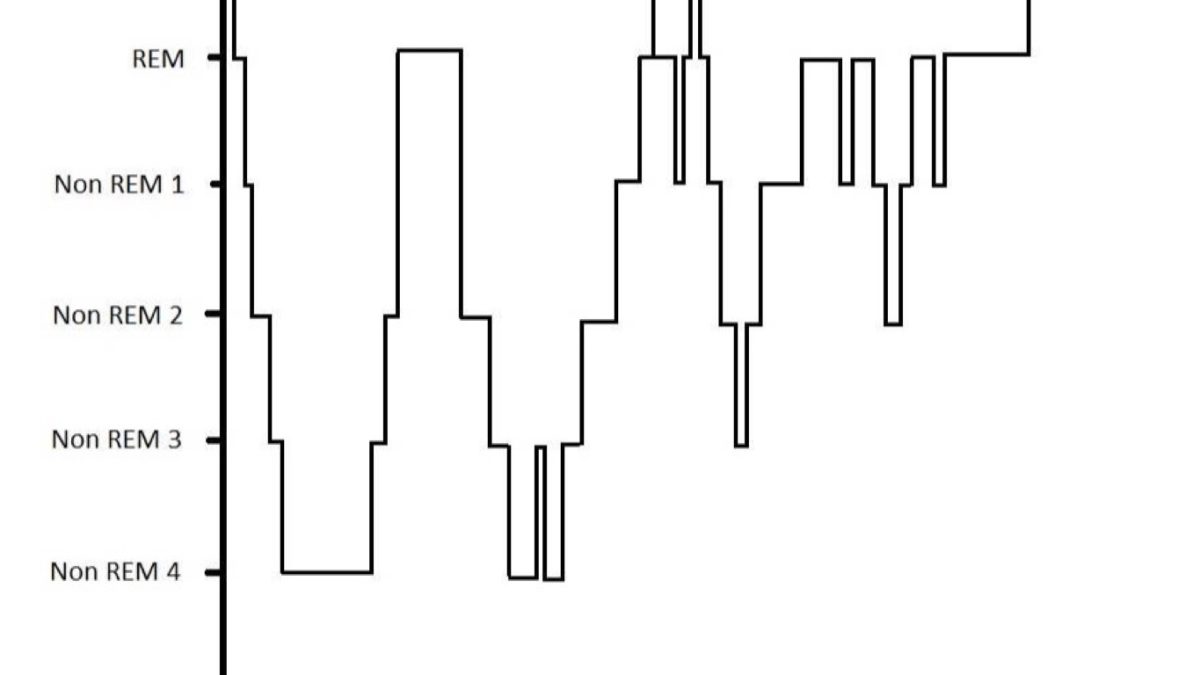
The Hypnogram: The Architecture of Nocturnal Slumber
Polysomnography reveals that human sleep is not a monolith, but a meticulously choreographed architectural progression through repeated 90-minute ultradian cycles:
- Aminergic Demodulation: The locus coeruleus (norepinephrine) and raphe nuclei (serotonin) shut off completely, dropping to near-zero levels. This aminergic vacuum impairs episodic memory consolidation (explaining why we forget dreams within seconds of waking) and abolishes critical reflective logic.
- Cholinergic Explosion: Acetylcholine levels skyrocket, fueling intense internal visual and emotional imagery.
- Dorsolateral Prefrontal Deactivation: The executive monitoring center of the brain powers down, explaining our bizarre lack of metacognitive skepticism—we accept flying pigs and talking teacups without ever pausing to question their impossibility!
- Limbic Hyperactivation: The amygdala and anterior cingulate light up, infusing dreams with intense terror, euphoria, and eroticism.
Memory Replay and Emotional Calibration
Far from being meaningless random noise, sleep research by Matthew Walker and György Buzsáki proves that dreaming is essential for cognitive survival. During NREM slow-wave sleep, hippocampal place cells ‘replay’ daytime navigational and learning experiences at ten times real speed, transferring memory packets to the neocortex.
During REM sleep, the brain re-processes emotionally traumatic memories in a neurochemical environment completely devoid of noradrenaline (the stress chemical). REM sleep functions as nocturnal biological psychotherapy: it softens the painful emotional charge of memories while retaining the factual lessons learned.
Lucid Dreaming: The Hybrid State of Awareness
In 1975, Keith Hearne (and independently Stephen LaBerge at Stanford in 1980) verified the reality of lucid dreaming: the remarkable state where an individual becomes consciously aware that they are dreaming while remaining asleep inside REM atonia. LaBerge’s subjects signaled their lucidity by executing pre-agreed patterns of horizontal eye movements, recorded cleanly on electrooculograms.
Neuroimaging during lucid dreams reveals a unique hybrid neurobiology: the dorsolateral prefrontal cortex—normally dormant in REM—reactivates, restoring metacognition and conscious executive volition inside a self-generated virtual reality. The dreaming brain proves that consciousness does not require an external world; the machinery of the mind contains its own infinite, generative universe.
- NREM Stage 1 (N1): The twilight transition from wakefulness to slumber, characterized by theta waves (4 to 7 Hz) and fleeting hypnagogic hallucinations.
- NREM Stage 2 (N2): True sleep, demarcated by distinctive neurochemical signatures: sleep spindles (11 to 16 Hz bursts generated by thalamocortical loops) and high-voltage K-complexes that protect the slumbering brain from sensory awakenings.
- NREM Stage 3 (N3 / Slow-Wave Sleep – SWS): Deep restorative slumber dominated by synchronized high-amplitude delta waves (0.5 to 4 Hz). During SWS, the glymphatic system expands, flushing neurotoxic metabolic waste—including amyloid-beta and tau proteins—from the interstitial spaces of the cortex.
- REM Sleep: Muscle atonia (paralysis), rapid eye movements, genital tumescence, autonomic storms, and vivid hallucinatory dreaming.
The Neurochemistry of the Dream State: Hobson’s AIM Model
Harvard neurobiologists J. Allan Hobson and Robert McCarley formulated the Activation-Synthesis Hypothesis, later refined into the AIM Model (Activation, Input-Output Gating, Modulation):
During REM sleep, cholinergic neurons in the pons fire bursts of ponto-geniculo-occipital (PGO) waves that bombard the lateral geniculate nucleus and occipital cortex, generating synthetic visual imagery. Simultaneously:
- Aminergic Demodulation: The locus coeruleus (norepinephrine) and raphe nuclei (serotonin) shut off completely, dropping to near-zero levels. This aminergic vacuum impairs episodic memory consolidation (explaining why we forget dreams within seconds of waking) and abolishes critical reflective logic.
- Cholinergic Explosion: Acetylcholine levels skyrocket, fueling intense internal visual and emotional imagery.
- Dorsolateral Prefrontal Deactivation: The executive monitoring center of the brain powers down, explaining our bizarre lack of metacognitive skepticism—we accept flying pigs and talking teacups without ever pausing to question their impossibility!
- Limbic Hyperactivation: The amygdala and anterior cingulate light up, infusing dreams with intense terror, euphoria, and eroticism.
Memory Replay and Emotional Calibration
Far from being meaningless random noise, sleep research by Matthew Walker and György Buzsáki proves that dreaming is essential for cognitive survival. During NREM slow-wave sleep, hippocampal place cells ‘replay’ daytime navigational and learning experiences at ten times real speed, transferring memory packets to the neocortex.
During REM sleep, the brain re-processes emotionally traumatic memories in a neurochemical environment completely devoid of noradrenaline (the stress chemical). REM sleep functions as nocturnal biological psychotherapy: it softens the painful emotional charge of memories while retaining the factual lessons learned.
Lucid Dreaming: The Hybrid State of Awareness
In 1975, Keith Hearne (and independently Stephen LaBerge at Stanford in 1980) verified the reality of lucid dreaming: the remarkable state where an individual becomes consciously aware that they are dreaming while remaining asleep inside REM atonia. LaBerge’s subjects signaled their lucidity by executing pre-agreed patterns of horizontal eye movements, recorded cleanly on electrooculograms.
Neuroimaging during lucid dreams reveals a unique hybrid neurobiology: the dorsolateral prefrontal cortex—normally dormant in REM—reactivates, restoring metacognition and conscious executive volition inside a self-generated virtual reality. The dreaming brain proves that consciousness does not require an external world; the machinery of the mind contains its own infinite, generative universe.