By the early twentieth century, Cajal had charted the cellular map of the brain, but a profound mechanistic mystery remained: how do thoughts, sensory impressions, and motor commands actually travel along these microscopic fibers? In 1780, Luigi Galvani had made dead frog legs twitch with electrostatic sparks, revealing that animal tissue pulses with bioelectricity. In 1952, at the Laboratory of the Marine Biological Association in Plymouth, English biophysicists Alan Hodgkin and Andrew Huxley achieved one of the supreme mathematical triumphs of physiology: deciphering the biophysical dance of voltage-gated ion channels that generates the action potential—the universal binary code of the conscious mind.
The Atlantic Squid and the Giant Axon
Studying human or mammalian nerve fibers was technologically impossible in the 1930s: a typical human axon measures barely 1 to 2 micrometers ($10^{-6} text{ m}$) in diameter, far too minuscule to insert glass microelectrodes without obliterating the cell.
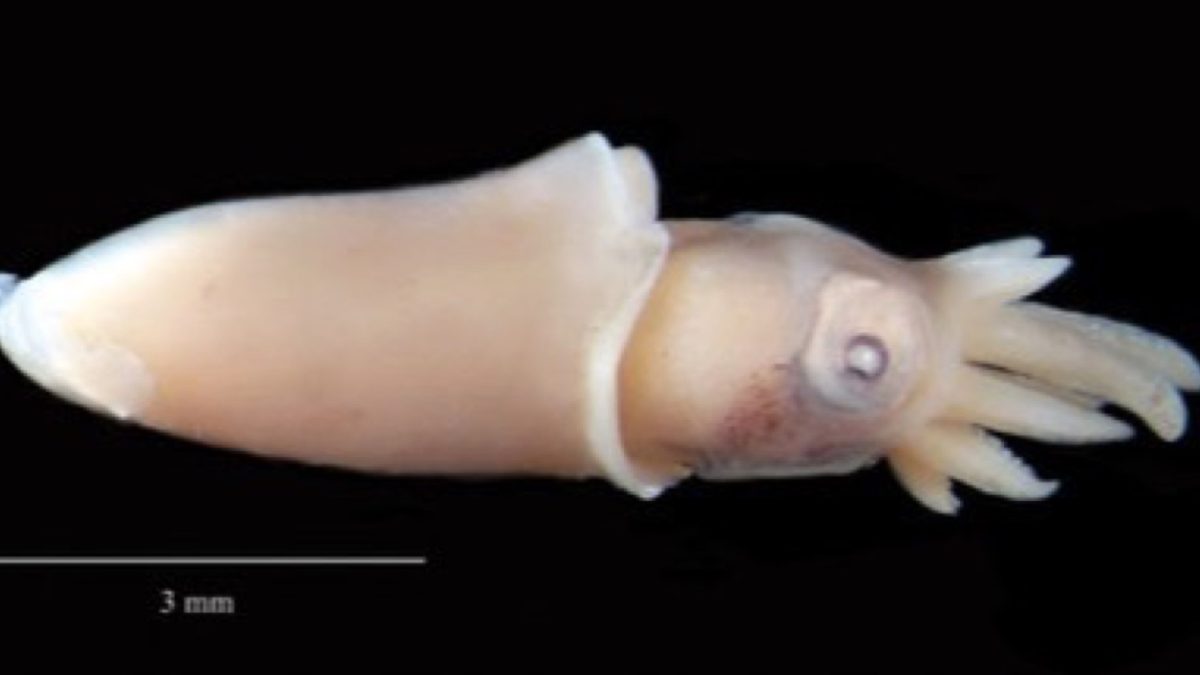
The breakthrough arrived via marine zoology. In 1936, British zoologist J. Z. Young discovered that the North Atlantic squid (Loligo pealeii) possesses an evolutionary marvel: giant motor axons driving its jet-propulsion mantle that reach up to 1 millimeter (1,000 micrometers) in diameter—hundreds of times thicker than a human axon, visible to the naked eye like thin strands of translucent spaghetti.
The Resting Membrane Potential: The Biological Battery
Hodgkin and Huxley threaded a fine, silver-coated glass capillary electrode down the longitudinal axis of an excised squid axon, measuring the electrical potential difference across the cell membrane at rest. The interior of the resting neuron registered a stable negative voltage:
$$V_m approx -70 text{ mV}$$
This resting membrane potential is generated by the unequal distribution of inorganic ions across the semipermeable lipid bilayer, maintained by energy-hungry sodium-potassium ATP pumps ($3text{Na}^+ text{ out} / 2text{K}^+ text{ in}$):
- Rapid Depolarization (Sodium Inrush): Voltage-gated sodium channels snap open. Driven by both concentration gradients and electrical attraction, $text{Na}^+$ ions rush into the cell, flipping the internal voltage positive ($+40 text{ mV}$).
- Inactivation & Repolarization (Potassium Outflow): Sodium channels inactivate. Delayed voltage-gated potassium channels swing open, allowing $text{K}^+$ ions to surge out into the extracellular space, restoring negative polarity.
- Hyperpolarization & Refractory Period: Potassium channels close sluggishly, creating a brief refractory dip below $-70 text{ mV}$ that prevents the impulse from echoing backwards, enforcing strict unidirectional forward propagation.
The Hodgkin-Huxley Equations
In five landmark papers published in the Journal of Physiology in 1952, Hodgkin and Huxley modeled the excitable membrane as an equivalent electrical circuit composed of a membrane capacitance $C_m$ parallel with three variable ionic conductors:
$$I_m = C_m frac{dV_m}{dt} + bar{g}_{text{Na}} m^3 h (V_m – E_{text{Na}}) + bar{g}_{text{K}} n^4 (V_m – E_{text{K}}) + g_L (V_m – E_L)$$
where $m, h, n$ are gating variables satisfying first-order differential equations that govern channel opening and closing probabilities. Manually integrating these non-linear equations with a mechanical Brunsviga hand-crank calculator over several months, Huxley showed that the theoretical curves matched empirical oscilloscope traces of nerve impulses to the decimal point.
Awarded the 1963 Nobel Prize in Physiology or Medicine, Hodgkin and Huxley proved that thought is not an ethereal magical essence; every memory, emotion, and perception in the universe is encoded in the lightning-fast, coordinated shuffle of sodium and potassium ions dancing across cell membranes at one hundred meters per second.
- Intracellular Fluid: High potassium ($text{K}^+$), low sodium ($text{Na}^+$), rich in negatively charged organic anions.
- Extracellular Fluid: High sodium ($text{Na}^+$), high chloride ($text{Cl}^-$), mimicking primordial seawater.
The equilibrium potential for each individual ion is dictated with thermodynamic perfection by the Nernst Equation:
$$E_{text{ion}} = frac{RT}{zF} ln left( frac{[text{ion}]_{text{out}}}{[text{ion}]_{text{in}}} right)$$
While the overall membrane potential follows the multi-ion weighted Goldman-Hodgkin-Katz (GHK) Voltage Equation:
$$V_m = frac{RT}{F} ln left( frac{P_{text{K}}[text{K}^+]_{text{out}} + P_{text{Na}}[text{Na}^+]_{text{out}} + P_{text{Cl}}[text{Cl}^-]_{text{in}}}{P_{text{K}}[text{K}^+]_{text{in}} + P_{text{Na}}[text{Na}^+]_{text{in}} + P_{text{Cl}}[text{Cl}^-]_{text{out}}} right)$$
The Voltage Clamp and the Action Potential
Using Kenneth Cole’s revolutionary voltage-clamp technique, Hodgkin and Huxley held the membrane potential at arbitrary commanded voltages, measuring the tiny ionic currents flowing across the membrane. When the membrane was depolarized past a critical threshold ($approx -55 text{ mV}$), a lightning-fast, all-or-nothing electrical pulse erupted, spiking to $+40 text{ mV}$ in barely a millisecond:
- Rapid Depolarization (Sodium Inrush): Voltage-gated sodium channels snap open. Driven by both concentration gradients and electrical attraction, $text{Na}^+$ ions rush into the cell, flipping the internal voltage positive ($+40 text{ mV}$).
- Inactivation & Repolarization (Potassium Outflow): Sodium channels inactivate. Delayed voltage-gated potassium channels swing open, allowing $text{K}^+$ ions to surge out into the extracellular space, restoring negative polarity.
- Hyperpolarization & Refractory Period: Potassium channels close sluggishly, creating a brief refractory dip below $-70 text{ mV}$ that prevents the impulse from echoing backwards, enforcing strict unidirectional forward propagation.
The Hodgkin-Huxley Equations
In five landmark papers published in the Journal of Physiology in 1952, Hodgkin and Huxley modeled the excitable membrane as an equivalent electrical circuit composed of a membrane capacitance $C_m$ parallel with three variable ionic conductors:
$$I_m = C_m frac{dV_m}{dt} + bar{g}_{text{Na}} m^3 h (V_m – E_{text{Na}}) + bar{g}_{text{K}} n^4 (V_m – E_{text{K}}) + g_L (V_m – E_L)$$
where $m, h, n$ are gating variables satisfying first-order differential equations that govern channel opening and closing probabilities. Manually integrating these non-linear equations with a mechanical Brunsviga hand-crank calculator over several months, Huxley showed that the theoretical curves matched empirical oscilloscope traces of nerve impulses to the decimal point.
Awarded the 1963 Nobel Prize in Physiology or Medicine, Hodgkin and Huxley proved that thought is not an ethereal magical essence; every memory, emotion, and perception in the universe is encoded in the lightning-fast, coordinated shuffle of sodium and potassium ions dancing across cell membranes at one hundred meters per second.