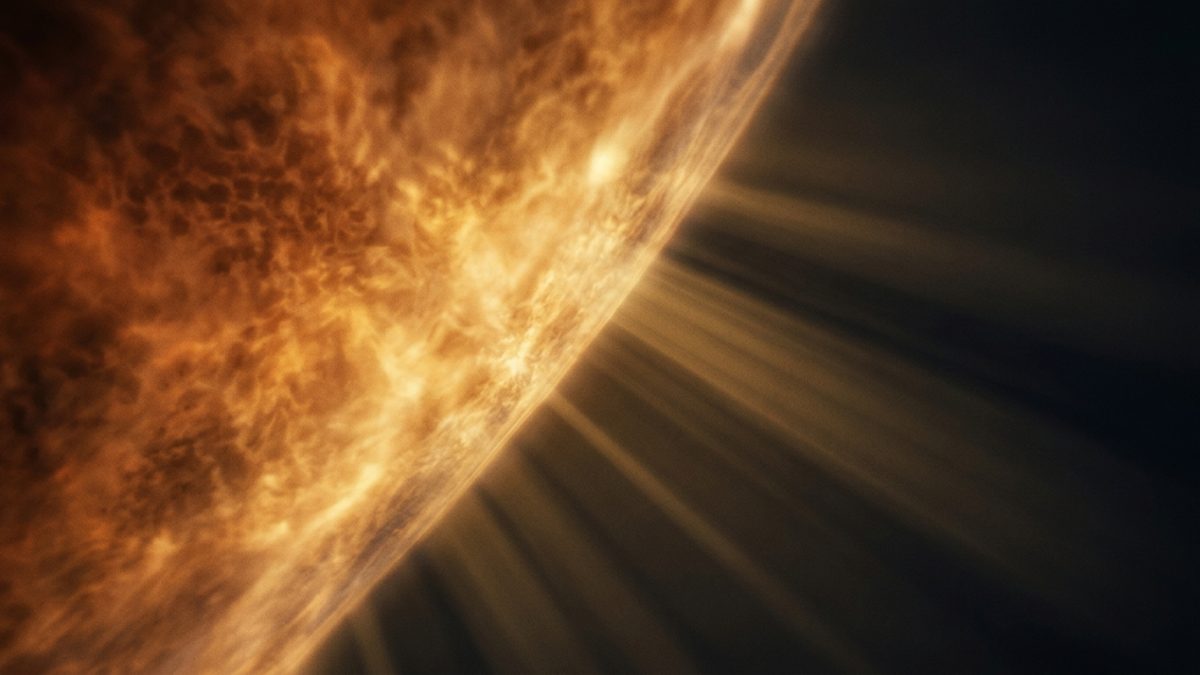
For over three billion years, life on Earth was a silent, microscopic realm of single cells and quiet microbial mats. Then, emerging from the frozen crucible of global Snowball Earth glaciations 541 million years ago, the biosphere detonated into an evolutionary frenzy known as the Cambrian Explosion. In a geological blink of barely twenty million years, every foundational animal body plan (phylum) in existence today was invented: compound eyes, sharp jaws, armored carapaces, segmented bodies, and a flexible dorsal cord that would one day carry the human spinal column.
The Cryogenian Crucible: The Great Snowball Thaw
Between 720 and 635 million years ago, the supercontinent Rodinia broke apart, exposing thousands of miles of fresh basaltic coastline to tropical weathering. Atmospheric carbon dioxide was aggressively sequestered into marine carbonates, plunging the planet into the two deepest, most apocalyptic ice ages in geological history: the Sturtian (717–660 Ma) and the Marinoan (645–635 Ma) glaciations.
Unlike ordinary ice ages, these were true Snowball Earth events (Hoffman & Schrag 2002): sea ice kilometers thick sealed the entire global ocean from the poles right across the equator. The planet was transformed into an unyielding, frozen white mirror.
For tens of millions of years, continental glaciers acted as colossal industrial pulverizers, crushing thousands of meters of bedrock into ultra-fine “glacial flour.” When volcanic CO₂ emissions finally accumulated to over 0.12 bars, greenhouse warming shattered the ice in a catastrophic super-thaw.
Torrents of meltwater flushed trillions of tons of weathered phosphorus, calcium, and iron into the warm oceans. This massive nutrient injection triggered catastrophic blooms of photosynthetic eukaryotic algae, burying gigatons of organic carbon and releasing an unprecedented surge of free atmospheric oxygen (O₂) up to 10–20\% PAL. For the first time in history, the oceans possessed the dissolved oxygen levels required to power the collagen synthesis, thick tissue diffusion, and muscular bioenergetics of large animals.
The Ediacaran Experiment (575 to 541 Ma): The Velvet Garden
The first macroscopic multicellular communities emerged immediately following the Marinoan thaw: the Ediacaran Biota, first discovered in the Ediacara Hills of South Australia and Newfoundland’s Mistaken Point.
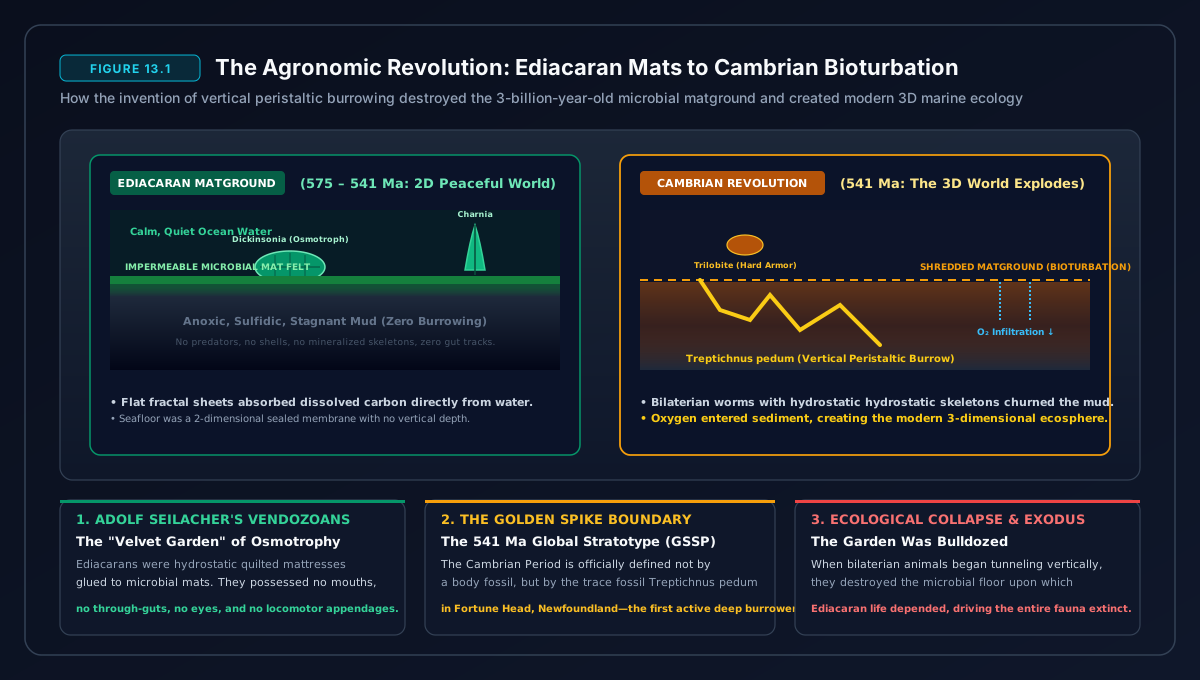
The Ediacaran world was a surreal, peaceful underwater landscape often dubbed the “Garden of Ediacara”. Bizarre, soft-bodied organisms rested peacefully atop microbial mats or anchored into the ocean floor with circular holdfasts:
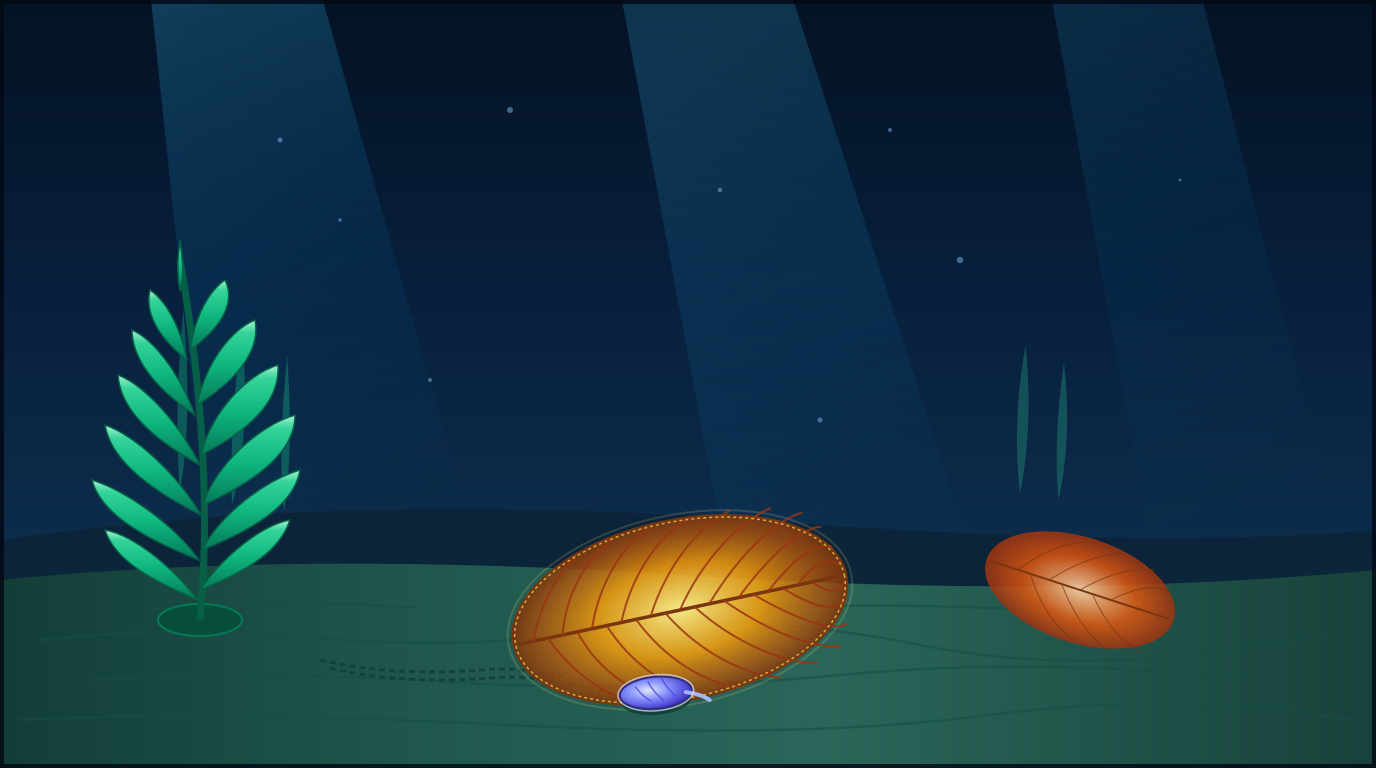
- Dickinsonia: Flat, quilted, oval-shaped organisms reaching up to one meter across. In 2018, chemical biomarker analysis by Ilya Bobrovskiy detected fossilized cholesteroids (cholesterol molecules) inside Dickinsonia tissues, confirming once and for all that these mysterious quilted cushions were true animals (Metazoa)!
- Charnia: Frond-like organisms displaying self-similar, fractal branching architectures that absorbed dissolved organic matter directly from the seawater.
- Kimberella: A bilateral, slug-like grazing animal that used a primitive proboscis to scrape the microbial seafloor—an early relative of mollusks.
Crucially, the Ediacaran world had no predators, no eyes, no teeth, and no hard mineralized skeletons. It was an ecosystem of peaceful mat-feeders and passive filter-feeders living in symbiotic equilibrium. But around 541 million years ago, this peaceful velvet world was completely wiped away.
The Cambrian Explosion: The Biological Big Bang
In 1859, Charles Darwin admitted in On the Origin of Species that the sudden appearance of complex, fully formed animals with hard shells at the base of the Cambrian strata was a grave challenge to his theory of gradual natural selection. Over the past century, discoveries in the Burgess Shale (Canada) and Chengjiang (China) have demystified the Cambrian Explosion:
1. Biomineralization: Skeletons and Armor
Around 541 million years ago, animals developed the genetic and enzymatic ability to precipitate dissolved calcium, carbonate, and phosphate ions into rigid crystals: calcite (CaCO₃) and apatite (Ca_5(PO_4)_3OH). The first phase of this revolution was the Small Shelly Fauna (tiny cones, spicules, and plates), quickly followed by the jointed, calcified exoskeletons of Trilobites.
2. The Light Switch Hypothesis: The Evolution of Vision
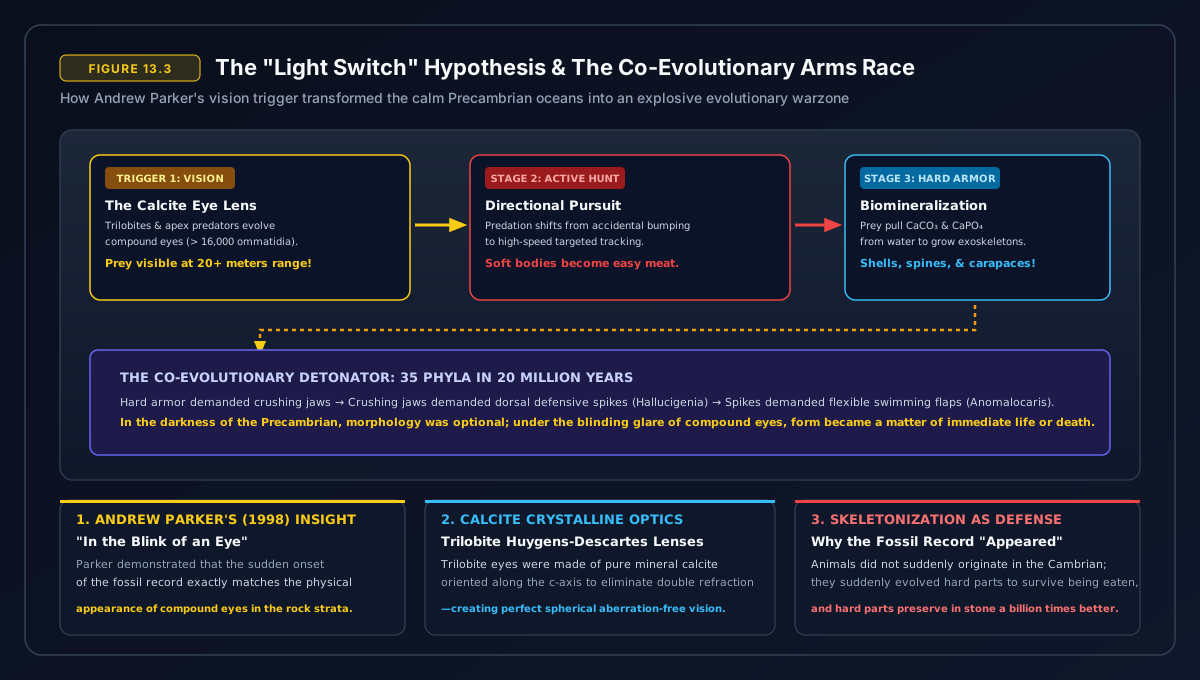
In 2003, evolutionary biologist Andrew Parker proposed the Light Switch Hypothesis. Prior to the Cambrian, animals lacked image-forming optical eyes; they sensed their environment through slow chemical diffusion and tactile touch. Then, inside early arthropods, simple light-sensitive patches evolved into sophisticated compound eyes with crystalline calcite lenses.
The moment an animal could actively see its prey from meters away, the rules of evolution changed overnight. Passive grazing became a death sentence. Vision ignited the first predator-prey evolutionary arms race: prey had to evolve protective mineralized armor, camouflage, spikes, and burrowing behaviors; predators had to evolve faster swimming appendages, crushing claws, and binocular vision.
Monsters of the Deep: The Cambrian Menagerie
The fossil deposits of the Canadian Rockies’ Burgess Shale preserve a startling menagerie of alien-like anatomical experiments:
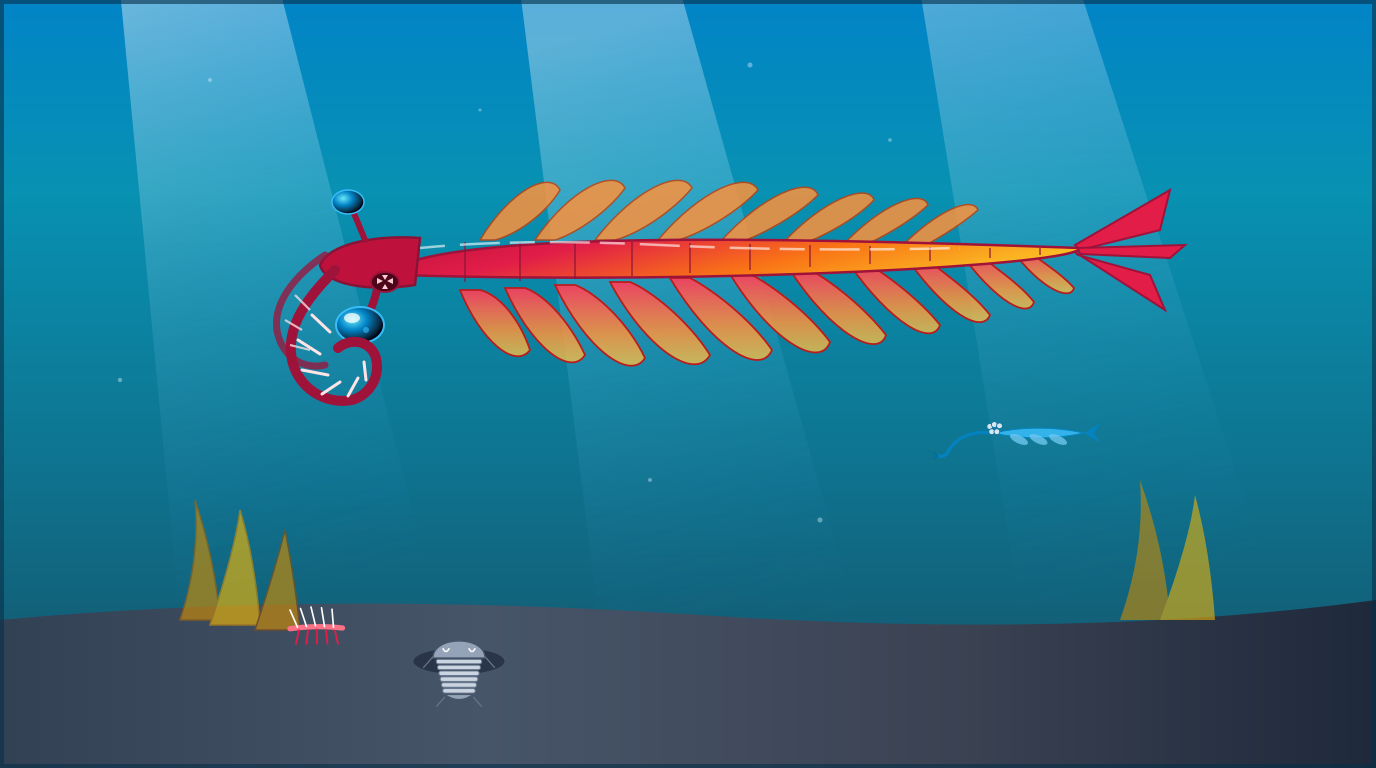
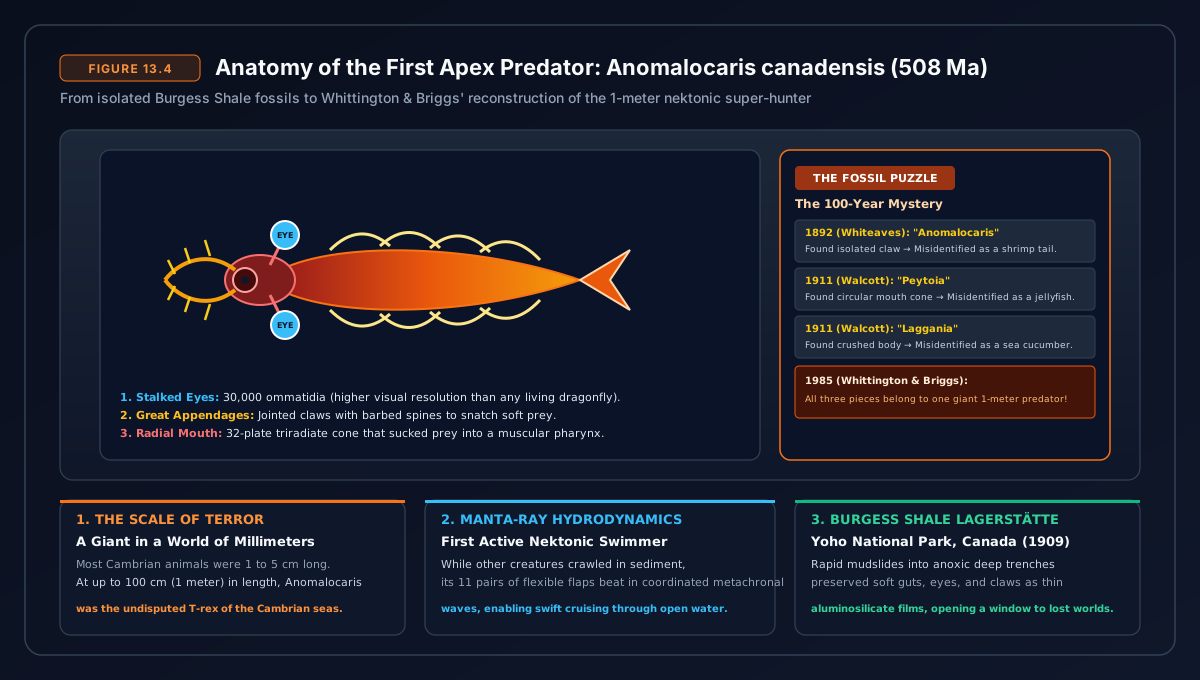
- Anomalocaris canadensis (“The Abnormal Shrimp”): The world’s first true apex predator. Spanning up to one meter long, Anomalocaris swam with flexible lateral body flaps, stalked compound eyes boasting 16,000 hexagonal lenses, two spiny grasping appendages to snatch prey, and a circular, diaphragm-like mouth lined with jagged serrated plates.
- Opabinia regalis: A bizarre creature featuring five stalked eyes and a long, flexible frontal nozzle terminating in a grasping claw.
- Hallucigenia sparsa: A walking worm with seven pairs of rigid, pointed dorsal spines for defense and tentacle-like legs with tiny claws.
- Wiwaxia corrugata: A creeping slug covered in overlapping armor scales and prominent defensive daggers.
Pikaia and Haikouichthys: The Blueprint of the Human Spine
Amidst the spiny horrors and armored arthropods of the Cambrian seas swam a small, unassuming, ribbon-like animal barely five centimeters long: Pikaia gracilens, alongside the Chinese fossil Haikouichthys ercaicunensis.
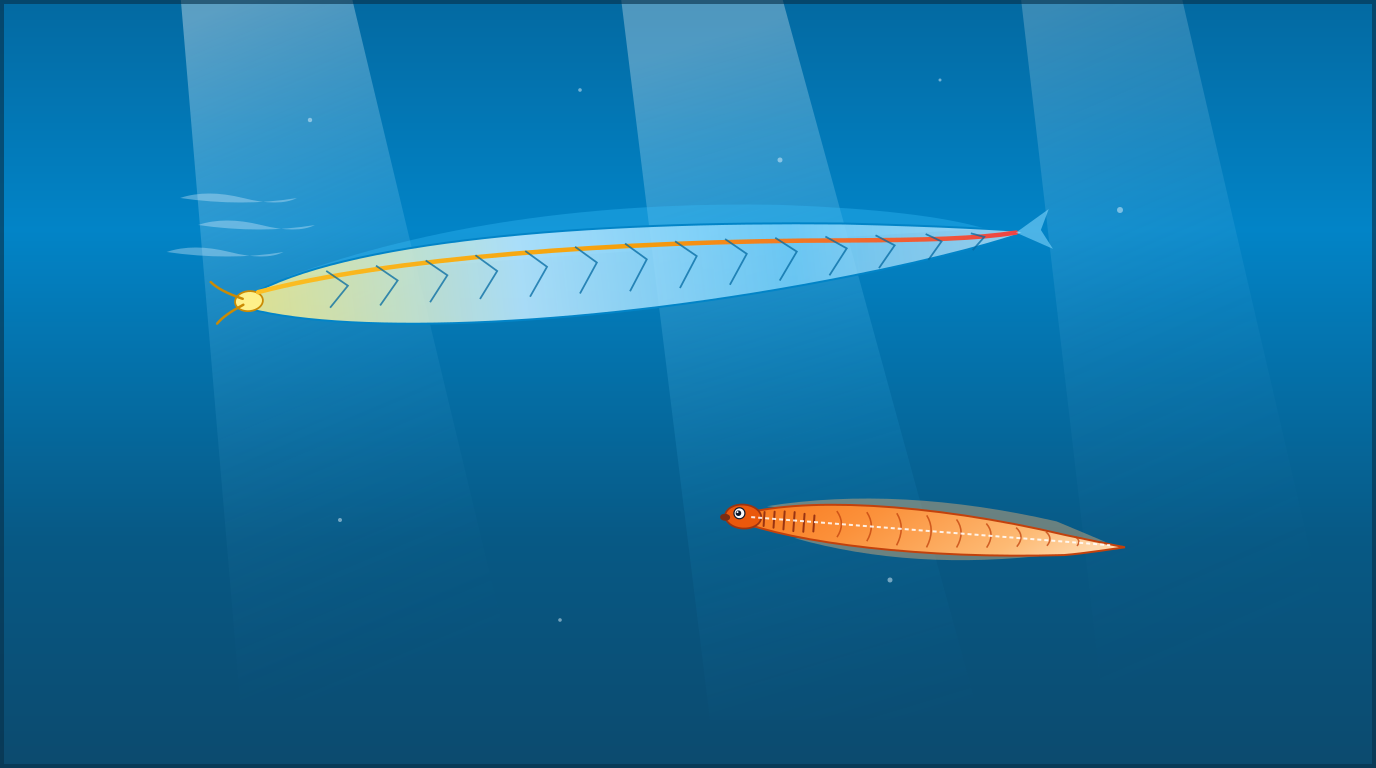
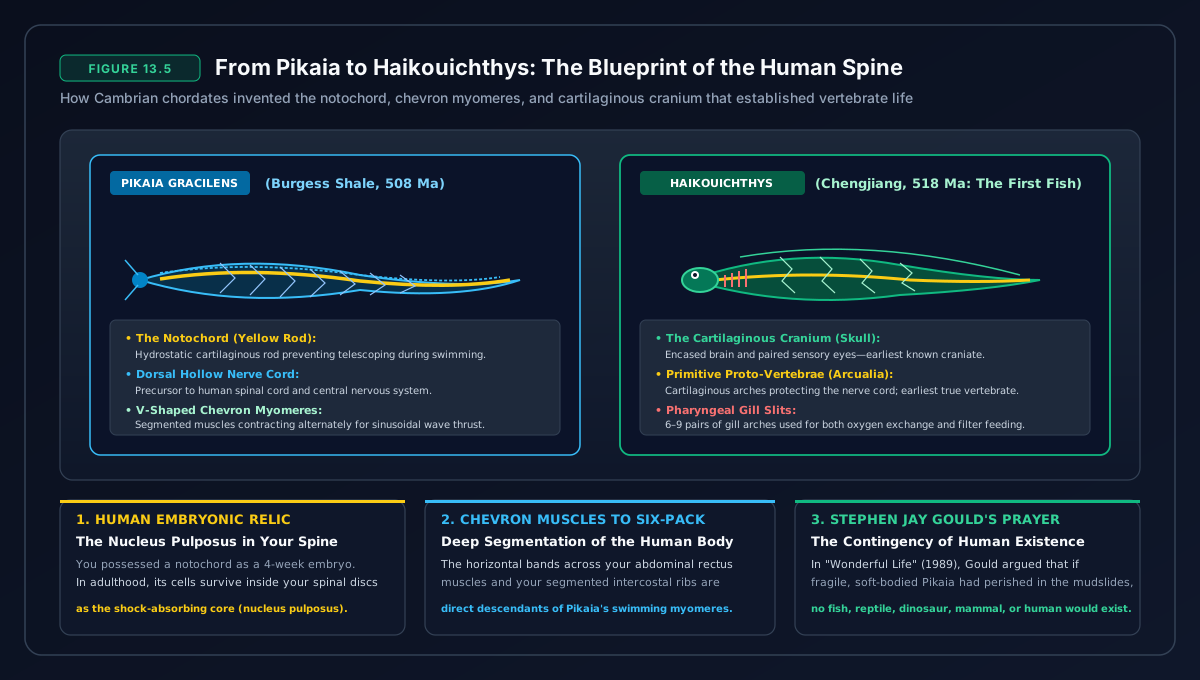
Pikaia and Haikouichthys did not have shells or claws. Instead, they possessed a suite of radical structural innovations that define the phylum Chordata:
- The Notochord: A flexible, rod-like hydrostatic structure running along the back that served as an anchor for swimming muscles—the direct evolutionary precursor of the vertebral column and spine.
- Dorsal Hollow Nerve Cord: Positioned directly above the notochord—the evolutionary origin of the central nervous system, spinal cord, and brain.
- V-Shaped Muscle Blocks (Myomeres): Chevron-shaped muscle segments that allowed graceful, undulating S-swimming locomotion.
- Pharyngeal Slits: Branchial gill openings used originally for filter-feeding and respiration.
Every fish, amphibian, reptile, dinosaur, bird, mammal, and human being on planet Earth inherited their skeletal and nervous architecture directly from these humble Cambrian swimmers.
The Cambrian Phyla Architecture: Foundations of Modern Biology
| Phylum | Cambrian Exemplar | Key Morphological Innovations | Modern Descendants |
|---|---|---|---|
| Arthropoda | Trilobita, Anomalocaris, Sanctacaris | Chitinous exoskeleton, jointed appendages, compound eyes. | Insects, spiders, crabs, lobsters, scorpions (80\% of all animal species). |
| Chordata | Pikaia, Haikouichthys, Metaspriggina | Notochord, dorsal nerve cord, myomeres, bilateral cephalization. | Fish, amphibians, reptiles, birds, mammals, humans. |
| Mollusca | Kimberella, Wiwaxia, Nectocaris | Muscular foot, mantle, radula feeding organ, calcareous shell. | Octopuses, squids, snails, clams, oysters. |
| Echinodermata | Gogia, Helicoplacus | Fivefold (pentaradial) symmetry, water vascular system, calcite endoskeleton. | Starfish, sea urchins, sand dollars, sea cucumbers. |
| Annelida | Canadia, Burgessochaeta | Metameric true segmentation, coelom fluid body cavity, parapodia. | Earthworms, leeches, polychaete marine worms. |
| Cnidaria | Thaumaptilon, Marrella relatives | Radial symmetry, stinging nematocysts, diffuse nerve net. | Jellyfish, sea anemones, coral reefs. |
The Verdict: The Ocean is Conquered
By the end of the Cambrian Period (roughly 485 million years ago), the biological paradigm of planet Earth was settled forever. The basic toolkit of animal life—bilateral symmetry, specialized sensory organs, digestive systems, circulatory blood flow, and central brains—had been mastered.
Yet, while the oceans teemed with jawless fish, giant nautiloids, and scurrying trilobites, the continents remained silent, barren, rocky wastelands devoid of soil, trees, or footsteps. To conquer the land, life had to solve the lethal challenges of gravitational weight, desiccation, and unbuffered solar radiation.
In Part 14 of The Universal Chronicle, we will follow life as it crawls out of the waves: The Conquest of Land — Primitive Forests, Arthropod Pioneers, and the Tetrapod Revolution.
Academic Citations & Foundational Literature
- Hoffman, P. F., & Schrag, D. P. (2002). “The snowball Earth hypothesis: testing the limits of global change.” Terra Nova, 14(3), 129–155. doi:10.1046/j.1365-3121.2002.00408.x.
- Bobrovskiy, I., et al. (2018). “Ancient steroids establish the Ediacaran fossil Dickinsonia as one of the earliest animals.” Science, 361(6408), 1246–1249. doi:10.1126/science.aat7228.
- Gould, S. J. (1989). Wonderful Life: The Burgess Shale and the Nature of History. W. W. Norton & Company. ISBN: 978-0393027051.
- Parker, A. (2003). In the Blink of an Eye: How Vision Sparked the Big Bang of Evolution. Basic Books. ISBN: 978-0738206073.
- Shu, D. G., et al. (1999). “Lower Cambrian vertebrates from south China.” Nature, 402, 42–46. doi:10.1038/46965.
- Erwin, D. H., et al. (2011). “The Cambrian Conundrum: Early Divergence and Later Ecological Success in the Early History of Animals.” Science, 334(6059), 1091–1097. doi:10.1126/science.1206375.