
For more than three billion years, the continents of Earth were as barren and hostile as the regolith of Mars. While the oceans swarmed with trilobites, cephalopods, and jawed placoderms, terrestrial rock lay scorched under unattenuated solar radiation, washed by sterile acidic rain, and completely devoid of organic matter. The emergence of life onto terra firma was not a celebratory walk onto welcoming soil; it was a grueling biological campaign requiring the synthesis of structural polymers, the invention of water-impermeable coatings, the re-engineering of respiratory apparatuses for gaseous oxygen, and the radical reorganization of fins into load-bearing limbs.
1. The Barren Continent and the Cryptogamic Pioneers (~470 to 420 Ma)
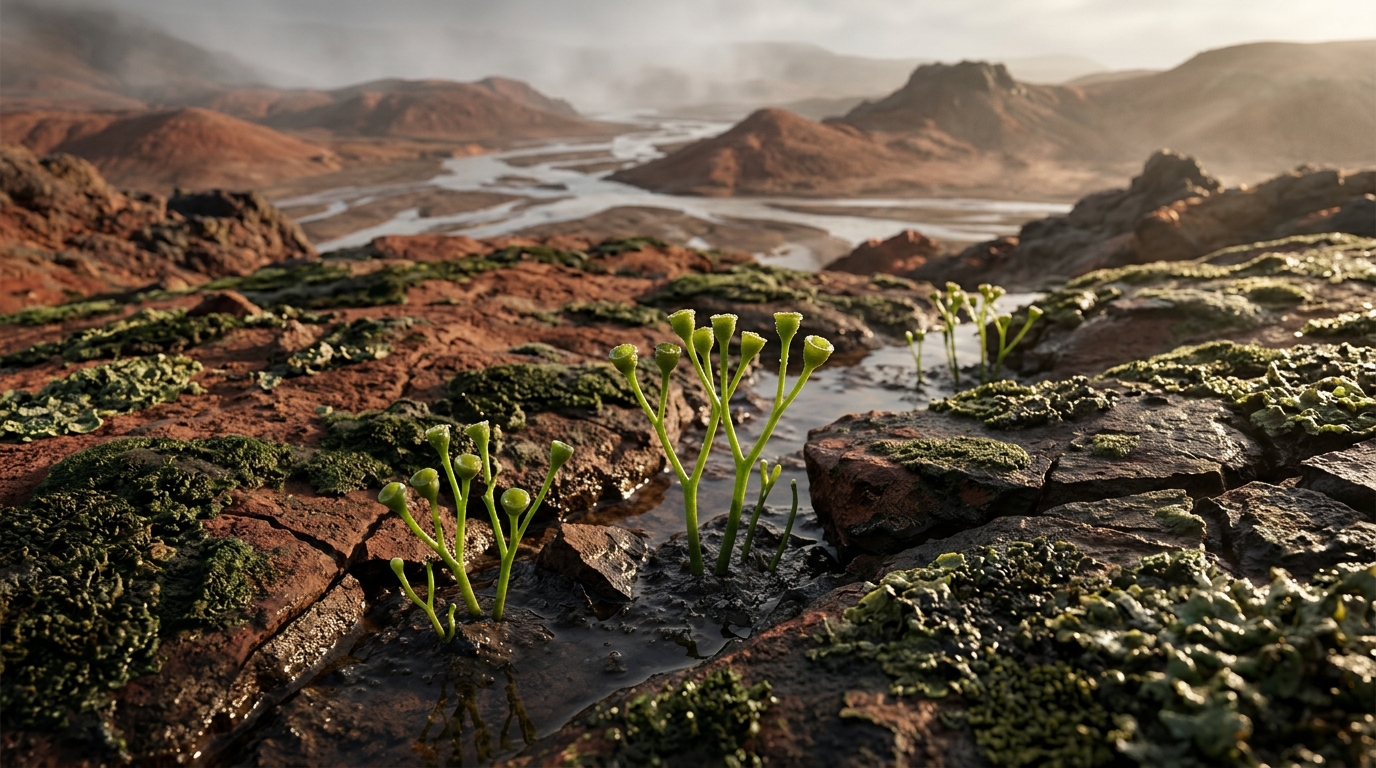
During the early Paleozoic, the terrestrial landscape was an alien expanse of craggy granite, basaltic rubble, and pulverized mineral silicates. Prior to the Silurian period, any organism attempting to venture out of the photic water column faced immediate dehydration, mechanical collapse under unsupported gravitational acceleration, and fatal genomic degradation from ultraviolet (UVB) flux.
The protective shield was forged by marine cyanobacteria and eukaryotic algae whose photosynthetic oxygenation had steadily enriched the stratosphere. In the presence of ultraviolet radiation (λ < 240 nm), diatomic oxygen undergoes photolysis into reactive atomic radicals, which combine with ambient O₂ to generate ozone:
$$\text{O}_2 + h\nu \to 2\text{O}$$ $$\text{O} + \text{O}_2 + \text{M} \to \text{O}_3 + \text{M}$$By the Middle Ordovician (~470 Ma), the stratospheric ozone layer had reached sufficient thickness to attenuate lethal UVB flux, opening an ecological frontier along coastal estuarine margins. The first colonizers were cryptogamic ground covers—non-vascular bryophyte-like organisms resembling modern liverworts and mosses. Lacking roots, leaves, or vascular circulation, these primitive plants secreted organic acids that catalyzed the biogeochemical weathering of silicate rocks. By extracting phosphorus, potassium, and magnesium, they initiated the genesis of Earth’s first true soils (pedogenesis) and locked up atmospheric carbon dioxide, plunging the planet into transient glacial cooling.
The Invention of Sporopollenin
The greatest biochemical triumph of early land plants was the synthesis of sporopollenin—an extraordinary biopolymer composed of cross-linked fatty acids, phenylpropanoids, and phenolic carotenoids. Unyielding to bacterial enzymatic decomposition, chemically inert, and virtually indestructible, sporopollenin encased plant spores in an impervious protective capsule, preserving the reproductive genetic code as it drifted through desiccating terrestrial winds.
2. The Vascular Revolution and the Great Devonian Forests (~420 to 359 Ma)
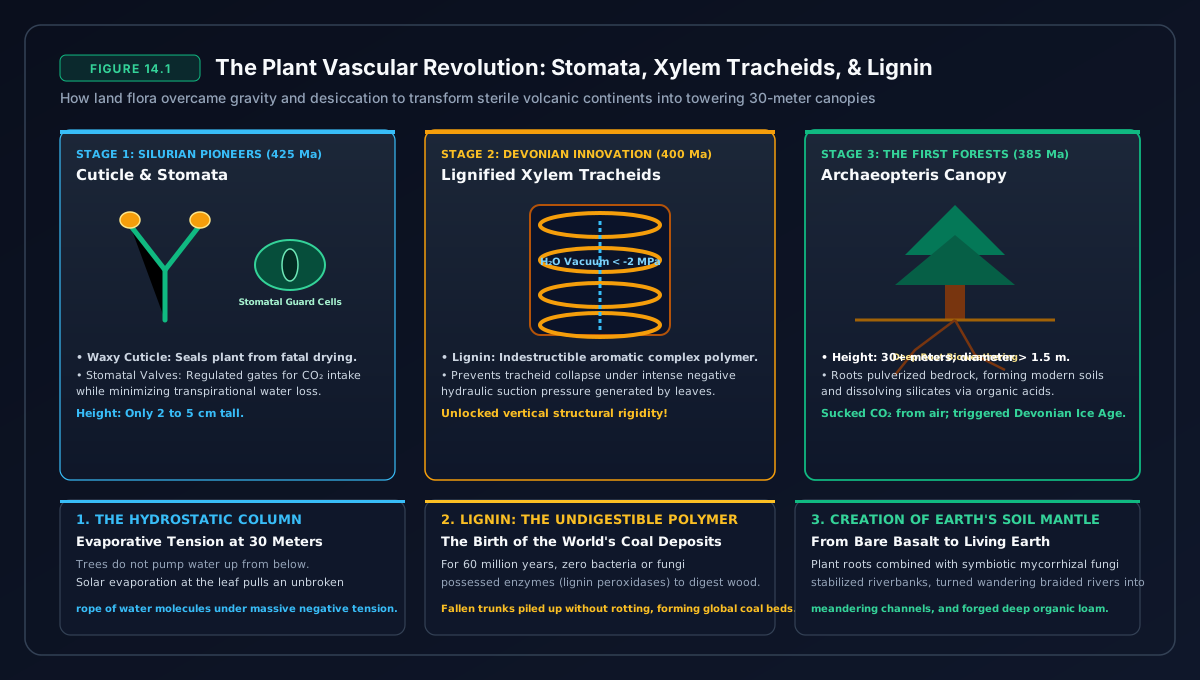
While bryophytes remained tethered to wet rock faces, never exceeding a few millimeters in height due to reliance on capillary diffusion, the Late Silurian witness the emergence of polysporangiophytes like Cooksonia, culminating in true vascular plants (tracheophytes). This evolutionary breakthrough hinged on two architectural inventions:
- Xylem and Phloem: Specialized vascular conduits lined with dead, hollowed tracheid cells that transported water and dissolved mineral ions upward from root systems via transpirational pull, countered by phloem tubes carrying photosynthesized sugars downward.
- Lignin: A complex, cross-linked racemic macromolecule composed of aromatic phenylpropane units. By embedding lignin into cellulose cell walls, vascular plants imparted rigid mechanical compressive strength, allowing plant stems to defy gravity and reach toward the sky in an escalatory race for direct sunlight.
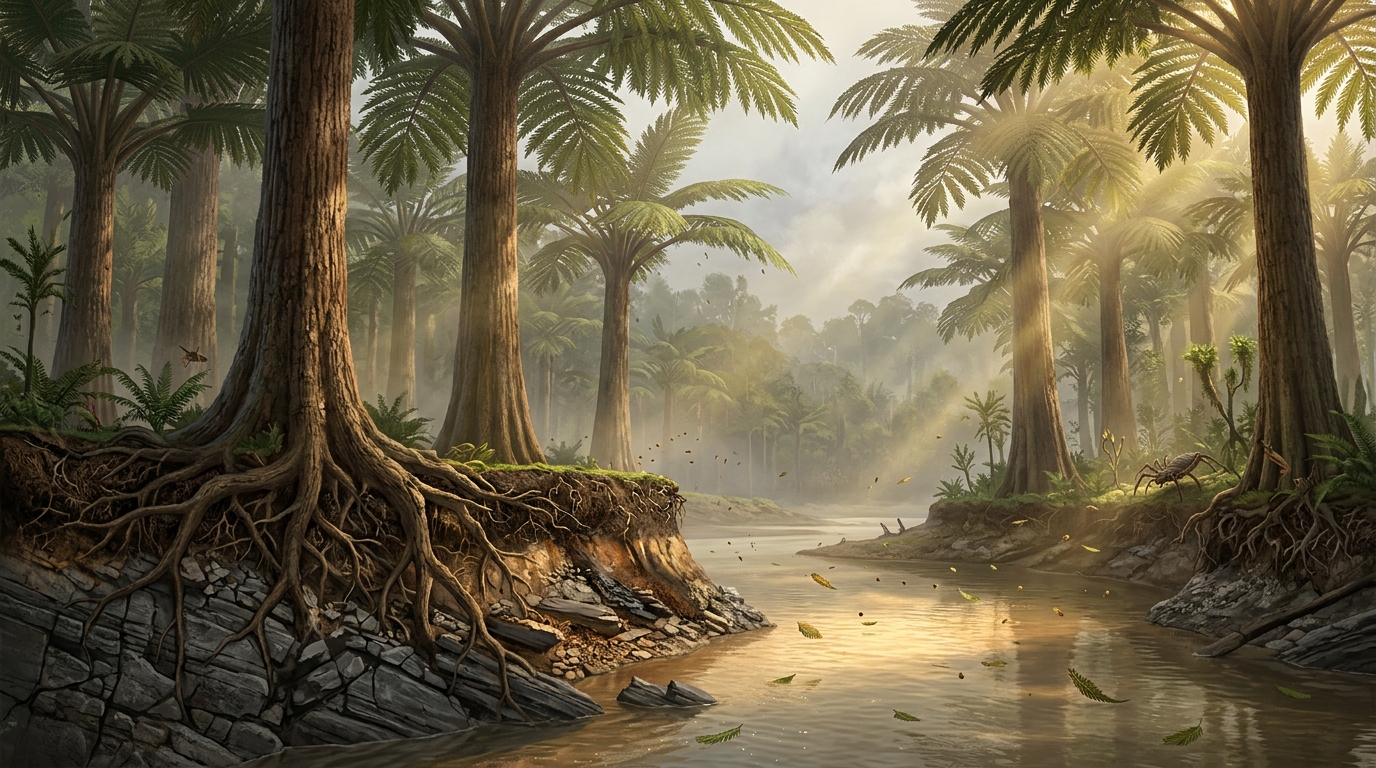
By the Late Devonian (~380 Ma), the world had transformed from a green crust into towering forests dominated by Archaeopteris—the first modern tree with extensive woody root systems and bifacial cambium. These deep, penetrative roots fractured the bedrock down to several meters, dramatically increasing chemical weathering rates by a factor of seven. The resulting influx of calcium and magnesium cations reacted with dissolved marine bicarbonate to precipitate vast carbonate shelves, drawing down thousands of gigatons of atmospheric CO₂:
3. The Carboniferous Swamp Hyperoxia and the Arthropod Giants (~359 to 299 Ma)
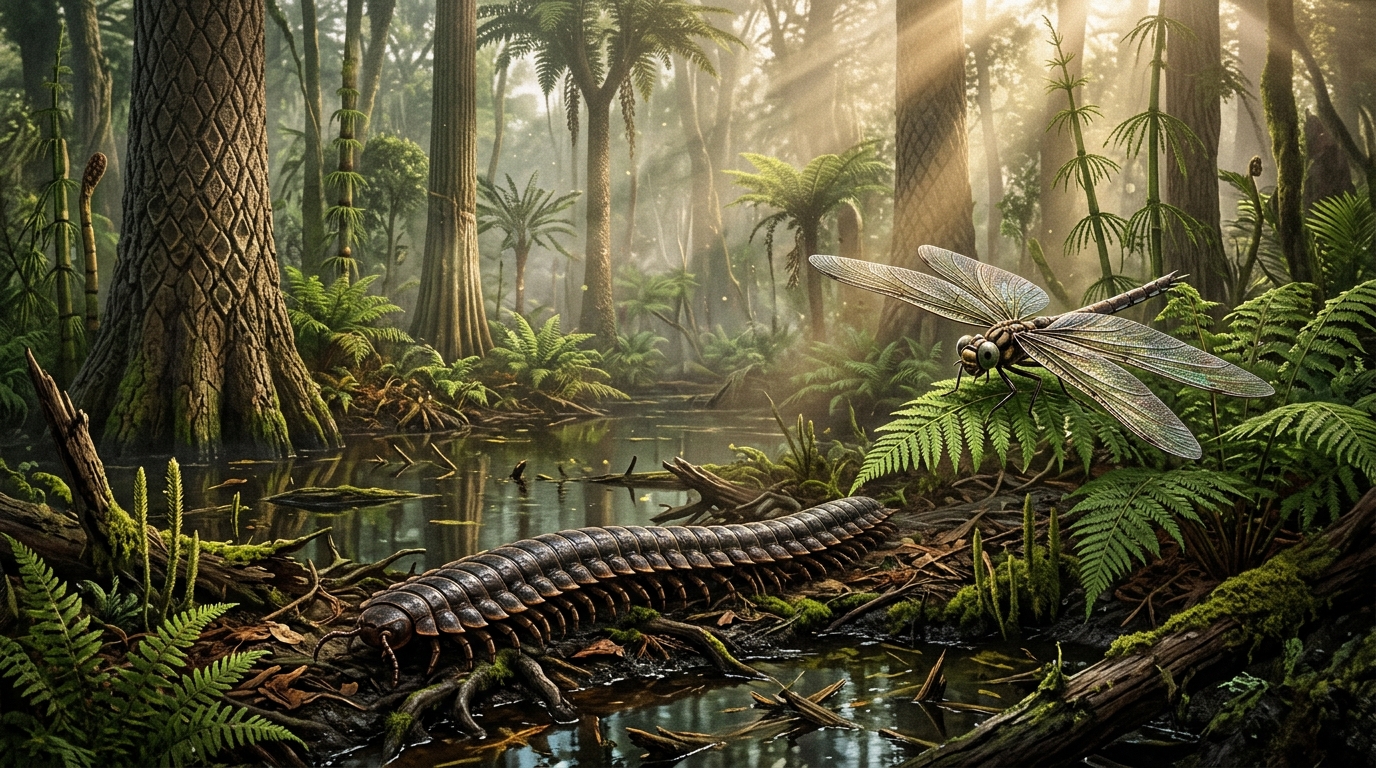
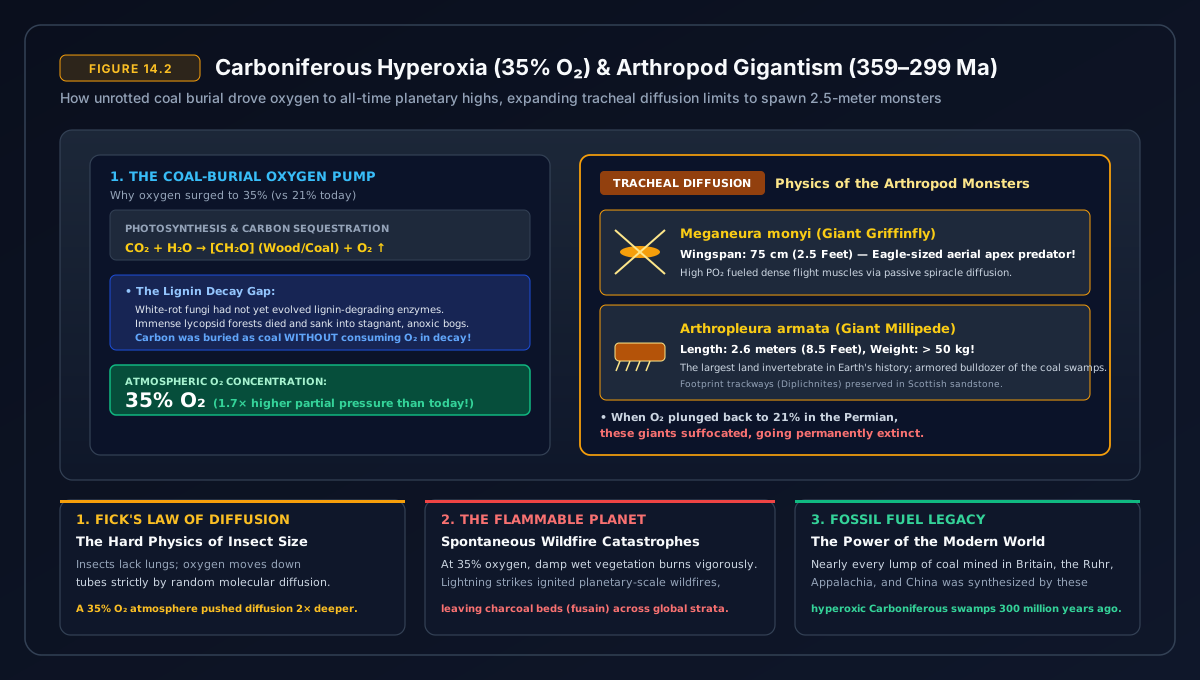
During the Carboniferous period, equatorial continents collided to form equatorial supercontinents smothered in vast, waterlogged wetlands. Trees like Lepidodendron (scale trees) and Sigillaria grew to heights of forty meters over acidic, oxygen-starved peat bogs. Crucially, the fungi and bacteria of the Carboniferous had not yet evolved the specialized class of enzymes—specifically lignin peroxidase and manganese peroxidase—capable of breaking down the aromatic rings of lignin.
When these towering trees fell into anoxic swamps, they did not decay. Layer upon layer of unoxidized cellulose and lignin accumulated under sediment blankets, subjected to heat and geostatic pressure over millions of years to form the massive bituminous coal deposits that would fuel the Industrial Revolution 300 million years later. Because the carbon was buried rather than oxidized back into CO₂, atmospheric oxygen soared from its modern baseline of 21% to an astonishing peak of 35%.
Spiracular Diffusion and Arthropod Gigantism
Arthropods breathe via passive tracheal tubes open to the atmosphere through lateral spiracles; their maximum body size is fundamentally bounded by the mean free path and diffusion rate of oxygen molecules through microscopic air tubules. Under a hyperoxic 35% O₂ atmosphere, oxygen penetrated far deeper into muscle tissue, unleashing an era of terrifying invertebrates: Meganeura monyi, a predatory griffinfly with a wingspan exceeding 75 centimeters; Arthropleura, a monstrous armored myriapod stretching 2.6 meters in length; and scorpions like Pulmonoscorpius reaching a meter from claw to stinger.
4. The Sarcopterygian Transition: Fins Become Limbs (~385 to 365 Ma)
While arthropods exploited their chitinous exoskeletons to conquer the land early, the vertebrate assault on land demanded a radical rethinking of internal endoskeletal anatomy. The journey began in stagnant, weed-choked freshwater shallows where predatory sarcopterygian (lobe-finned) fish lurked.
| Organism | Geological Age | Anatomical Milestones | Habitat / Ecology |
|---|---|---|---|
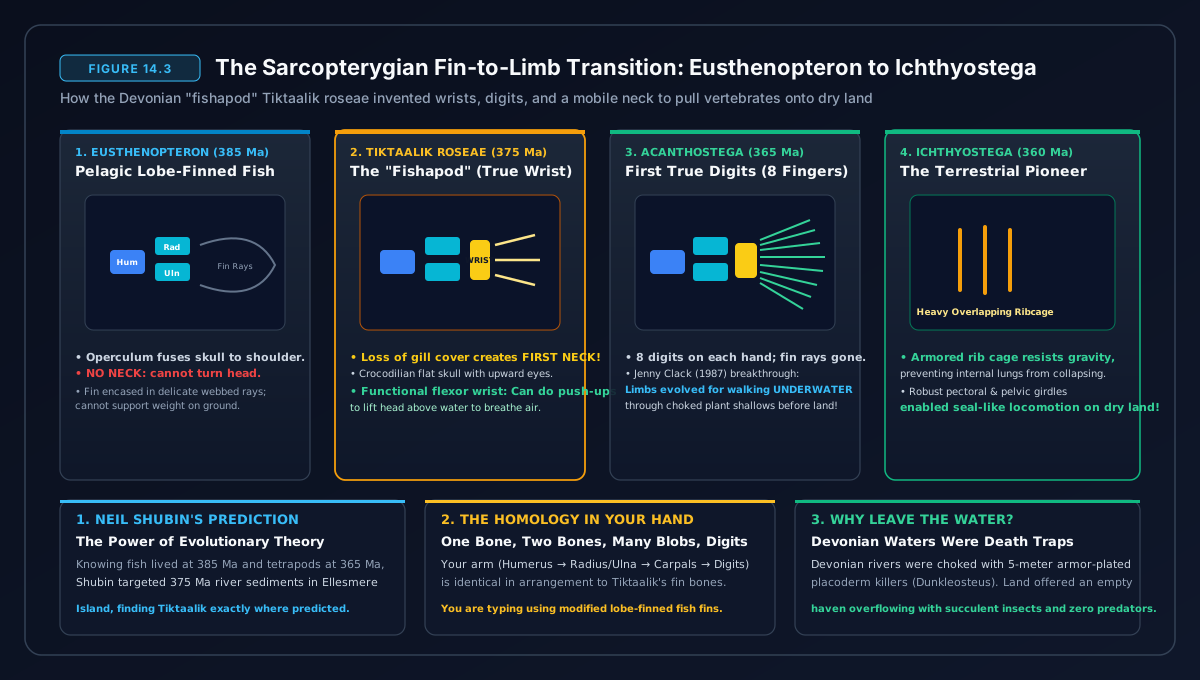
| Eusthenopteron | 385 Ma (Devonian) | Internal choanae (nostrils), ancestral humerus, radius, and ulna homologous to tetrapod limb bones. | Open water pelagic predator; strictly aquatic with rayed fins. |
| Panderichthys | 380 Ma (Devonian) | Dorsoventrally flattened body, loss of dorsal and anal fins, eyes positioned atop skull. | Shallow swamp bottom-dweller; propping body up in muddy shallows. |
| Tiktaalik roseae | 375 Ma (Devonian) | True mobile neck (loss of opercular bones), wrist joints capable of weight-bearing flexion, spiracular notches indicating ancestral lungs. | Intertidal / mudflat ambush predator; able to crawl over land barriers between evaporating pools. |
| Acanthostega | 365 Ma (Devonian) | True polydactylous digits (8 fingers per limb), fully articulated ankle and wrist, retention of internal gills. | Shallow freshwater marshes; fully aquatic limb usage precedes terrestrial locomotion. |
| Ichthyostega | 360 Ma (Devonian) | Robust overlapping ribs protecting thoracic cavity, rigid spine, strong pectoral girdle, 7 digits. | Semi-terrestrial pioneer; capable of seal-like crutching across land. |
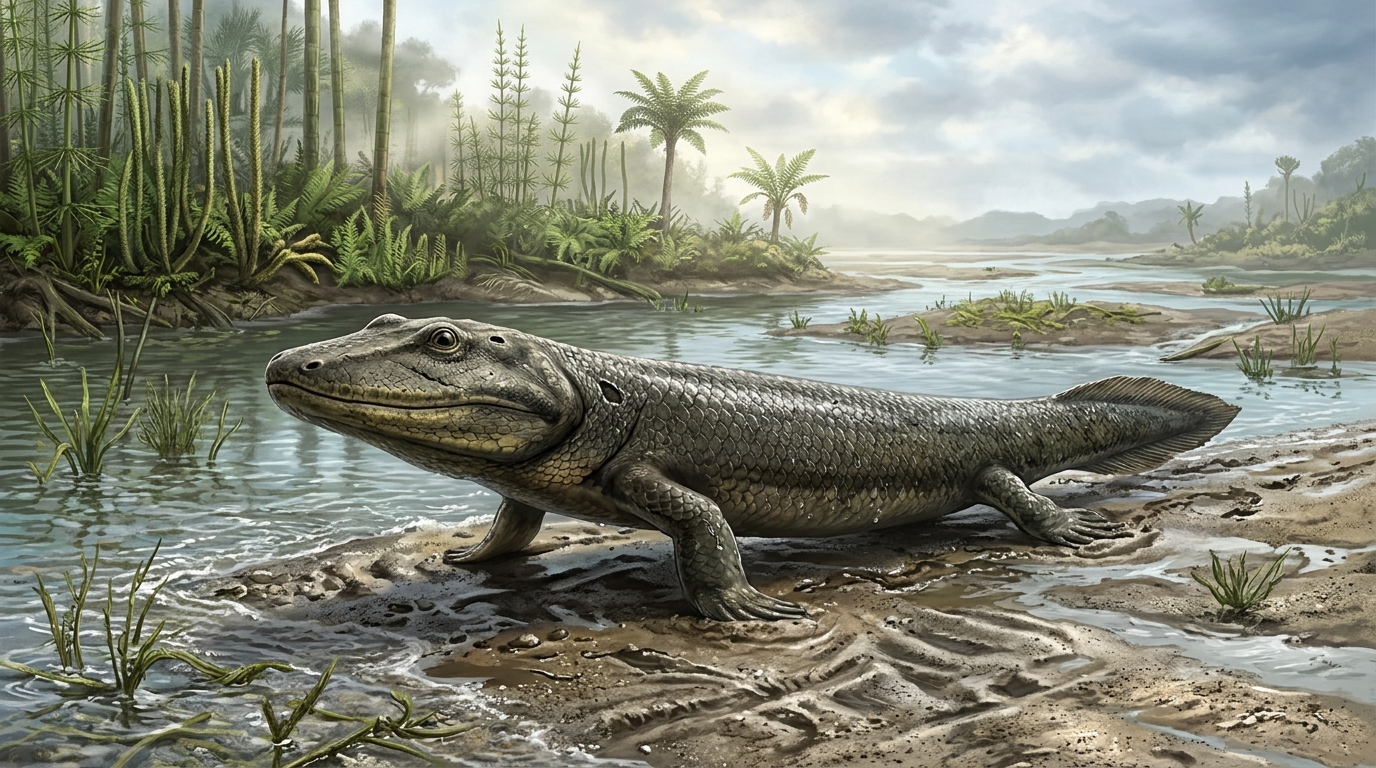
The discovery of Tiktaalik roseae in the Canadian Arctic by Edward Daeschler, Neil Shubin, and Farish Jenkins in 2004 provided the undeniable morphological bridge between fish and tetrapods. Unlike fish, whose skulls are locked immovably to the pectoral girdle by bony opercular plates, Tiktaalik lost these anchoring bones, gaining a flexible neck that could turn independently to track prey on land. Inside its fin, distal radial bones had evolved into functional wrist joints capable of flexion and extension, allowing it to execute primitive push-ups against the muddy substrates of oxygen-deprived estuaries.
5. Severing the Umbilical Cord: The Amniotic Egg (~312 Ma)
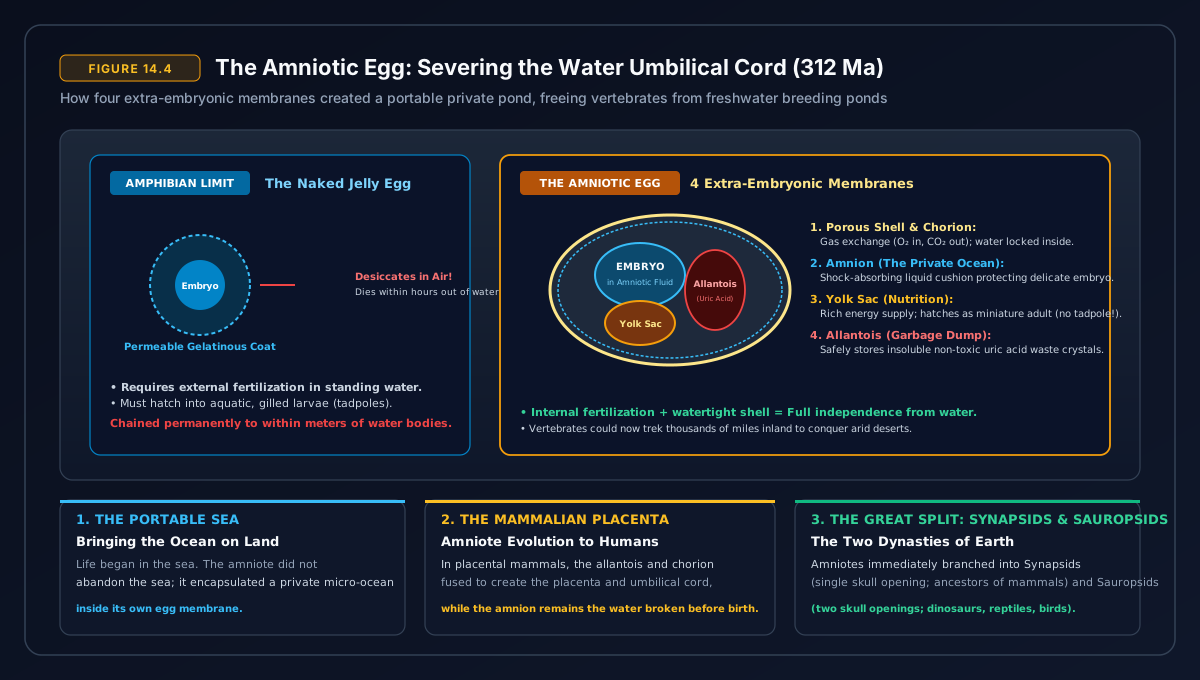
Despite walking on land, early amphibians remained prisoner to the water column. Their gelatinous, shell-less anamniotic eggs would wither and perish in dry air within minutes; their skin required continuous moisture for cutaneous respiration; and their free-swimming larval tadpoles demanded an aquatic sanctuary to undergo metamorphosis.
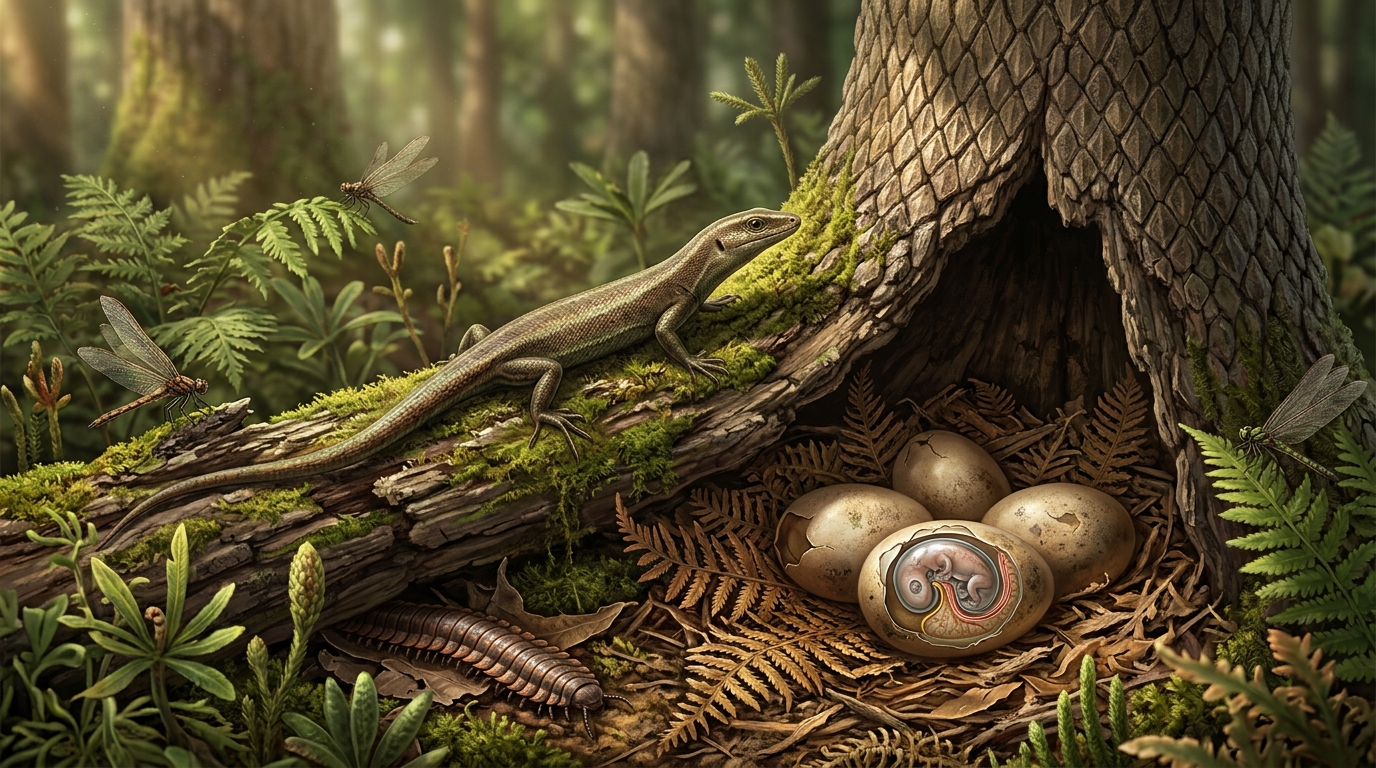
The definitive conquest of continental interiors arrived in the Late Carboniferous with the evolution of the amniote ancestor (exemplified by small, lizard-like creatures such as Hylonomus lyelli). The amniote innovation was an intricate miniature life-support system wrapped in a semi-permeable, calcium-rich shell that allowed gas exchange while preventing water evaporation:
- The Amnion: An inner fluid-filled sac that bathes the growing embryo in a synthetic private pond, protecting it from mechanical shock and desiccation.
- The Chorion: An outer vascular membrane that regulates oxygen intake and carbon dioxide expulsion across the porous shell.
- The Allantois: A dedicated internal bladder that stores nitrogenous waste (uric acid, requiring minimal water to precipitate) and participates in gas exchange.
- The Yolk Sac: A nutrient-dense storehouse of lipids and proteins that nourishes the embryo until hatching as a fully formed miniature adult, completely bypassing the vulnerable aquatic larval phase.
Equipped with the amniotic egg and dry, keratinized scales that arrested cutaneous desiccation, amniotes rapidly diverged into two fundamental evolutionary branches that would vie for planetary dominance for the next 300 million years: the Synapsida (distinguished by a single temporal fenestra behind each eye socket, giving rise to pelycosaurs, therapsids, and ultimately mammals) and the Sauropsida (with two temporal fenestras—the diapsids—giving rise to lizards, crocodilians, pterosaurs, dinosaurs, and birds).
6. The Great Dying: The Permian-Triassic Cataclysm (252 Ma)
By the Late Permian, synapsid “mammal-like reptiles”—such as the saber-toothed gorgonopsians and the massive herbivorous pareiasaurs—ruled a united supercontinent called Pangaea. But this thriving terrestrial empire was brought to near-total annihilation by the most devastating biological bottleneck in planetary history: the Permian-Triassic extinction event.
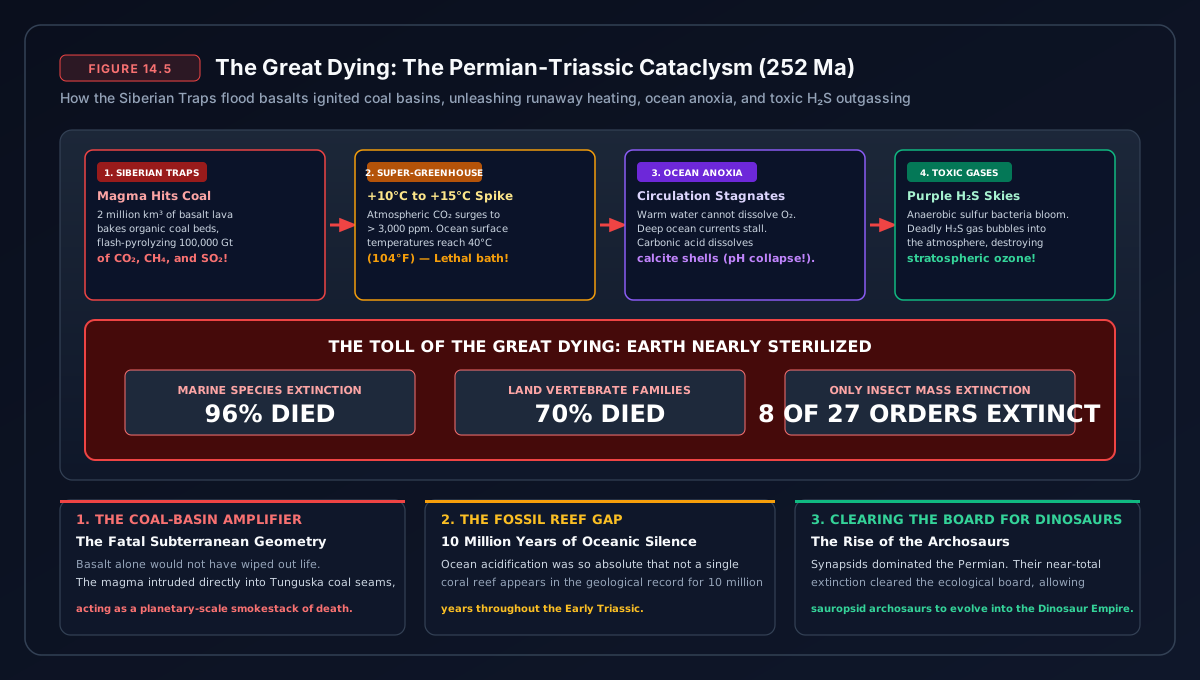
At 251.9 million years ago, immense mantle plumes welled up beneath what is now northern Russia, triggering the eruption of the Siberian Traps. Over the course of a million years, more than four million cubic kilometers of basaltic lava erupted across an area the size of Europe. As the magma punched through vast subsurface coal, carbonate, and petroleum basins, it pyrolyzed trillions of tons of carbon dioxide, sulfur dioxide, and methane into the atmosphere.
The global consequences were catastrophic:
- Super-Greenhouse Warming: Atmospheric temperatures skyrocketed by 10°C across the equator; tropical sea-surface temperatures soared past 40°C, exceeding thermal tolerance thresholds for animal enzymes.
- Ocean Acidification and Anoxia: As warming oceans lost dissolved oxygen, benthic microbial communities collapsed. Sulfate-reducing bacteria bloomed uncontrollably, saturating both deep seas and coastal shallows with toxic hydrogen sulfide (H₂S).
- Ozone Layer Collapse: Halogen gases liberated by pyrolyzed coals dismantled the stratospheric ozone layer, bombarding surviving plants and animals with blistering UV radiation that produced widespread pollen deformities and crop collapse.
When the ash settled, 96% of all marine species and 70% of terrestrial vertebrate families had perished. The great synapsid megafauna was shattered, leaving only small, burrowing survivors. Yet in the scorched, empty plains of the Early Triassic, the few surviving archosaurs (stem-crocodilians and proto-dinosaurs) stood before an evolutionary clean slate. The conquest of land was complete—and the stage was set for the golden age of the dinosaurs.
Academic Citations & Historical References
- Kenrick, P., & Crane, P. R. (1997). The origin and early diversification of land plants: a cladistic study. Smithsonian Institution Press. doi:10.5860/choice.35-4493
- Daeschler, E. B., Shubin, N. H., & Jenkins, F. A. (2006). A Devonian tetrapod-like fish and the evolution of the tetrapod body plan. Nature, 440(7085), 757–763. doi:10.1038/nature04639
- Shubin, N. H., Daeschler, E. B., & Jenkins, F. A. (2006). The pectoral fin of Tiktaalik roseae and the origin of the tetrapod limb. Nature, 440(7085), 764–771. doi:10.1038/nature04637
- Berner, R. A. (2006). GEOCARBSULF: A combined model for Phanerozoic atmospheric O2 and CO2. Geochimica et Cosmochimica Acta, 70(23), 5653–5664. doi:10.1016/j.gca.2005.11.032
- Benton, M. J. (2003). When Life Nearly Died: The Greatest Mass Extinction of All Time. Thames & Hudson. ISBN:978-0500051160.
- Burgess, S. D., Bowring, S., & Shen, S. Z. (2014). High-precision timeline for Earth\’s most severe extinction. Proceedings of the National Academy of Sciences, 111(9), 3316–3321. doi:10.1073/pnas.1317692111
- Carroll, R. L. (1988). Vertebrate Paleontology and Evolution. W. H. Freeman and Company. ISBN:978-0716718222.