At the end of the sixth century BCE, the nascent stream of Greek philosophy fractured into one of the most consequential metaphysical standoffs in intellectual history. On the Ionian coast at Ephesus, the solitary aristocrat Heraclitus gazed upon rushing rivers and crackling flames, declaring that perpetual change is the foundational reality of all things. Concurrently, across the Mediterranean in the southern Italian colony of Elea, Parmenides presented an uncompromising deductive poem demonstrating that change, motion, and multiplicity are sheer logical contradictions: What is, is; and what is not, cannot possibly be.
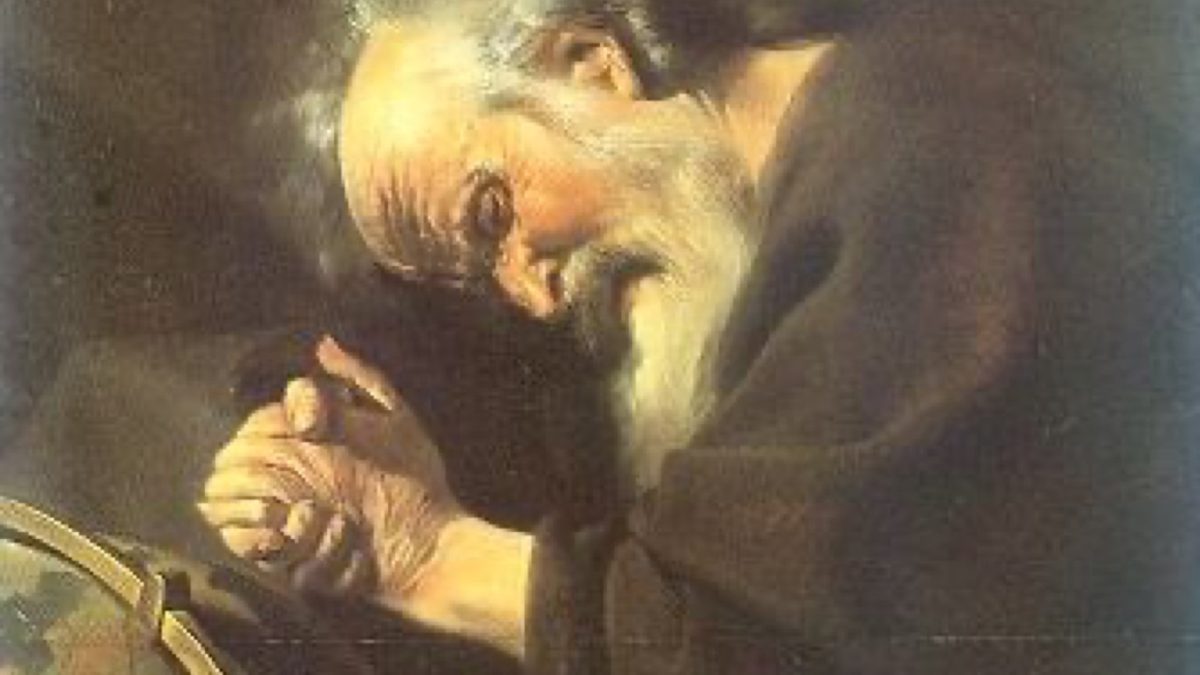
Heraclitus and the Cosmic River: Panta Rhei
For Heraclitus, reality is not a static collection of objects, but a dynamic, self-consuming process. His central cosmic symbol was Fire (pyr)—ever-living, kindling in measures and going out in measures. Nothing in nature stands still; stability is an illusion produced by balanced tensions, like the opposing forces of a drawn bow or a tuned lyre.
“No man ever steps in the same river twice, for it’s not the same river and he’s not the same man.” — Heraclitus of Ephesus
Yet Heraclitus was not a prophet of chaotic relativism. Underlying the strife of opposites lies the Logos (λόγος)—an objective cosmic grammar, a universal rational formula according to which all events unfold. While the masses live like sleepers wandering through subjective private worlds, the philosopher’s duty is to awaken to the Logos that binds all discord into supreme unity.
The Great Metaphysical Divide: Heraclitus vs. Parmenides
| Philosophical Category | Heraclitus of Ephesus | Parmenides of Elea |
|---|---|---|
| Primary Category | Becoming (Genesis / Flux) | Being (To Eon / Immutable Reality) |
| Sensory Trust | Senses reveal real flux; mind discerns Logos | Senses are treacherous illusions; reason alone rules |
| Cosmic Principle | Fire, Strife, and Harmony of Opposites | Indivisible, Unborn, Spherical, Eternal Plenitude |
| Legacy | Dialectics (Hegel, Nietzsche, Process Philosophy) | Rationalism, Ontology, Mathematical Formalism |
Parmenides and the Iron Logic of Being
Where Heraclitus relied on poetic aphorisms, Parmenides composed the first rigorous deductive proof in Western thought. In his philosophical poem On Nature, a goddess reveals to him the two paths of inquiry: the Way of Truth (Aletheia) and the Way of Opinion (Doxa).
Parmenides’ argument proceeds with surgical necessity: To think or speak of something is to think of what is. It is impossible to think of or articulate what is not, for non-being is literally nothing. But if non-being cannot exist, change becomes impossible; for an entity to change, it would have to transition from what it is to what it is not—or come to be out of nothing. Because ex nihilo nihil fit (nothing comes from nothing), reality must be continuous, ungenerated, indestructible, and entirely motionless. The sensory world of birth, decay, and movement is merely a dream of mortals deceived by the senses.
The Eleatic Paradoxes and the Birth of Logic
Parmenides’ brilliant disciple, Zeno of Elea, defended his master’s paradoxical monism by constructing devastating paradoxes against motion and multiplicity—such as Achilles unable to overtake the tortoise, and the flying arrow remaining frozen at every instant of its flight. These riddles forced subsequent thinkers (Empedocles, Anaxagoras, and the Atomists Democritus and Leucippus) to construct sophisticated pluralisms capable of reconciling the unyielding logic of Parmenidean Being with the undeniable sensory flux of Heraclitean Becoming.