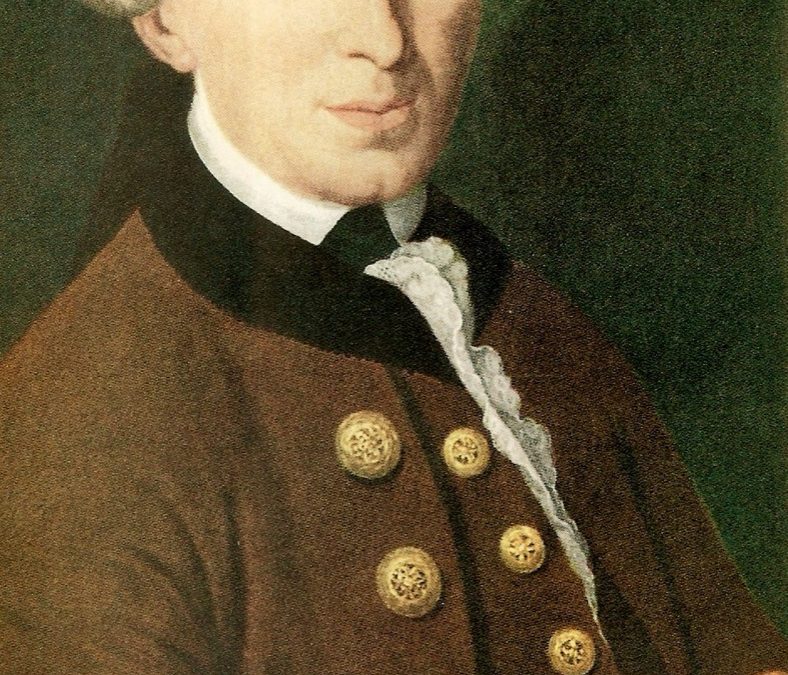
In the Baltic trading city of Königsberg in East Prussia, a diminutive professor named Immanuel Kant (1724–1804) lived a life of such mechanical regularity that housewives were said to set their clocks by his daily afternoon stroll. Yet within that frail, solitary skull occurred the most powerful earthquake in the history of philosophy. For decades, Kant had taught the orthodox Leibnizian-Wolffian rationalism. But when he read the translated works of David Hume, the foundations gave way. Hume had proved that causality, the bedrock of Newtonian physics and rational science, was a mere psychological habit without rational justification. As Kant famously confessed, “David Hume was the very one who first interrupted my dogmatic slumber and gave a completely new direction to my researches.”
The Kantian Problem: How Are Synthetic A Priori Judgments Possible?
Kant realized that both schools had painted themselves into dead ends: Rationalism degenerated into baseless metaphysical dogmatism, while Empiricism collapsed into destructive skepticism that rendered science impossible. To save science, mathematics, and human morality, Kant formulated the core question of his 1781 masterwork, the Critique of Pure Reason (Kritik der reinen Vernunft):
The Epistemic Matrix: Kant’s Synthetic A Priori
| Judgment Type | A Priori (Independent of Experience / Necessary) | A Posteriori (Derived from Experience / Contingent) |
|---|---|---|
| Analytic (Predicate contained in subject) |
All bachelors are unmarried. (Tautological, logically necessary, uninformative) |
Logically impossible category |
| Synthetic (Predicate amplifies subject) |
The Synthetic A Priori: 7 + 5 = 12 Every event has a cause. (Informative yet universally necessary!) |
The swan is white. (Empirical, contingent facts of nature) |
If mathematical equations and the principle of universal causation are not mere tautologies, yet are known with universal necessity prior to experience, where does their necessity originate?
The Copernican Revolution in Epistemology
Just as Nicolaus Copernicus realized that planetary motions could not be explained by assuming the observer stands stationary at the center of the cosmos, Kant proposed a revolutionary reversal in philosophy:
“Hitherto it has been assumed that all our knowledge must conform to objects. But let us once try whether we do not make more progress in the problems of metaphysics by assuming that objects must conform to our knowledge.” — Immanuel Kant
The human mind is not a passive mirror that reflects an independent external reality. Nor is it an empty bucket filled by sensory data. The mind is an active, structural processor: human consciousness imposes its own innate cognitive architecture onto the raw chaos of sensory inputs. Space and Time are not physical containers existing outside us; they are the a priori forms of sensible intuition—the subjective lenses through which alone anything can appear to a human mind.
Furthermore, the raw intuitions shaped by space and time are synthesized by twelve Categories of the Understanding (such as Causality, Substance, Unity, and Plurality). Why does every physical event appear caused? Not because causality exists in things-in-themselves, but because human consciousness cannot process any experience whatsoever except through the cognitive category of cause-and-effect.
Phenomena vs. Noumena: The Horizon of Reason
This triumph came with a humbling metaphysical price. Kant permanently cleaved reality into two realms:
- The Phenomenon (The World of Appearances): The empirical reality structured by space, time, and the categories. This is the legitimate domain of Newtonian physics, empirical science, and daily experience. Here, causality is universally valid.
- The Noumenon (The Thing-in-Itself / Ding an sich): Ultimate reality as it exists independent of our sensory apparatus and cognitive lenses. Of this realm, pure theoretical reason can know literally nothing.
Metaphysical questions concerning the beginning of the universe, the immortality of the soul, or the existence of God lead theoretical reason into insoluble Antinomies (contradictions where opposite positions can both be proven). Kant famously remarked: “I have found it necessary to deny knowledge, in order to make room for faith.”
The Categorical Imperative: The Moral Law Within
While theoretical reason cannot prove God, freedom, or immortality, practical reason demands them as necessary postulates of moral duty. In the Critique of Practical Reason, Kant formulated the supreme moral law: the Categorical Imperative:
“Act only according to that maxim whereby you can at the same time will that it should become a universal law.”
Furthermore, he commanded: “Treat humanity, whether in your own person or in the person of any other, never merely as a means to an end, but always as an end in itself.” For Kant, human dignity is infinite because human beings are autonomous moral agents capable of acting out of pure duty rather than biological impulse.
Engraved upon his tomb in Königsberg are the sublime words that summarize his monumental philosophy: “Two things fill the mind with ever new and increasing admiration and awe: the starry heavens above me and the moral law within me.”