Following the sudden death of Alexander the Great in 323 BCE, the self-governing classical Greek city-state disintegrated into fragmented, warring Hellenistic empires. Stripped of democratic civic agency, ordinary human beings found themselves buffeted by geopolitical chaos, military violence, and existential anxiety. In response, philosophy abandoned vast metaphysical cosmologies to address a burning practical question: How can a fragile individual preserve sanity, dignity, and serenity in a hostile and unpredictable world? From this crisis arose the two great rival schools of Hellenistic antiquity: Epicureanism and Stoicism.
Epicurus and the Garden of Simple Desires
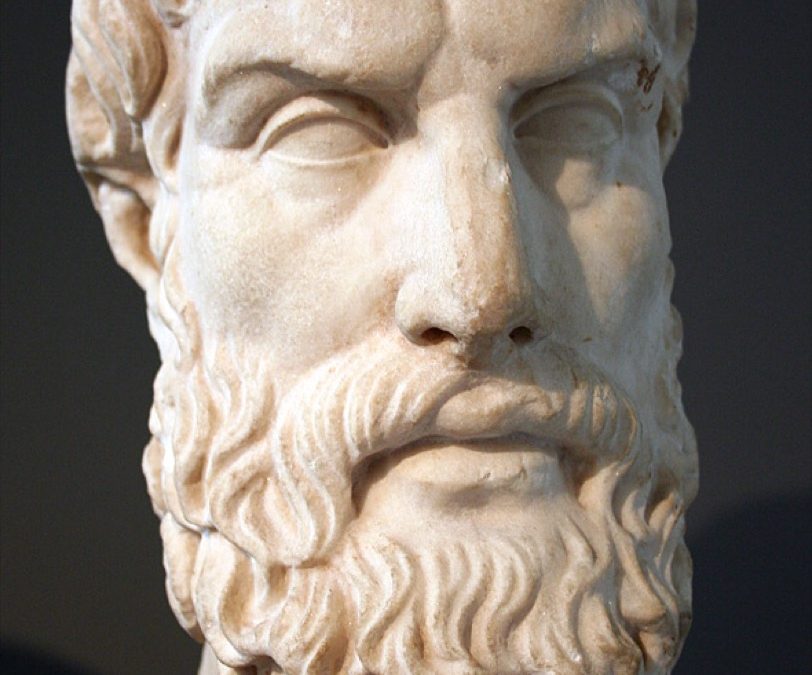
Outside the walls of Athens, Epicurus purchased a modest house with a walled garden. There, he founded an egalitarian community that scandalized polite society by welcoming women, slaves, and courtesans as intellectual equals. Contrary to modern slanders that equate “epicurean” with decadent luxury, Epicurus lived on bread, water, and olives.
Epicurus diagnosed the root cause of human misery as two psychological terrors: the fear of divine punishment and the fear of death. Drawing upon the atomism of Democritus, Epicurus argued that the universe consists entirely of material atoms moving through the void. The gods, made of ultra-fine atoms, dwell in blissful indifference between worlds, unconcerned with human affairs. Furthermore, death is simply the dissolution of atomic coherence:
“Death is nothing to us. When we exist, death is not; and when death exists, we are not.” — Epicurus
The sovereign goal of life is Ataraxia (untroubled psychological tranquility) and Aponia (absence of bodily pain). Epicurus divided human desires into three categories: natural and necessary (basic food, friendship, philosophy), natural but unnecessary (luxurious banquets), and unnatural and vain (political power, fame). True happiness requires moderating desires to the first category, transforming life into a serene fortress of quiet friendship.
Hellenistic Wisdom Compared
| Dimension | Epicureanism (The Garden) | Stoicism (The Painted Porch) |
|---|---|---|
| Foundational Physics | Materialist Atomism in the Void | Pantheistic Logos permeating the Cosmos |
| Highest Good (Telos) | Ataraxia (Tranquility) & Absence of Pain | Arete (Virtue) & Living According to Nature |
| Civic Engagement | Withdrawal from politics (Lathe biosas) | Cosmopolitan duty and public service |
| Mastery of Passion | Fulfill simple natural desires | Apatheia: eradication of irrational passions |
The Stoic Porch: Epictetus, Seneca, and Marcus Aurelius
Founded by Zeno of Citium on the painted public porch (Stoa Poikile) of Athens, Stoicism argued that reality is an interconnected organic whole infused with divine cosmic reason—the Logos. What happens to a person externally is outside their control; what remains unconditionally sovereign is one’s internal judgment, volition, and moral response (prohairesis).
Stoicism flourished from the Greek street into the highest corridors of Roman power through three extraordinary voices:
- Epictetus: A disabled former slave who formulated the Dichotomy of Control: divide all things into what is up to you (beliefs, desires, character) and what is not (reputation, wealth, health). Never tie your peace of mind to the latter.
- Seneca: A statesman and playwright who practiced Premeditatio Malorum (the premeditation of evils), fortifying the mind against sudden disaster and betrayal.
- Marcus Aurelius: The Roman Emperor who wrote his personal diary, the Meditations, on campaign along the freezing Danube, reminding himself to love his fellow humans, embrace fate (Amor Fati), and govern with unyielding integrity.
For the Stoic, freedom is not the absence of external constraints, but the internal mastery of one’s own soul—the creation of an Inner Citadel that no emperor, tyrant, or misfortune can ever breach.