In the 1870s, in the shadow of Harvard University in Cambridge, Massachusetts, an informal discussion circle called “The Metaphysical Club” gave birth to the first truly indigenous philosophical movement in American history. Composed of polymathic mathematicians, jurists, and psychologists—chief among them the reclusive logician Charles Sanders Peirce and the charismatic psychologist William James—the group was united by an impatience with the sterile, scholastic metaphysical disputes that had paralyzed Europe for centuries. For millennia, philosophers had spilled ocean of ink debating whether the universe is one or many, whether matter is distinct from mind, and what constitutes the timeless essence of truth. The Pragmatists swept away these verbal abstractions with a revolutionary operational test: What concrete difference does a theoretical proposition make to lived human action?
Peirce’s Pragmatic Maxim: Meaning as Action
Charles Sanders Peirce (1839–1914)—now celebrated as the father of modern semiotics (the theory of signs)—first formulated the core doctrine in his 1878 essay, “How to Make Our Ideas Clear”. Peirce observed that belief is not a static mental picture; belief is a psychological habit that guides human action. Therefore, to clarify any concept, one must trace its practical consequences:
“Consider what effects, that might conceivably have practical bearings, we conceive the object of our conception to have. Then, our conception of these effects is the whole of our conception of the object.” — Charles Sanders Peirce
If two rival metaphysical theories predict the exact same observable consequences under all conceivable circumstances, the debate between them is not an intellectual mystery; it is meaningless verbal noise. Truth, for Peirce, is the ideal limit toward which the community of scientific inquirers would converge if inquiry were carried out indefinitely.
The Pragmatic Triangle
- Charles Sanders Peirce: Scientific and logical pragmatism (Pragmaticism); meaning defined by observable operational consequences and communal inquiry.
- William James: Psychological and humanistic pragmatism; truth defined by its concrete “cash-value” in lived human experience and spiritual flourishing.
- John Dewey: Instrumentalism and social democracy; philosophy as an experimental tool for educational reform and institutional problem-solving.
William James: The Cash-Value of Truth
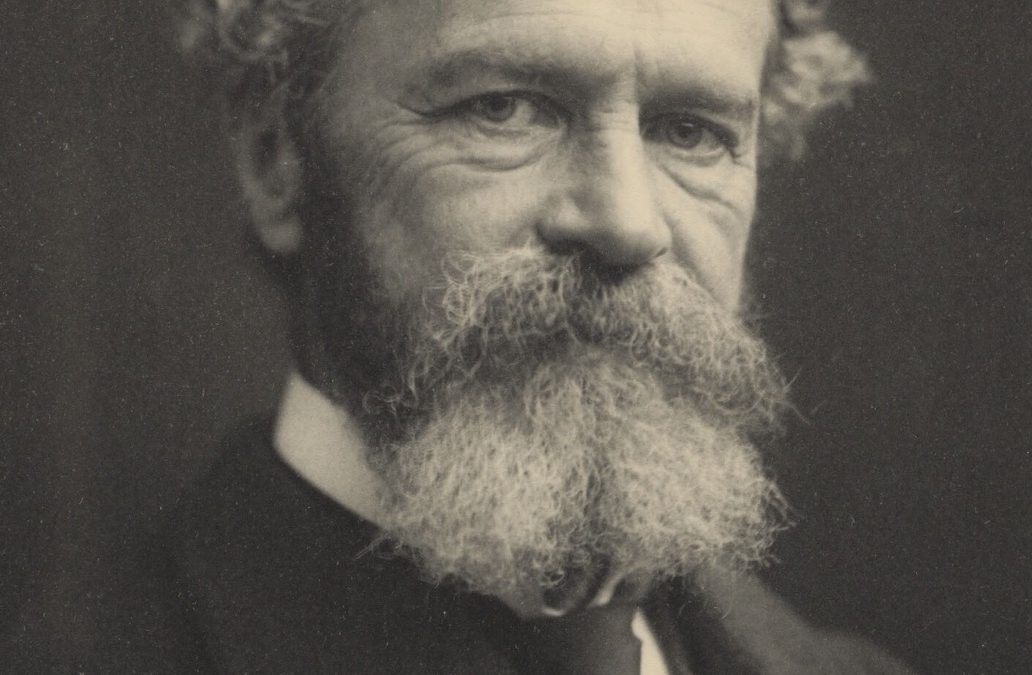
While Peirce remained an austere mathematician, William James (1842–1910) democratized pragmatism into a vibrant, warm-blooded philosophy of life. In his 1907 lectures, Pragmatism: A New Name for Some Old Ways of Thinking, James famously asserted that truth is not a static, inert correspondence between an idea and an objective reality existing out in the void. Truth is an Event: an idea becomes true when it successfully leads us through experience:
“Truth happens to an idea. It becomes true, is made true by events. Its verity is in fact an event, a process.”
James introduced the memorable metaphor of truth’s Cash-Value: If you say the world is guided by a loving Providence while your opponent claims it is blind mechanical matter, what concrete difference does it make to how you wake up in the morning, endure suffering, and face death? If the belief in meaning fosters moral courage, mental health, and transformative action, that belief possesses authentic pragmatic validity.
The Will to Believe and Radical Empiricism
In his celebrated 1896 address, The Will to Believe, James defended the rational right of individuals to adopt faith in the absence of coercive empirical evidence. In life, certain momentous decisions are forced and living: choosing to marry, trusting a friend, or adopting moral hope. In such cases, demanding scientific proof before acting ensures failure. Often, faith in a fact can help create the fact—a runner’s confidence produces the victory, and a nation’s shared belief produces social solidarity.
In his later metaphysical work, Essays in Radical Empiricism, James rejected both Cartesian dualism and materialism in favor of Pure Experience: reality in its raw immediacy is neither mental nor physical, but a flowing, undivided stream from which the concepts of “subject” and “object” are secondary abstractions. Pragmatism, in James’s hands, became a triumphant celebration of human agency, experimental courage, and the open universe.