While Greek philosophers strolled through the Agora of Athens debating the nature of the cosmos, an equally sophisticated, intensely analytical intellectual tradition was flourishing along the banks of the Ganges. Classical Indian philosophy—known as Darshana (from the Sanskrit root dṛś, meaning “direct sight” or “seeing reality as it is”)—was never a system of dogmatic myth. It was a rigorous, dialectical culture of public debate, formal logic, and epistemology driven by an urgent existential objective: the eradication of psychological suffering (dukkha) and the achievement of liberation (moksha).
The Architecture of Knowledge: Pramana Shastra
Every school of Indian thought began by addressing the critical epistemological question: How do we know what is real? This investigation yielded the theory of Pramanas (legitimate means of knowledge):
- Pratyaksha: Direct sensory perception, both external (eyes, ears) and internal (mental states).
- Anumana: Deductive and inductive logical inference, formulated by the Nyaya school into a five-step syllogism centuries before Francis Bacon.
- Upamana: Knowledge gained through valid analogy or comparison.
- Shabda: Verbal testimony from reliable, verified authorities or scripture.
The Six Classical Orthodox Schools (Shad-Darshana)
Indian tradition developed six mutually complementary systems grouped in analytical pairs:
- Nyaya & Vaisheshika: Formal epistemology, logic, and physical atomism (classifying reality into substances, qualities, and relations).
- Samkhya & Yoga: Dualistic metaphysics separating pure unattached consciousness (Purusha) from dynamic material nature (Prakriti), alongside experiential psychological disciplines.
- Mimamsa & Vedanta: Exegesis of Vedic action and profound non-dual metaphysical ontology (Advaita of Adi Shankara: Brahman as the sole ultimate reality).
Samkhya Dualism: Consciousness (Purusha) and Nature (Prakriti)
The Samkhya school formulated one of the most brilliant dualisms in the history of philosophy. It posited two eternal, uncreated principles: Prakriti, the dynamic, evolving material universe driven by three subtle equilibrium forces (Gunas: clarity/sattva, passion/rajas, inertia/tamas); and Purusha, infinite, passive, witnessing consciousness.
Human suffering arises from an illusion of identification: Purusha mistakenly confuses itself with the physical and mental modifications of Prakriti. Liberation occurs when the witnessing consciousness realizes its absolute transcendence from all bodily and emotional states.
The Buddhist Revolution: Pratityasamutpada and Anatta
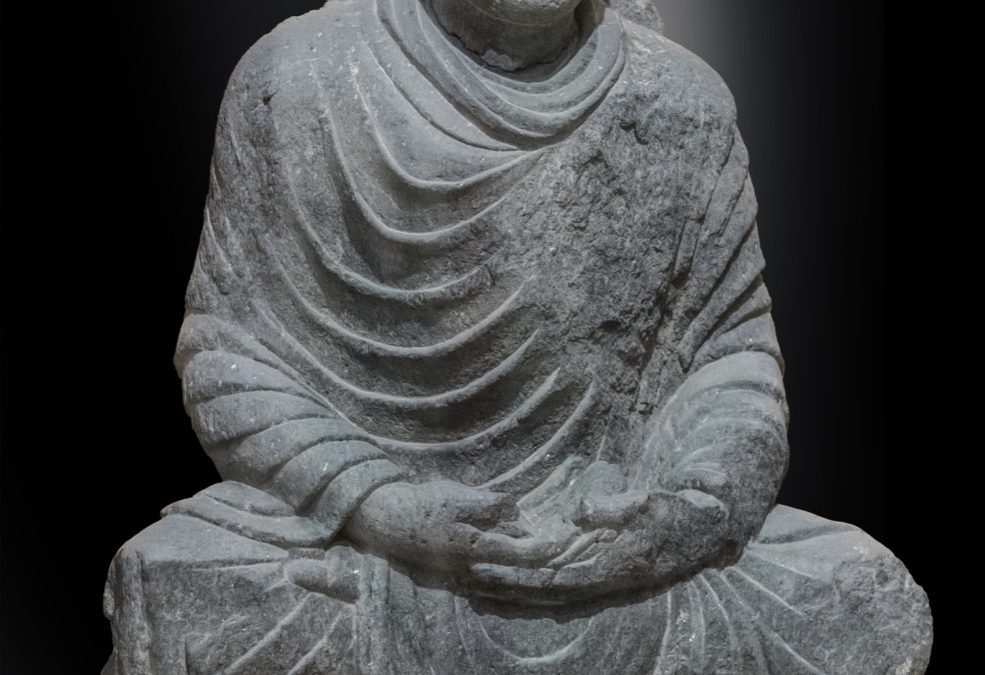
In radical contrast to the orthodox schools that affirmed an eternal, immutable soul (Atman), Siddhartha Gautama (the Buddha) advanced an analytical critique that prefigured the modern empiricism of David Hume and cognitive science by more than two millennia.
“All conditioned things are impermanent; all conditioned things are suffering; all things are without a self.” — The Dhammapada
Central to Buddhist thought is Pratītyasamutpāda (Dependent Origination): no phenomenon exists independently, causally unconditioned, or eternally. Everything arises in mutual interdependence. Consequently, when we introspect into our conscious awareness, we find no solid, permanent “I”. We discover only five constantly shifting bundles or aggregates (Skandhas): physical form, sensation, perception, mental volitions, and consciousness itself.
The doctrine of Anatta (non-self) reveals that the “ego” is a cognitive illusion generated by grasping onto ephemeral streams. By recognizing that there is no independent soul to defend, hoard, or obsess over, the thirst of craving (tanha) dissolves, extinguishing the flames of suffering into the profound peace of Nirvana.