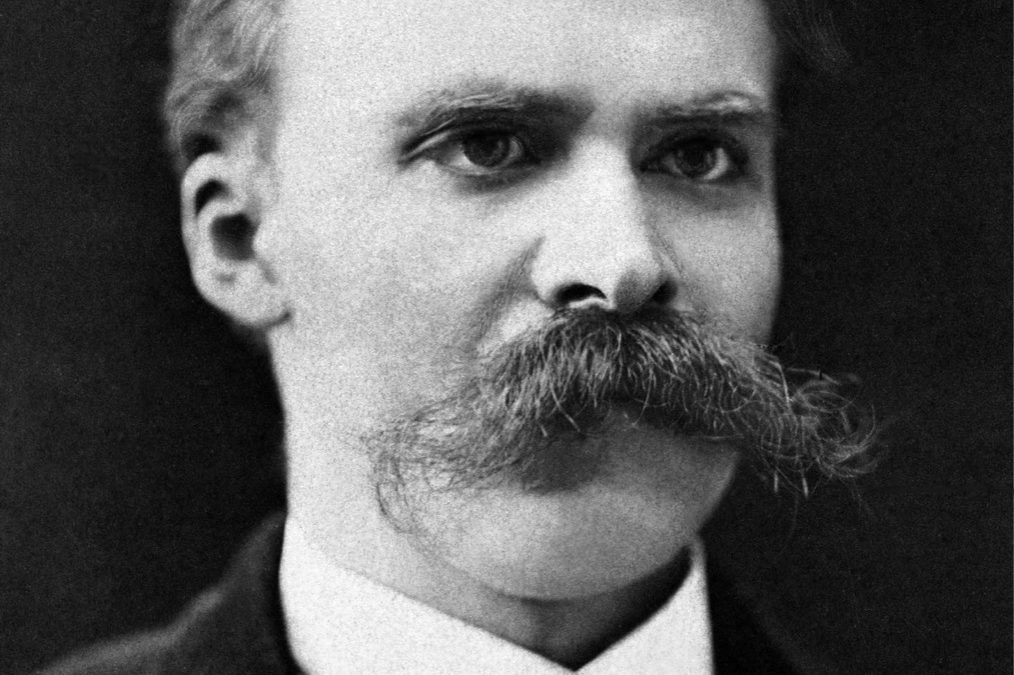
In the middle of the nineteenth century, the supreme rationalist edifice of Hegelian idealism—which claimed to explain every cosmic epoch, war, and political system through dialectical logic—provoked a furious revolt from two solitary prophets of the human soul. In Copenhagen, Søren Kierkegaard pointed out the grotesque irony of a philosopher building a magnificent speculative palace while being forced to live in a doghouse next door. What did abstract universal logic matter to an existing, trembling human individual facing mortality, guilt, and choice? Simultaneously in Germany and the Swiss Alps, Friedrich Nietzsche shattered the moral complacency of Western civilization with a philosophical hammer: declaring that European morality had exhausted its foundational vitality, plunging humanity into the abyss of nihilism.
Kierkegaard and the Leap of Faith
Kierkegaard (1813–1855), writing under complex pseudonyms to subvert academic complacency, established the foundational categories of modern Existentialism. Truth, he insisted in Concluding Unscientific Postscript, is not an objective scientific formula; Truth is Subjectivity: the passionate, personal inwardness with which an individual relates to their existence.
Human consciousness is uniquely burdened by Angst (dread or anxiety)—the dizzying vertigo of freedom standing before the terrifying abyss of absolute possibility. In Fear and Trembling (1843), Kierkegaard analyzed Abraham’s agonizing journey to Mount Moriah to sacrifice his beloved son Isaac. Abraham cannot be justified by universal ethics; ethically, he is a murderer. But through a Teleological Suspension of the Ethical, Abraham performs a radical Leap of Faith into the absurd, trusting God beyond the limits of human reason.
“Life can only be understood backwards; but it must be lived forwards.” — Søren Kierkegaard
Existentialism’s Twin Peaks
| Philosophical Dimension | Søren Kierkegaard | Friedrich Nietzsche |
|---|---|---|
| Ultimate Crisis | Existential dread (Angst) and spiritual despair | Nihilism following the “Death of God” |
| Source of Meaning | Individual commitment in the Leap of Faith | Self-overcoming through the Will to Power |
| Human Archetype | The Knight of Faith (embracing the absurd) | The Übermensch (creator of new values) |
| Stance on Suffering | Redemptive crucible of spiritual authenticity | Dionysian affirmation of life (Amor Fati) |
Nietzsche: The Death of God and the Will to Power
In The Gay Science (1882), Friedrich Nietzsche (1844–1900) announced the historical event that defined the modern era: “God is dead. God remains dead. And we have killed him. How shall we comfort ourselves, the murderers of all murderers?”
Nietzsche was not delivering an atheist victory speech; he was sounding the ultimate alarm. For two thousand years, Western culture’s morals, legal systems, and sense of purpose had been anchored in Christian metaphysics. With that foundation eroded by the scientific revolution and historical criticism, European culture was sleepwalking into catastrophic Nihilism—the total collapse of values where nothing is true and everything is permitted.
The Revaluation of All Values: Master vs. Slave Morality
In On the Genealogy of Morals (1887), Nietzsche exposed the psychological origins of traditional morality. Ancient classical culture operated on Master Morality, where the noble, strong, and life-affirming were designated “Good,” and the weak or base “Bad.”
Subjugated populations, consumed by suppressed resentment (ressentiment), executed a psychological revolution: they inverted values into Slave Morality. Strength, pride, and earthly vitality were branded as “Evil,” while meekness, poverty, obedience, and self-denial were crowned as “Good.”
The Übermensch and Amor Fati
Nietzsche called for the Revaluation of All Values (Umwertung aller Werte). To transcend passive nihilism, humanity must breed the Übermensch (the Overman)—an exceptional individual possessing the psychological courage to create sovereign values out of their own creative vitality. Life is not the preservation of existence, but the Will to Power (Wille zur Macht): the instinct to overcome limits, master oneself, and impose form onto chaos.
The ultimate test of the Übermensch is Amor Fati (love of one’s fate) embodied in the thought of the Eternal Recurrence: to embrace one’s life—with all its agonizing pain, failures, and triumphs—with such passionate affirmation that one would joyfully choose to live it identically for all eternity.